The modern dental practice operates in a dynamic landscape, where clinical excellence alone is no longer sufficient for sustained growth and success. Beyond the sterile environment of the operatory lies the intricate ecosystem of practice management, a complex interplay of operations, patient care, team dynamics, financial health, and technological adoption. In the United States alone, there are approximately 135,333 dental practice establishments [Weave, 2023], a testament to the robust and competitive nature of the industry. This burgeoning market, with the global dental market projected to reach USD 118.36 billion by 2034 [Fortune Business Insights, 2025], demands more than just routine care; it requires a growth-minded approach, a strategic imperative for any practice aiming to thrive rather than just survive. This article serves as an actionable roadmap, guiding dental professionals through the essential management tips that unlock untapped practice potential, transforming daily operations into a powerful engine for scalable and sustainable growth.
Defining "Practice Potential" in Today's Dental Landscape
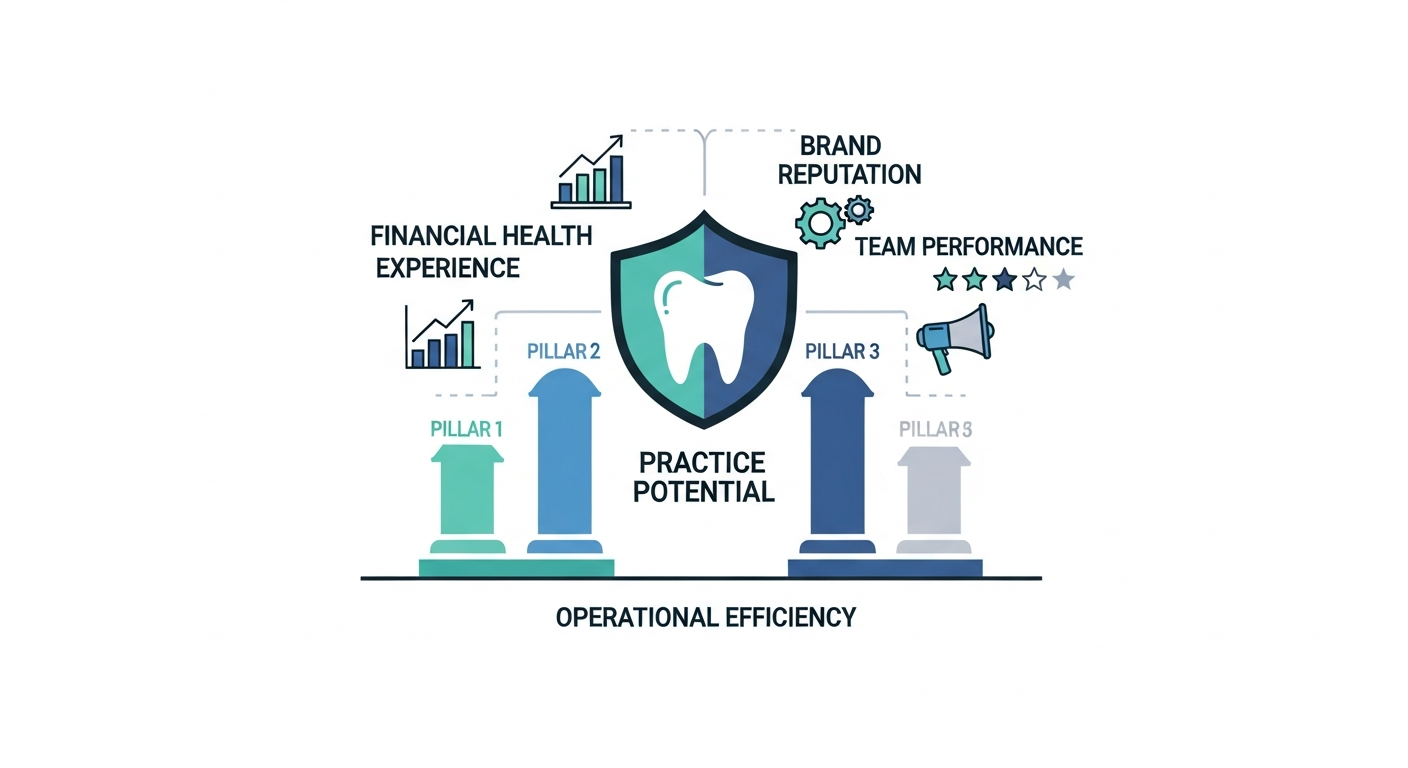 True practice potential is a holistic concept built on four key pillars supported by a foundation of operational efficiency.
Practice potential extends far beyond the number of patients a dental office sees or the procedures performed. It encompasses the holistic health and future-readiness of the practice. This includes optimizing revenue streams, enhancing patient retention and acquisition through exceptional service, fostering a high-performing and engaged team, and building a strong, trusted brand reputation. In essence, it's about maximizing every facet of the practice to achieve peak operational efficiency, unparalleled patient satisfaction, and consistent financial growth. The average profit margin of a dental practice, around 38% [U.S. Bureau of Labor Statistics, 2024], offers a benchmark, but true potential lies in exceeding this through strategic management, ensuring profitability while delivering superior patient care.
The Strategic Imperative: Why Integrated Management Drives Growth
Integrated management is the cornerstone of unlocking practice potential. It recognizes that no single element of a dental practice operates in isolation. Streamlined operations directly impact the patient experience, a motivated dental team enhances patient care and efficiency, and sound financial management provides the resources for technological investment and marketing initiatives. Failing to integrate these components leads to inefficiencies, patient dissatisfaction, staff burnout, and missed growth opportunities. For instance, nearly half (49%) of practices report case acceptance rates between 40% and 70% [Planet DDS, 2025], suggesting a critical need for integrated communication and patient education strategies, which are products of effective, integrated management. A practice that views management holistically is better equipped to adapt to market changes, leverage new technologies, and build lasting patient relationships, thereby securing its future growth trajectory.
What You'll Learn: An Actionable Roadmap for Your Dental Practice
This guide provides a comprehensive, step-by-step approach to transforming your dental practice. We will delve into optimizing operational efficiency, mastering the patient experience, empowering your dental team, fortifying financial management, driving strategic patient acquisition and retention, and leveraging modern technology. Furthermore, we will address the crucial aspect of compliance, ensuring your practice operates securely and builds trust. By the end of this article, you will possess a clear understanding of how to implement these strategies, turning potential into tangible growth and establishing your practice as a leader in the field.
Optimize Operational Efficiency: Streamlining Your Path to Scalability
Efficiency is not merely about doing things faster; it's about doing them smarter, ensuring that every minute and resource contributes to the practice's overall goals and scalability. By refining operational workflows, dental practices can significantly enhance throughput, reduce costs, and free up valuable time for both staff and clinicians to focus on higher-value tasks, ultimately leading to increased patient satisfaction and revenue.
Mastering Appointment Scheduling for Maximized Throughput
Effective appointment scheduling, which can be done through a patient engagement software such as Flex Dental Solutions, is critical for maximizing the utilization of chair time and minimizing patient wait times. This involves implementing intelligent scheduling systems that consider appointment duration, procedure complexity, and the availability of clinicians and hygienists. Practices should leverage strategies to reduce no-shows and cancellations, such as automated appointment reminders via texts and emails, and clear cancellation policies. Analyzing historical data on appointment patterns can inform future scheduling decisions, ensuring the dental office operates at optimal capacity. Efficient scheduling directly impacts patient flow, allowing for more appointments to be seen without compromising the quality of patient care.
Streamlining Front and Back Office Workflows
The front and back office of a dental practice are the engines that drive its daily operations. Streamlining workflows here is paramount. This includes optimizing patient check-in and check-out processes, managing patient records efficiently, and ensuring clear communication channels between administrative staff and the clinical team. Standardizing procedures for tasks like insurance verification, appointment confirmation, and follow-up communications reduces errors and saves time. A well-defined workflow ensures that administrative tasks are handled promptly and accurately, allowing the dental team to focus on delivering excellent patient care and enhancing the overall patient experience. This efficiency extends to internal communication, ensuring that every member of the dental team is informed and aligned.
Leveraging Practice Management Software for Seamless Operations
Modern practice management software, like Open Dental, is indispensable for achieving seamless operations. These comprehensive systems integrate patient scheduling, electronic health records (EHRs), billing, insurance claim processing, and patient communication tools into a single platform. The North America dental practice management software market, for instance, dominated the global market with a share of 47.6% in 2024 [Global Market Insights, 2025], highlighting its central role. Advanced practice management software facilitates automated appointment reminders, streamlines the billing process, helps track patient data securely in compliance with HIPAA, and provides valuable insights through reporting and analytics. By leveraging these tools effectively, practices can automate repetitive tasks, reduce administrative burden, improve data accuracy, and gain a clear overview of practice performance, paving the way for scalable growth.
Elevate the Patient Experience: Your Growth Engine for Retention and Referrals
In today's competitive healthcare environment, the patient experience has transcended mere customer service; it is a primary driver of practice growth. A consistently positive patient experience fosters loyalty, encourages repeat visits, and generates invaluable word-of-mouth referrals, acting as a powerful and cost-effective acquisition strategy.
Crafting a Welcoming & Comfortable Environment
The physical environment of the dental office plays a significant role in shaping patient perceptions and comfort levels. Creating a welcoming and relaxing atmosphere begins with the reception area, which should be clean, comfortable, and aesthetically pleasing. Soft lighting, pleasant decor, and accessible amenities contribute to a sense of calm. Beyond the visual, the soundscape and even scent can influence patient mood. Ensuring privacy during consultations and treatments is also paramount. A thoughtful approach to the office environment demonstrates a commitment to patient well-being, setting a positive tone from the moment a patient walks through the door.
Enhancing Patient Communication and Engagement
Effective patient communication is the bedrock of trust and satisfaction. This involves clear, empathetic, and personalized interactions at every touchpoint. From the initial phone call or online inquiry to post-treatment follow-ups, every communication should be professional and informative. Practices should prioritize educating patients about their oral health, treatment options, and the importance of preventative care. Utilizing various communication channels, including phone calls, emails, and potentially personalized texts for appointment reminders or care instructions, ensures that patients feel informed and valued. Nearly half (49%) of practices reported case acceptance rates between 40% and 70% [Planet DDS, 2025]; improved communication and education are key to increasing this crucial metric.
Digital Tools for a Modern Patient Journey
The integration of digital tools, such as Flex Dental Solutions, has revolutionized the patient journey. Online appointment booking systems empower patients with convenience and control over their schedules. Patient portals offer secure access to personal health records, treatment plans, and billing information, fostering transparency and engagement. Telehealth options can be utilized for consultations, follow-ups, and remote patient monitoring, expanding access to care. Digital forms and questionnaires completed prior to appointments streamline the check-in process, saving time for both patients and staff. These technologies not only enhance patient convenience but also contribute to a more efficient practice workflow, making the overall experience more modern and responsive.
Empower Your Team: The Foundation of Sustainable Practice Growth
A dental practice is only as strong as its team. Investing in the recruitment, training, and well-being of your staff is not merely an operational necessity; it is a strategic imperative for sustainable growth. An empowered, skilled, and motivated dental team is directly responsible for delivering exceptional patient care, driving operational efficiency, and fostering a positive practice culture.
Strategic Staffing and Recruitment for Excellence
Attracting and retaining top talent requires a strategic approach to staffing and recruitment. Beyond clinical skills, practices should seek individuals who align with the practice's culture and values, possess strong communication abilities, and demonstrate a commitment to patient care. Clearly defined job roles and responsibilities are essential to ensure everyone understands their contribution to the practice's success. For independent owners and first-time buyers, the interest in private practices rose sharply between 2024 and the first half of 2025, increasing from 16% to 39% [Christie & Co, 2025], underscoring the competitive hiring landscape. Proactive recruitment strategies, including leveraging professional networks and offering competitive compensation and benefits, are vital for building a high-performing dental team.
Ongoing Staff Training and Development
Continuous learning and development are crucial for maintaining a skilled and adaptable dental team. This encompasses not only ongoing clinical education for dentists and Hygienists but also training for administrative staff in areas such as advanced practice management software, customer service, and compliance. Regular workshops, continuing education courses, and cross-training initiatives equip staff with the latest knowledge and skills. This investment benefits the practice by improving the quality of patient care, enhancing operational efficiency, and increasing staff engagement and job satisfaction.
Fostering Effective Communication and Collaboration
A collaborative environment thrives on open and effective communication. Regular team meetings, clear feedback mechanisms, and opportunities for staff to voice concerns and suggestions are essential. Encouraging interdisciplinary communication between administrative staff, Hygienists, dentists, and specialists ensures a cohesive approach to patient care. When the dental team communicates effectively, issues are resolved more quickly, workflows are smoother, and a sense of shared purpose is cultivated, all of which contribute to a more positive work environment and enhanced patient experience.
Staff Retention: Nurturing Your Greatest Asset
High staff turnover can be costly and disruptive to a dental practice. Nurturing your team through recognition, professional development opportunities, and a supportive work-life balance is key to retention. Recognizing staff achievements, providing opportunities for career advancement, and fostering a culture of appreciation can significantly boost morale and loyalty. Ensuring fair compensation, benefits, and a positive work environment are fundamental. A stable, experienced team is more efficient, provides better patient care, and contributes significantly to the practice's long-term success and growth. Hygienists, in particular, play a vital role in patient retention and can be powerful advocates for the practice, making their retention crucial for growth.
Master Financial Management: Fueling Your Practice's Expansion
Sound financial management is the lifeblood of any successful dental practice, providing the necessary resources to invest in growth, technology, and staff development. A proactive approach to billing, strategic financial planning, and diligent accounts receivable management are essential for maintaining healthy cash flow and ensuring the practice's long-term viability. The average profit margin of a dental practice, around 38% [U.S. Bureau of Labor Statistics, 2024], signifies the importance of optimizing revenue and controlling costs.
Optimizing Billing and Insurance Claims
Accurate and efficient billing is fundamental to financial health. This involves meticulous record-keeping, precise coding, and timely submission of insurance claims. Practices must stay abreast of evolving insurance policies and coding regulations to minimize claim denials and rejections. Utilizing practice management software with integrated billing functionalities can automate much of this process, reducing errors and expediting payment cycles. Streamlining the insurance verification process before appointments and educating patients about their benefits and out-of-pocket responsibilities are also critical steps. Given that approximately 72 million adults in the US (27%) do not have dental insurance [CareQuest Institute, 2024], offering clear payment options for uninsured patients is also a crucial component of financial management.
Strategic Financial Planning and Analysis
Beyond day-to-day billing, strategic financial planning is essential for growth. This involves developing realistic budgets, forecasting revenue and expenses, and regularly analyzing key financial performance indicators (KPIs). Understanding metrics such as average revenue per patient, cost per procedure, and patient acquisition cost allows for informed decision-making. Regular financial reviews help identify areas of overspending or underperformance, enabling timely adjustments to strategy. The global dental insurance market's projected growth to USD 390.3 billion by 2030 [Global Market Insights, 2026] indicates the significant role of insurance, making accurate financial analysis crucial. This foresight allows practices to allocate resources effectively towards growth initiatives.
Proactive Management of Accounts Receivable
An efficient accounts receivable (AR) process is vital for maintaining positive cash flow. This requires establishing clear payment policies, following up promptly on outstanding balances, and offering flexible payment options. Proactive AR management involves sending statements promptly, utilizing automated reminders for overdue accounts, and considering payment plans for patients facing financial difficulties. Reducing the average number of days accounts receivable remain outstanding directly impacts the practice's liquidity, enabling it to meet financial obligations and invest in future expansion.
Drive Patient Acquisition & Retention: Strategic Marketing for Continuous Growth
Attracting new patients and retaining existing ones are the twin pillars of sustainable growth for any dental practice. A well-defined marketing strategy, grounded in understanding the target audience and leveraging diverse channels, is essential for building a consistent patient pipeline and fostering long-term loyalty.
Building a Strong Online Presence and Reputation
In the digital age, a practice's online presence is often the first point of contact for potential patients. A professional, user-friendly website is non-negotiable, serving as a hub for information about services, staff, and practice policies. Active engagement on social media platforms allows for direct interaction with patients, sharing valuable content, and showcasing the practice's personality. Crucially, actively managing online reviews on platforms like Google My Business and Yelp is essential. Positive reviews build trust and credibility, while addressing negative feedback constructively demonstrates a commitment to patient satisfaction.
Targeted Marketing and Patient Reactivation
Effective marketing goes beyond broad outreach; it involves targeted campaigns designed to reach specific patient segments. This could include digital advertising targeting local demographics, email marketing campaigns for special offers or educational content, and specialized outreach for services like orthodontics or cosmetic dentistry. Patient reactivation campaigns are also vital, using recall systems and personalized outreach to re-engage patients who haven't visited in a while. This proactive approach leverages existing patient relationships and data to fill appointment slots and re-establish care.
Understanding Your Market and Patient Load
A thorough understanding of the local market and the practice's patient demographics is fundamental to effective marketing. Analyzing the competitive landscape, identifying unmet needs within the community, and understanding patient preferences can inform marketing strategies. Furthermore, assessing the practice's current patient load and capacity helps in setting realistic acquisition goals. This data-driven approach ensures that marketing efforts are focused, efficient, and aligned with the practice's operational capabilities, preventing overbooking and ensuring quality patient care.
Leverage Modern Technology & Digital Dentistry: Innovating for Future Growth
The rapid evolution of technology in dentistry presents unparalleled opportunities for enhancing practice efficiency, improving patient care, and driving growth. Embracing modern digital tools and integrating advanced software solutions allows practices to innovate, streamline operations, and offer a superior patient experience.
Integrating Advanced Practice Management Software
While basic practice management software, like Open Dental, is essential, advanced solutions offer deeper insights and greater integration capabilities. These systems go beyond scheduling and billing to provide sophisticated reporting and analytics, enabling data-driven decision-making. Features like patient engagement modules, such as Flex Dental Solutions, robust marketing tools, and seamless integration with other dental technologies can further optimize practice workflows. About 35% of dental practices in the U.S. have implemented some form of AI-powered technology in their clinical or administrative workflows [Christopher Durusky, DDS, 2025], indicating a clear trend towards adopting advanced technological solutions for enhanced efficiency and patient engagement.
Harnessing Digital Dentistry Tools
Digital dentistry encompasses a range of technologies, including intraoral scanners, CAD/CAM systems, digital radiography, and cone-beam computed tomography (CBCT). These tools significantly improve diagnostic accuracy, treatment planning, and the precision of dental procedures. For patients, digital dentistry often means more comfortable, faster, and more accurate treatment outcomes. The U.S. digital dentistry market, valued at $1.26 billion in 2023, is projected to grow significantly [iData Research, 2024], demonstrating the increasing adoption and value placed on these innovations. Integrating these tools can enhance the practice's reputation for cutting-edge care and attract patients seeking advanced treatment options.
Automation for Enhanced Efficiency and Patient Engagement
Automation is a key enabler of both efficiency and improved patient engagement. Automated appointment reminders, follow-up communications, and recall systems reduce administrative burden and ensure patients remain connected to the practice. Online patient intake forms and digital consent processes streamline administrative tasks, saving time and reducing paper waste. Automation can also be applied to internal workflows, such as task delegation and inventory management. By automating repetitive processes, the dental team can dedicate more time to direct patient care and strategic initiatives, fostering growth and improving overall practice performance.
Ensure Compliance and Security: Building Trust and Mitigating Risk for Growth
Operating a dental practice involves adherence to a complex web of regulations designed to protect patient privacy, ensure safety, and maintain ethical standards. Robust compliance strategies are not just legal obligations; they are foundational to building patient trust and safeguarding the practice against costly risks, thereby enabling sustainable growth.
Comprehensive HIPAA Compliance
The Health Insurance Portability and Accountability Act (HIPAA) mandates strict standards for the protection of patient health information. Comprehensive HIPAA compliance involves implementing robust security measures for electronic health records, establishing clear policies for data access and disclosure, and providing regular training for all staff on privacy and security protocols. Conducting regular risk assessments and developing a breach response plan are critical components of maintaining compliance. A strong commitment to HIPAA demonstrates ethical practice and builds patient confidence, which is paramount for reputation and patient retention.
OSHA and Workplace Safety
The Occupational Safety and Health Administration (OSHA) sets standards to ensure a safe working environment for all employees. For dental practices, this includes protocols for infection control, proper handling of hazardous materials, emergency preparedness, and ergonomic considerations for staff. A safe workplace not only protects the dental team but also contributes to a positive work culture and reduces the risk of accidents and injuries, which can lead to costly disruptions and legal liabilities.
Adhering to Regulations and Best Practices
Beyond HIPAA and OSHA, dental practices must comply with state and local regulations governing licensure, advertising, and professional conduct. Staying informed about updates to these regulations and consistently applying best practices in all aspects of practice management ensures that the practice operates ethically and legally. This diligence not only mitigates legal risks but also reinforces the practice's reputation for professionalism and reliability, fostering patient trust and supporting long-term growth.
Conclusion: Your Roadmap to Unlocking Practice Potential and Sustained Growth
Unlocking the full potential of a dental practice in today's competitive landscape demands a holistic, strategic, and growth-oriented approach to management. This article has outlined the interconnected pillars essential for thriving: optimizing operational efficiency, elevating the patient experience, empowering your team, mastering financial management, driving patient acquisition and retention, leveraging modern technology, and ensuring unwavering compliance. Each element, when strategically managed, contributes to a compounding effect, creating a practice that is not only profitable but also resilient, patient-centric, and poised for continuous growth.
The journey from potential to sustained success requires a commitment to continuous improvement. Start by evaluating your current practices within each of these key areas. Identify the most significant opportunities for improvement and prioritize implementation. Leverage practice management software as your central hub for data and efficiency. Invest in your dental team, recognizing their crucial role in every patient interaction and operational success. Foster an environment where patient care is paramount, and leverage digital tools to enhance engagement and convenience. Proactive financial management will fuel your growth initiatives, while strategic marketing and a strong online presence will attract and retain the patients who form the lifeblood of your practice. Finally, ensure that robust compliance and security measures underpin all your efforts, building the trust necessary for long-term relationships. By embracing these essential dental management tips, you are not merely running a practice; you are cultivating a thriving enterprise ready to meet the future of dentistry.