A dental practice operates in an environment of escalating patient expectations, complex administrative demands, and stringent regulatory requirements. In this dynamic landscape, outdated paper-based systems are no longer just inefficient; they are a significant impediment to growth, patient satisfaction, and operational excellence. This guide provides a comprehensive roadmap for dental practices to embrace the digital transformation by transitioning to paperless forms, unlocking a new era of streamlined operations, enhanced patient experiences, and a more secure, future-ready practice. We will delve into the strategic imperative for this shift, explore the core benefits, detail essential paperless forms, guide you in selecting the right solution, and outline a clear path for successful implementation.
The Dawn of a New Era in Dental Practice Management
The dental industry, like many healthcare sectors, is undergoing a profound digital evolution. This transformation is driven by a confluence of factors, pushing practices to re-evaluate traditional methods and adopt technologies that foster efficiency, improve patient care, and ensure compliance.
The Mounting Pressures on Modern Dental Practices
Today's dental practices face a multifaceted set of challenges. Patients increasingly expect seamless, convenient digital interactions, mirroring their experiences in other service industries. They are often more informed and have higher expectations for personalized care and communication. Simultaneously, the administrative burden on dental teams continues to grow. Tasks such as managing patient records, scheduling appointments, processing insurance claims, and ensuring regulatory compliance consume valuable time that could be dedicated to direct patient care. This administrative overhead not only impacts staff morale but also directly affects the practice's capacity and profitability.
Why Paper is No Longer Sustainable: Hidden Costs and Inefficiencies
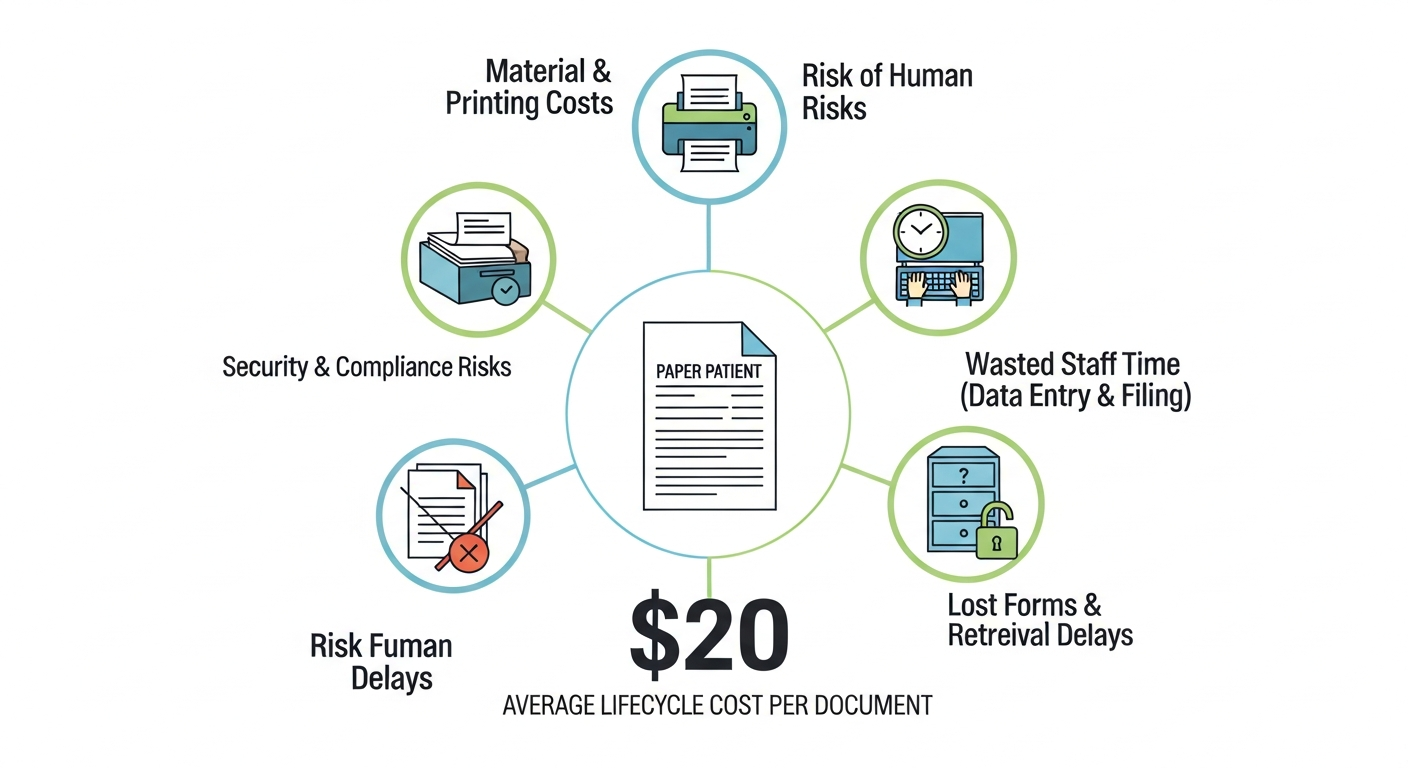 The true cost of a paper form extends far beyond the paper itself, encompassing staff time, potential errors, and security vulnerabilities.
The reliance on paper forms, while seemingly straightforward, carries substantial hidden costs and inherent inefficiencies. Beyond the recurring expenses of paper, ink, printers, and physical storage solutions, paper systems are prone to errors, delays, and security risks. Manual data entry from paper forms into practice management software, like Open Dental, is time-consuming and introduces the possibility of typos and inaccuracies. Lost or misplaced forms can lead to incomplete patient histories, compromised treatment plans, and frustrating administrative bottlenecks. Furthermore, the environmental impact of excessive paper consumption is a growing concern for many practices and their patient base. The tangible costs are significant; in fact, healthcare organizations spend an average of $20 per paper document when accounting for printing, storage, distribution, and retrieval costs National Institutes of Health database via DoctorConnect.net, 2025.
Embracing the Digital Shift: What This Guide Will Cover
This guide is designed to equip dental practices with the knowledge and strategies necessary to successfully transition to paperless forms. We will explore the compelling reasons why this shift is not merely beneficial but strategically imperative in today's healthcare environment. You will learn about the core pillars of paperless transformation, focusing on enhanced workflow efficiency, elevated patient experiences, and uncompromised data security. We will also detail the essential types of forms that can be digitized, the critical features to look for in a paperless forms solution, and provide a practical, step-by-step approach to implementation.
The Strategic Imperative: Why Go Paperless NOW?
The decision to transition to paperless forms is more than an operational upgrade; it's a strategic imperative for dental practices aiming to thrive in the current and future healthcare landscape. The advantages extend far beyond mere convenience, impacting patient relationships, practice growth, and regulatory standing.
Beyond Efficiency: Meeting Evolving Patient Expectations (patient experience, practice experience)
Modern patients arrive at dental appointments with expectations shaped by their digital lives. They anticipate user-friendly online forms, mobile-friendly interfaces, and a streamlined check-in process. Moreover, a significant number of patients would rather use digital forms to schedule dental care than call a practice. By offering digital dental forms, practices can significantly enhance the patient experience, reducing wait times, minimizing administrative friction, and projecting a modern, efficient image. This improved patient experience fosters greater satisfaction, encourages patient loyalty, and can be a key differentiator in a competitive market.
Gaining a Competitive Edge in a Digital World (practice success)
In an increasingly competitive market, practices that leverage technology to improve operations and patient engagement gain a distinct advantage. Adopting paperless forms positions your practice as forward-thinking and technologically adept. This not only appeals to a broader patient demographic but also signals operational efficiency to referring dentists and potential new patients. Streamlined processes allow your team to focus more on clinical care and patient relationships, contributing directly to practice success and a stronger reputation.
Navigating Regulatory Landscapes with Confidence (HIPAA, State dental practice act, Health Insurance Portability and Accountability Act of 1996)
Compliance with regulations such as HIPAA is paramount. Paper records are inherently vulnerable; misplacing a file or an unsecured cabinet can lead to significant legal and financial repercussions. Digital solutions, when properly implemented and chosen for their HIPAA compliance, offer robust security features, encryption, and audit trails. This significantly reduces the risk of breaches and ensures that your practice consistently meets the requirements of HIPAA and state dental practice acts. The average cost of a healthcare data breach reached nearly $11 million in 2023 IBM Security via Blog, 2024, underscoring the critical importance of secure digital practices.
The Untapped Potential for Growth and Scalability
Paperless forms are foundational to a practice's ability to scale and grow. Digital data is more easily analyzed, providing insights into patient demographics, treatment trends, and operational bottlenecks. This data-driven approach enables more informed decision-making, resource allocation, and strategic planning. As your practice expands, digital systems can effortlessly accommodate increased patient volume without a proportional increase in administrative staff or physical resources, ensuring scalability and long-term viability.
Core Pillars of Paperless Transformation: Benefits Redefined
The transition to paperless forms is a catalyst for comprehensive operational improvements within a dental practice. It impacts fundamental aspects of day-to-day management, patient interaction, and data security, driving tangible benefits.
Unlocking Unprecedented Workflow Efficiency (workflow, paperless workflows, automation workflow, workflow efficiency)
One of the most immediate and significant benefits of adopting paperless forms is the dramatic improvement in workflow efficiency. By digitizing patient intake, consent, and history forms, practices can eliminate the time spent printing, managing, and filing paper documents. This creates streamlined, paperless workflows that reduce manual data entry errors and speed up the entire patient onboarding process. The introduction of automation workflow capabilities means that once a digital form is completed, the data can be instantly integrated into your practice management software, triggering subsequent tasks and approvals. This automation frees up valuable staff time, allowing them to focus on higher-value clinical and patient-facing activities, thereby increasing overall workflow efficiency.
Elevating the Patient Experience (patient experience, user-friendly online forms, mobile app, mobile-friendly)
The patient experience is at the heart of successful modern practices. Paperless forms, accessible via user-friendly online forms on tablets or through a mobile app, offer unparalleled convenience. Patients can complete their necessary documentation before even arriving at the practice, reducing waiting room time and anxiety. Ensuring forms are mobile-friendly caters to the vast majority of patients who manage their lives through smartphones. This digital-first approach not only meets evolving patient expectations but also signals a practice committed to modern, efficient, and patient-centric care.
Securing Your Practice's Future: Compliance and Data Integrity (HIPAA, HIPAA compliant)
In an era of increasing data sensitivity and regulatory scrutiny, maintaining HIPAA compliance is non-negotiable. Paperless forms, when sourced from a reputable vendor, are designed with robust security measures to ensure HIPAA compliant data handling. This includes encryption for data in transit and at rest, secure storage, and access controls. By moving away from paper, practices significantly mitigate the risks associated with physical document loss, unauthorized access, or damage. This ensures the integrity of patient data and provides peace of mind, safeguarding the practice against potential compliance violations and the severe consequences they entail.
Essential Paperless Forms for Every Dental Practice
Digitizing essential dental forms is the cornerstone of a paperless practice. By standardizing and modernizing these critical documents, practices can unlock significant gains in efficiency, accuracy, and patient satisfaction.
Critical Consent Forms (consent forms, HIPAA consent)
Consent forms are a vital part of patient care, ensuring informed decision-making and legal protection. This category includes general consent for treatment, specific procedure consents, and crucial HIPAA consent forms. Digital consent forms can incorporate e-signature capabilities, ensuring that consent is properly documented and easily retrievable. This streamlines the process for both patients and staff, eliminating the need for printing, signing, and scanning. Patients can review and sign these forms comfortably, ensuring they fully understand their implications.
Financial and Insurance Management (financial forms, insurance, insurance verification, insurance card, insurance management)
Managing financial aspects and insurance details is a significant administrative undertaking. Paperless solutions can digitize new patient intake forms, which often include detailed financial and insurance information. This allows for efficient capture of patient demographics, guarantor details, and insurance policy information. Advanced systems can even facilitate real-time insurance verification, allowing practices to confirm coverage and estimate patient responsibility before appointments, reducing billing errors and improving cash flow. The ability to securely capture or upload images of an insurance card further streamlines this process.
Specialized Forms for Modern Dentistry
Beyond the foundational forms, a paperless system can accommodate a wide array of specialized documents. This includes patient medical history forms, which can be dynamically updated and easily accessed by clinicians. Dental history questionnaires, patient satisfaction surveys, pre- and post-operative instructions, and even appointment reminder preferences can all be managed digitally. This comprehensive digital record-keeping not only improves organization but also provides a richer dataset for patient care and practice analysis.
Choosing the Right Paperless Forms Solution: A Strategic Decision
Selecting a paperless forms solution is a critical decision that impacts operational efficiency, patient experience, and practice management. A thoughtful evaluation process ensures the chosen system aligns with your practice's unique needs and integrates seamlessly into your existing technology ecosystem.
Seamless Integration with Your Practice Management System (practice management, practice management software, Practice Management System)
The most effective paperless forms solutions, such as Flex Dental Solutions, are those that integrate seamlessly with your existing practice management software (PMS), like Open Dental. This integration ensures that patient data captured through digital forms is automatically and accurately populated into your PMS, eliminating the need for duplicate data entry and reducing errors. Look for solutions that offer robust APIs or pre-built connectors for major practice management software platforms. This synergy is key to unlocking true workflow automation.
Robust Form Builder Capabilities (Form Builder, digital form builder, custom form building)
The ability to customize forms is essential. A powerful Form Builder allows your practice to create and modify dental forms specific to your services and protocols. This includes adding custom fields, logic-based branching (e.g., showing specific questions based on previous answers), branding your forms with your practice logo, and ensuring they are compliant with any specific state or federal requirements. A user-friendly digital form builder empowers your practice to adapt its forms as needs evolve.
Uncompromised HIPAA Compliance and Security Features
As discussed, HIPAA compliance is paramount. When evaluating solutions, prioritize those that explicitly state their HIPAA compliance and detail their security measures. This includes data encryption, secure storage, regular security audits, and access controls. Understanding the vendor's commitment to data security, including their policies on data breach notification and disaster recovery, is crucial for protecting your practice and your patients. A truly HIPAA compliant system is designed with patient privacy as a core principle.
User Experience for Both Patients and Staff (user-friendly online forms, patient experience, practice experience)
The success of a paperless system hinges on its usability for both patients and staff. Forms should be intuitive and easy for patients to complete, whether on a tablet in the waiting room or via a link sent to their phone. For staff, the system should simplify form management, data retrieval, and integration with the practice management workflow. A clunky interface for either group can lead to frustration, decreased adoption, and a negative impact on the overall patient experience and practice workflow.
Automation, Reporting, and Analytics (automation workflow, Practice by Numbers, Practice Management Infographics)
The true power of paperless forms extends beyond simple digitization. Advanced solutions offer automation workflow capabilities that can trigger follow-up tasks or reminders based on form submissions. Robust reporting and analytics features provide valuable insights into patient trends, form completion rates, and operational bottlenecks. This data, when analyzed (akin to "Practice by Numbers" or through "Practice Management Infographics"), can drive informed decisions, optimize resource allocation, and identify areas for further improvement, contributing to overall practice success.
The Transition Journey: Implementing Paperless Forms Successfully
Transitioning to a paperless system requires careful planning and execution to ensure a smooth adoption and maximum benefit for your practice.
Planning Your Rollout: Assessment and Strategy
Begin by assessing your current paper-based workflows and identifying which forms are the highest priority for digitization. Develop a clear strategy that outlines your goals, timeline, and the resources you will allocate. Consider your practice's specific needs, such as patient volume, existing technology infrastructure, and staff capacity. A phased approach can be highly effective, starting with the most impactful forms and gradually expanding.
Vendor Selection and Partnership
Choosing the right vendor is paramount. Evaluate potential solutions based on the criteria discussed earlier: integration capabilities, form builder functionality, HIPAA compliance, user experience, and reporting features. Look for vendors that offer dedicated support and a partnership approach, providing guidance and assistance throughout the implementation process and beyond. Request demos, speak with references, and ensure their solution aligns with your budget and long-term vision.
Data Migration and Integration Best Practices
If you have existing digital patient records, plan for a secure and efficient data migration strategy. Ensure the chosen solution can import or integrate with your current data sources without loss or corruption. Proper integration with your practice management software is key here; work closely with both your PMS provider and your paperless forms vendor to establish a seamless data flow.
Empowering Your Team: Comprehensive Staff Training and Adoption
Successful adoption relies heavily on your team's buy-in and proficiency. Conduct thorough training sessions for all staff members who will interact with the new system. Explain the benefits of paperless forms, demonstrate how to use the software, and provide clear protocols for managing digital documents. Address any concerns or resistance proactively and establish a support system for ongoing questions. Staff training is crucial, especially since 60% of dental practices identify administrative burden as their #1 operational challenge, with practice owners reporting that 73% of staff time goes to non-clinical tasks dentalaiassist.com, 2025.
Phased Implementation and Continuous Optimization
Implement the paperless forms system in phases, starting with a pilot group or a specific set of forms. Gather feedback from both staff and patients during this initial phase. Use this feedback to make necessary adjustments and optimize workflows before a full rollout. Continuous optimization is an ongoing process; regularly review your system's performance, explore new features, and adapt your processes to maximize efficiency and patient satisfaction.
Conclusion
The transition to paperless forms represents a fundamental shift in how modern dental practices operate, moving from cumbersome, error-prone paper processes to efficient, secure, and patient-centric digital workflows. By embracing this transformation, practices can significantly enhance operational efficiency, dramatically improve the patient experience, strengthen data security and ensure robust HIPAA compliance, and lay the groundwork for sustainable growth and scalability. The strategic imperative is clear: paperless forms are no longer a luxury but a necessity for practices aiming to remain competitive and deliver exceptional care in the digital age. Take the decisive step today to streamline your administrative tasks, empower your team, and elevate your practice to new heights of success.