Introduction: The Evolution of Dental Intake
The dental industry is in constant motion, driven by advancements in technology and evolving patient expectations. For decades, the patient intake process has been a familiar ritual: clipboards, pens, and stacks of paper. This system, while functional, is increasingly becoming a bottleneck, hindering efficiency, compromising data security, and diminishing the patient experience. As practices strive for greater operational agility and a more modern patient journey, the transition to paperless dental forms is no longer a luxury but a strategic imperative. This evolution from paper to pixels is reshaping how dental practices manage patient information, streamline workflows, and enhance overall service delivery.
Moving Beyond Clipboards: Why Paperless is Imperative for Modern Dental Practices
The traditional paper-based system for patient forms, while once standard, presents a cascade of inefficiencies. Manual data entry is time-consuming and prone to errors. The physical handling of forms—scanning, filing, shredding—occupies valuable staff time and prime office real estate. Furthermore, paper records are susceptible to damage, loss, and unauthorized access, posing significant challenges for privacy and compliance. In an era where digital convenience is expected, a practice still reliant on clipboards risks appearing outdated, potentially impacting patient perception and retention. Embracing paperless forms signifies a commitment to modernization, operational excellence, and a superior patient experience, aligning the dental practice with contemporary healthcare standards and patient preferences.
The Tangible Benefits: Why Your Practice Needs to Go Paperless Now
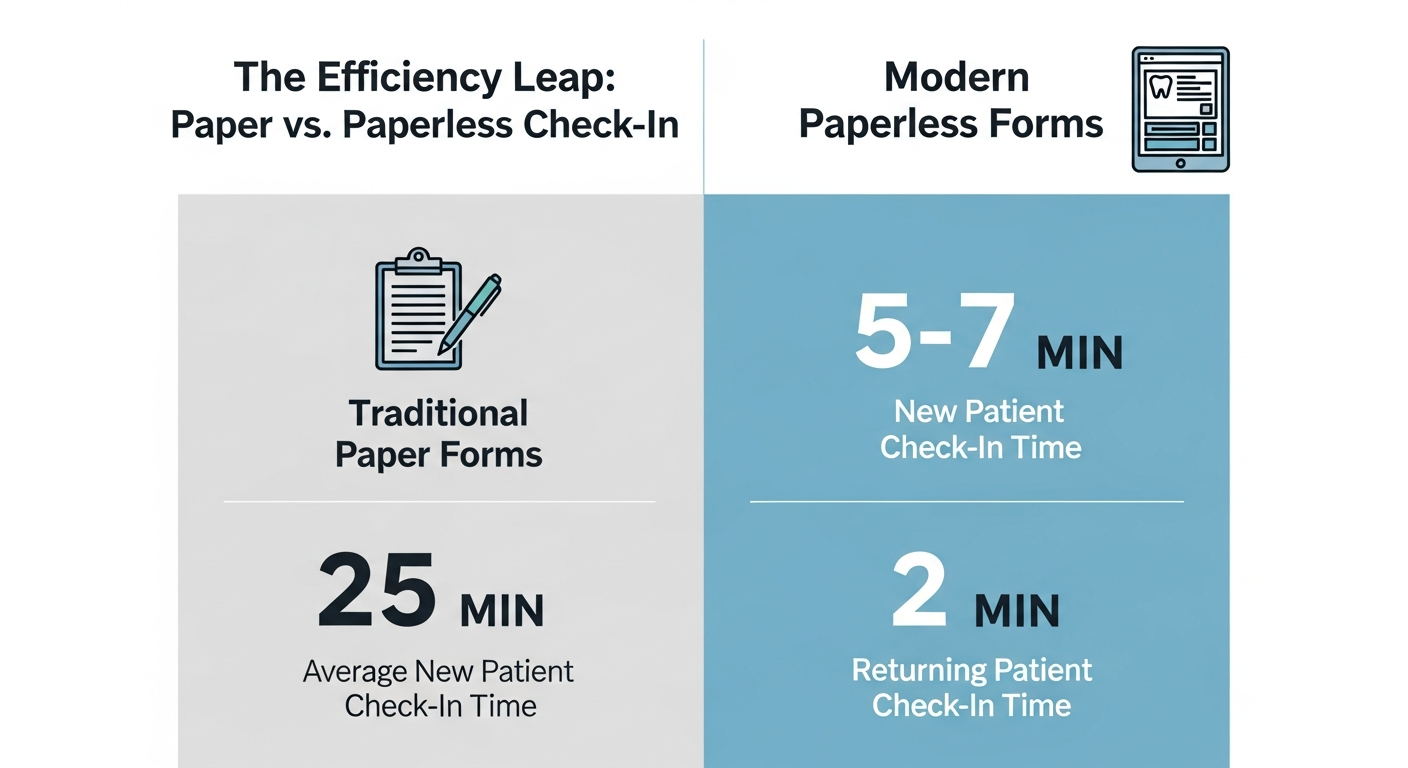 Paperless forms can reduce new patient check-in times by over 75%, transforming the front-desk workflow.
The adoption of paperless dental forms offers a transformative shift for any dental practice, yielding a multitude of advantages that positively impact every facet of operations and patient interaction. Flex Dental Solutions, a leader in patient engagement and certified third party integration with Open Dental, offers this for practices.
Boosted Operational Efficiency and Streamlined Workflow
The most immediate and significant benefit of implementing paperless forms is a dramatic increase in operational efficiency. The days of manual data entry are behind us, which is not only tedious but also a common source of transcription errors. Digital forms allow patient information to be captured directly into the system, eliminating the need for staff to re-key data from paper documents. This accelerates the check-in process considerably; for instance, digital check-in solutions can cut new-patient check-in times from an average of 25 minutes down to a mere 5–7 minutes, and for returning patients, it can be as quick as 2 minutes Dialog Health, 2026. This saved time can be reallocated to more patient-facing tasks or administrative duties that require human interaction. The entire workflow becomes smoother, from appointment scheduling and pre-visit form completion to in-office check-in and chart population. The elimination of tasks like scanning, printing, and shredding reduces administrative burden, freeing up front-desk staff to focus on patient care and other critical responsibilities, thereby optimizing the overall practice workflow.
Elevated Patient Experience and Engagement
Patient expectations have evolved, with a strong preference for convenience and digital interaction. Offering paperless forms significantly enhances the patient experience by providing flexibility and reducing friction. Patients can often complete intake forms and consent documents from the comfort of their homes prior to their appointment, via email or text link. This not only saves them time in the waiting room but also allows them to fill out forms without feeling rushed. A modern, tech-savvy approach to patient intake projects a professional image for the dental practice, contributing to greater patient satisfaction and engagement. This digital touchpoint can also be a platform for more personalized communication and follow-up, fostering stronger patient relationships.
Enhanced Security and HIPAA Compliance
Protecting sensitive patient information is paramount, and paperless forms offer a more secure and compliant way to manage this data. Digital platforms typically employ robust encryption and secure storage solutions, safeguarding patient information against unauthorized access, loss, or damage that can occur with physical paper records. This is crucial for maintaining strict adherence to HIPAA regulations. Digital systems offer better control over who can access patient data and provide audit trails, which are essential for compliance. The risk of data breaches associated with misfiled, lost, or stolen paper documents is significantly reduced. By leveraging secure software, dental practices can fortify their data protection measures, ensuring patient privacy and avoiding potential penalties associated with compliance failures.
Significant Cost Savings and Positive Environmental Impact
The financial and environmental benefits of transitioning to paperless forms are substantial. The ongoing costs associated with paper, ink, printing, postage, and physical storage can accumulate significantly over time. Eliminating these expenses leads to direct cost savings for the practice. Moreover, the environmental impact is considerable. A study by Semmelweis University highlighted that paper and wet wipes alone constituted 22% of hazardous waste from a dental faculty, contributing to dentistry's environmental footprint [Semmelweis University, 2025]. By going paperless, practices reduce their consumption of resources and minimize waste, contributing to a more sustainable operational model. The broader healthcare industry recognizes this potential, with the CAQH Index identifying a $20 billion savings opportunity if the healthcare industry transitions from manual to electronic workflows [CAQH, 2025]. The global digital dentistry market itself is projected for significant growth, driven by the increasing ROI from digital software and equipment SkyQuest Technology Consulting, 2024, underscoring the economic viability of this transition.
Improved Data Accuracy and Accessibility
Paperless systems significantly enhance the accuracy and accessibility of patient information. Manual data entry is a common source of transcription errors, which can lead to misdiagnoses, incorrect treatment plans, or billing issues. Digital forms, when integrated with practice management software (PMS), such as Open Dental, minimize these errors by capturing information directly. Furthermore, digital patient information is instantly searchable and accessible. Staff can quickly retrieve patient histories, consent forms, or contact details without sifting through filing cabinets. This centralized and organized approach to patient data not only improves efficiency but also ensures that clinicians have the most accurate and up-to-date information at their fingertips, leading to better-informed clinical decisions and a more cohesive patient care experience.
Essential Forms to Digitize for Maximum Impact
To fully leverage the benefits of a paperless system, focusing on key forms can yield the most significant improvements in efficiency, data quality, and patient experience.
New Patient Registration & Intake Forms
These are typically the first set of documents a new patient encounters. Digitizing them streamlines the onboarding process, collecting essential patient information, demographics, emergency contacts, and insurance details efficiently.
Medical History & Health History Forms
Crucial for patient safety, these forms capture vital health information, allergies, medications, and past medical conditions. Digital versions ensure this information is easily accessible to the dental team for informed treatment planning and are consistently updated.
Consent Forms & Financial Documents
Digitizing consent forms (e.g., for treatment, photography, privacy policies) and financial agreements ensures clear communication and a secure, verifiable record of patient agreement. E-signature capabilities make this process quick and compliant.
Insurance & Policy Forms
Collecting and verifying insurance information digitally expedites the billing and claims process. Patients can often upload insurance cards or enter details directly, reducing administrative work for the practice and potential errors in claim submissions.
Choosing the Right Paperless Forms Solution: Key Features & Considerations
Selecting the appropriate paperless forms platform is critical for successful implementation. Consider the following features to ensure the chosen software enhances your practice's workflow and meets its specific needs.
Seamless Integration with Practice Management Software (PMS)
The most effective paperless forms solutions integrate seamlessly with your existing Practice Management Software (PMS), such as Open Dental. This integration allows for automatic data transfer, eliminating duplicate entry and ensuring that patient information is updated across all platforms. The global dental practice management software market is substantial, with North America holding a significant share, partly driven by the increasing emphasis on paperless practices IMARC Group, 2024, highlighting the importance of this interoperability.
Robust Security and HIPAA Compliance Features
Ensure the platform offers robust security measures, including encryption, secure data storage, and audit trails, to maintain HIPAA compliance. This protects sensitive patient information and ensures the practice meets regulatory requirements.
Customization and Digital Form Builder Capabilities
A flexible digital form builder allows you to easily customize existing forms or create new ones to match your practice's specific needs and branding. This ensures you capture all necessary information without being limited by pre-set templates.
E-Signature & Digital Signature Functionality
The ability for patients to electronically sign forms directly on a tablet or computer streamlines the consent and agreement process, eliminating the need for printing and wet signatures.
Multiple Patient Completion Options
An ideal solution provides flexibility for patients to complete forms either in the office on a tablet or remotely via email or text message links before their appointment.
Efficient Communication & Workflow Automation
Look for features that automate communication, such as sending forms via email or text, appointment reminders, and follow-up messages. This further optimizes the workflow and enhances patient engagement.
Your Blueprint for a Successful Paperless Implementation
Transitioning to paperless forms is a process that requires careful planning and execution. Following a structured approach can ensure a smooth and effective implementation for your dental practice.
Phase 1: Assessment and Planning
Begin by thoroughly assessing your current paper-based workflow and identifying specific pain points and areas for improvement. Define clear goals for your paperless initiative, such as reducing administrative time, improving patient experience, or enhancing data accuracy. Evaluate your existing technology infrastructure and identify any potential integration needs with your PMS.
Phase 2: Solution Selection and Setup
Based on your assessment, research and select a paperless forms software that best fits your practice's needs and budget. Prioritize solutions that offer seamless integration with your PMS, robust security features, and the customization capabilities you require. Work with the vendor to set up the platform, configure forms, and ensure all necessary security protocols are in place.
Phase 3: Rollout and Staff Training
Implement a phased rollout strategy, perhaps starting with a single department or a small group of patients. Comprehensive staff training is crucial to ensure everyone understands how to use the new system, troubleshoot common issues, and guide patients. Educate your team on the benefits and how it will improve their daily tasks.
Phase 4: Patient Adoption and Ongoing Optimization
Encourage patient adoption by clearly communicating the benefits of using digital forms and providing easy-to-follow instructions. Gather feedback from both staff and patients to identify any areas for improvement. Continuously optimize your digital forms and workflows based on this feedback and evolving practice needs.
Overcoming Implementation Hurdles: Strategies for a Smooth Transition
While the benefits are clear, implementing a new system can present challenges. Proactive strategies can help overcome common hurdles and ensure a successful transition.
Addressing Staff Resistance to Change
Staff members may be hesitant to adopt new technology due to unfamiliarity or concern about increased workload during the learning phase. Provide thorough training, emphasize how the new system will simplify their tasks and reduce tedious work, and involve them in the decision-making process. Highlight the long-term benefits for their roles and the practice.
Ensuring Patient Comfort and Compliance
Some patients may prefer paper or be less tech-savvy. Offer clear, easy-to-understand instructions and provide assistance for those who need it. Ensure your system has options for in-office completion on tablets or assistance from front-desk staff to accommodate all patient preferences and ensure full compliance with form completion.
Maintaining Data Integrity and Security
Regularly review and update security protocols. Ensure that staff are trained on data handling best practices and HIPAA compliance. Implement regular backups and audit logs to maintain data integrity and provide a clear record of all data access and changes.
Conclusion: Embrace Efficiency, Empower Your Practice
The shift to paperless dental forms represents a significant leap forward for any dental practice seeking to enhance efficiency, elevate the patient experience, and fortify data security. By moving beyond outdated paper-based systems, practices can unlock substantial operational improvements, reduce costs, and contribute to environmental sustainability. The tangible benefits—from streamlined workflows and reduced administrative burden to improved patient satisfaction and robust HIPAA compliance—make this transition a strategic investment in the future. Implementing a well-chosen paperless solution, guided by a phased approach and comprehensive staff training, is key to realizing these advantages. Embrace this digital evolution, empower your team, and deliver a superior experience for your patients, positioning your practice at the forefront of modern dental care.