Introduction: The Data Imperative for Modern Dental Practices
Dental practices can no longer rely solely on intuition to guide their operations and growth strategies. The modern dental practice thrives on a foundation of data, transforming raw information into the actionable insights that fuel success. For practices looking to move beyond guesswork and embrace a future of predictable growth and enhanced profitability, understanding and implementing a robust analytics dashboard is no longer optional—it's essential. This guide will equip you with the knowledge to leverage the power of your dental data, turning your practice into a data-driven powerhouse.
The Shift from Intuition to Data-Driven Dentistry
For decades, the art of dentistry often coexisted with a more intuitive approach to practice management. Decisions regarding patient care, scheduling, marketing, and financial strategies were frequently based on experience and instinct. While valuable, this approach can limit a practice's potential, often leading to missed opportunities, inefficiencies, and a slower pace of growth. The digital age has ushered in an era where comprehensive data analytics provides a clearer, more precise map for navigation. Embracing this shift means moving from "what do I feel is happening?" to "what does the data tell me is happening?" This fundamental change allows for objective analysis, targeted improvements, and ultimately, more strategic decision-making for your dental practice.
Why Your Dental Practice Can't Afford to Ignore Analytics
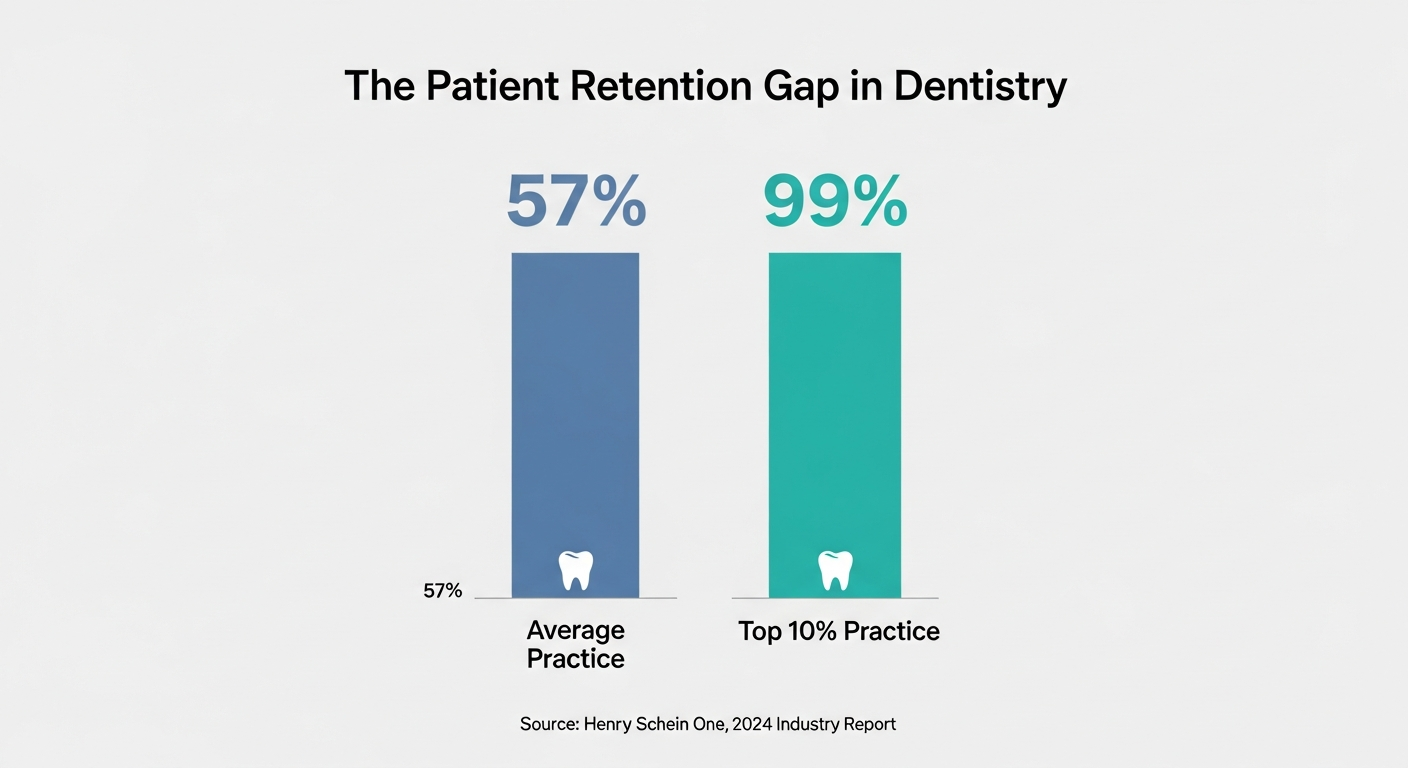 Data reveals a significant gap in patient retention between average and top-performing dental practices, a key area for data-driven improvement.
Ignoring the insights buried within your practice data is akin to flying blind. Without understanding key metrics, you risk making decisions that inadvertently hinder growth, reduce profitability, or compromise patient care. This significant disparity underscores the power of effective management, much of which can be illuminated by analytics. Furthermore, with the global dental market projected to reach $95.37 billion by 2032 Source: FollowApp.Care, 2024, the competitive pressure to optimize operations and patient acquisition is immense. Analytics provides the tools to not only keep pace but to lead.
What You'll Discover in This Essential Guide to Growth
This guide is designed to be your comprehensive roadmap to unlocking dental practice growth through data. We will demystify the dental analytics dashboard, exploring its core components and how it serves as your practice's compass. You’ll learn about the critical key performance indicators (KPIs) that matter most for driving growth across patient acquisition, production, profitability, and operational efficiency. Crucially, we'll delve into the art of translating these data points into actionable insights and strategic plans that boost your revenue and profitability. We’ll also provide guidance on building an effective dashboard and cultivating a data-driven culture within your team, ensuring that these powerful tools are not just present but actively utilized.
Demystifying the Dental Analytics Dashboard: Your Practice's Compass
The concept of a dental analytics dashboard might sound technical, but its purpose is elegantly simple: to provide a clear, consolidated view of your practice's performance. Think of it as the cockpit of an airplane – a central hub where all critical instruments provide the pilot with the information needed to navigate safely and efficiently towards their destination. For your dental practice, that destination is sustained growth and optimal profitability.
What Exactly is a Dental Analytics Dashboard?
At its core, a dental analytics dashboard is a visual interface that aggregates and displays key data from various sources within your practice management system (PMS), such as Open Dental, and other operational tools. It moves beyond static spreadsheets or isolated reports to offer a dynamic, real-time overview of your practice's health. Instead of hunting for information across different platforms, a dashboard consolidates vital metrics into easily digestible charts, graphs, and numerical summaries. This centralized view allows you to monitor production, patient flow, financial performance, and more, all in one place, enabling quicker identification of trends and potential issues.
Beyond Basic Reporting: Real-Time Business Intelligence for Dental Practices
A true Analytics Dashboard, like the one available through Flex Dental Solutions, offers more than just historical reporting; it provides real-time business intelligence. While basic reporting shows you what happened last week or last month, a sophisticated dashboard offers current insights. This means you can identify a dip in appointments or a rise in no-shows as they occur, not days or weeks later when it's harder to course-correct. This immediate visibility is crucial for agile practice management. It transforms your practice management system, such as Open Dental, from a record-keeping tool into a strategic asset, empowering you with the information needed to make proactive, data-driven decisions that impact revenue and patient outcomes.
The Core Benefits: Visibility, Actionable Insights, and Sustained Growth
The primary benefits of implementing a dental dashboard are multifaceted. Firstly, it provides unparalleled visibility into every facet of your practice. You can see at a glance where your production stands, how effectively your appointments are being filled, and where your revenue is coming from. Secondly, this visibility leads directly to actionable insights. Instead of being overwhelmed by raw data, the dashboard presents it in a way that highlights what needs attention. For example, a spike in missed appointments might prompt a review of your scheduling confirmation process. Finally, this combination of visibility and actionable insights is the engine for sustained growth. By continuously monitoring performance and making informed adjustments, your dental practice can achieve consistent improvements in patient acquisition, retention, and financial health.
Your Practice's North Star: Essential KPIs for Unlocking Growth
Identifying and meticulously tracking the right Key Performance Indicators (KPIs) is fundamental to leveraging your analytics dashboard. These metrics act as your practice's North Star, guiding your decisions and illuminating the path toward desired outcomes. They translate the broad landscape of your practice’s operations into specific, measurable objectives that drive growth and profitability.
Patient Acquisition & Retention KPIs
Attracting new patients and ensuring existing ones return is the lifeblood of any dental practice. Key metrics here include:
- New Patient Numbers: Tracks the effectiveness of your marketing efforts and referral strategies.
- Referral Sources: Identifies which channels (e.g., online reviews, existing patients, physician referrals) are most successful.
- Patient Retention Rate: As noted, this is critical. A low rate suggests issues with patient experience, recall systems, or clinical satisfaction.
- Recall Appointment Rate: Measures how effectively patients are brought back for their recommended check-ups and cleanings, directly impacting consistent production.
Production & Profitability KPIs
These metrics directly reflect the financial health and efficiency of your dental practice.
- Total Production: The total value of services performed, regardless of collections.
- Total Collections: The actual amount of money received from patients and insurance.
- Production per Provider/Hygiene Hour: Helps assess the output of individual team members and optimize scheduling.
- Average Production per Visit: Indicates the value of services delivered during each patient encounter.
- Collection Rate: The percentage of production that is successfully collected, a direct measure of financial efficiency. Businesses using big data have seen profits increase by 8–10% and costs reduce by 10% Source: Jarvis Analytics, 2021, demonstrating the financial impact of data-driven approaches.
- Profitability by Procedure/Service: Identifies which treatments are most lucrative and where opportunities for upselling or focused marketing might exist.
Operational Efficiency & Clinical Workflow KPIs
Streamlining operations ensures your practice runs smoothly, enhances the patient experience, and maximizes production time.
- Appointment Utilization Rate: Measures how much of your available chair time is actually being used for billable services.
- Chair Time Efficiency: Similar to utilization, this focuses on how productively chairs are used during occupied appointments.
- Treatment Plan Acceptance Rate: Crucial for understanding patient trust and the effectiveness of your case presentation. Low rates can indicate barriers that data analytics can help uncover.
- Provider Performance Metrics: Beyond just production, this can include metrics related to appointment duration, patient satisfaction (if tracked), and adherence to clinical protocols.
- Staffing Efficiency: In light of significant challenges in recruiting hygienists (72% finding it extremely challenging) and dental assistants (77% finding it extremely or very challenging) Source: Top Trends Shaping Dental Healthcare, 2025, optimizing the productivity and scheduling of existing staff is paramount. Analytics can help identify workflow bottlenecks and opportunities for better resource allocation.
Marketing Effectiveness KPIs: Connecting Spend to Growth
Understanding the return on your marketing investment is crucial for growth.
- Cost Per New Patient: Calculates how much you spend to acquire each new patient, allowing for optimization of marketing channels.
- Marketing Channel ROI: Measures the revenue generated from specific marketing campaigns (e.g., digital ads, direct mail) versus their cost.
- Website Traffic & Conversion Rates: Tracks how many potential patients visit your website and how many take a desired action (e.g., request an appointment, call). While clicks are a starting point, conversion is the goal.
- Online Review Metrics: Monitor average ratings and the volume of reviews across platforms to gauge patient perception and attract new patients.
From Data to Dollars: Translating Insights into Actionable Strategies
The true power of an Analytics Dashboard lies not just in presenting data, but in transforming that data into actionable insights that drive tangible improvements in practice management, revenue, and profitability. This is where the data-driven philosophy moves from concept to concrete results.
Daily Practice Optimization with Your Dashboard
On a daily basis, your dental dashboard can inform immediate operational adjustments. For instance, by monitoring your appointments schedule in real-time, you can identify last-minute cancellations or no-shows. This insight allows your front desk team to proactively fill those slots with patients from a waiting list or schedule urgent follow-ups, maximizing production and minimizing lost revenue. Similarly, observing provider schedules can highlight opportunities to shift non-clinical tasks or offer same-day treatment plans to patients who are present, boosting both efficiency and overall practice output.
Strategic Growth Planning with Analytics
Beyond daily adjustments, your dashboard is invaluable for long-term strategic planning. By analyzing trends in patient acquisition and retention KPIs over months or quarters, you can identify what marketing strategies are truly working and which are underperforming. If your new patient data shows a strong influx from online referrals, it’s a clear signal to invest more resources there. Conversely, if your treatment plan acceptance rates are consistently low for specific procedures, you can investigate the barriers—perhaps through patient surveys or by reviewing your case presentation techniques. This data-driven approach ensures that your growth strategies are informed by evidence, not guesswork.
Financial Health and Cost Reduction Through Analytics
Profitability is a key objective for any business, and the dental practice is no exception. Your analytics dashboard can provide deep insights into your financial health. By tracking overhead expenses against revenue and production, you can pinpoint areas where costs might be escalating unnecessarily. For example, detailed analysis of supply usage or equipment maintenance schedules can reveal opportunities for bulk purchasing discounts or preventative maintenance that avoids costly repairs. With average overhead expenses in the U.S. private dental sector typically ranging from 60–70% of revenue Source: Dental Implant Clinic Performance Metrics in the United States, 2025, even small percentage reductions in cost can significantly boost your bottom line and overall profitability.
Real-World Scenarios: How Data Drives Specific Practice Growth (Illustrative Examples)
Consider a dental practice noticing a decline in its treatment plan acceptance rate from its dashboard. Through Data Analytics, they investigate further and discover that patients who receive preliminary diagnostic X-rays are more likely to accept recommended treatments. This actionable insight leads to a simple change: ensuring all diagnostic X-rays are taken and reviewed with the patient prior to discussing treatment options. Consequently, the treatment plan acceptance rate increases, directly boosting production and revenue.
Another scenario involves a practice that notices a high number of appointments booked but a concerningly low collection rate. By analyzing the data, they identify that a significant portion of outstanding balances belongs to patients with specific insurance plans known for slow reimbursements. This leads to a strategic adjustment: implementing a more robust pre-authorization process for patients with these plans and offering more flexible payment options for upfront co-pays. This proactive approach improves cash flow and enhances overall profitability.
In a third instance, a practice leverages its dashboard to examine patient recall patterns. They identify that patients who miss their six-month check-ups are far less likely to return for restorative work. This insight prompts a targeted re-engagement campaign for patients who are overdue for their recall appointments, focusing on the importance of preventive care. This initiative not only improves patient health but also stimulates production by bringing previously disengaged patients back into the practice's active schedule.
Building Your Ideal Analytics Dashboard: Key Features and Considerations
Selecting and implementing an effective Analytics Dashboard is a critical step in your journey towards a data-driven practice. The right platform should be more than just a collection of charts; it should be a powerful, intuitive tool tailored to the unique needs of your dental practice.
Core Functionalities of a Powerful Analytics Platform
A robust dental analytics platform should offer several core functionalities. Real-time data integration is paramount, allowing you to monitor your practice’s pulse as it beats. Customizable reporting is essential, enabling you to tailor views to specific KPIs and objectives relevant to your practice's growth. The ability to create actionable insights by highlighting trends, anomalies, and areas for improvement is a key differentiator. Furthermore, the platform should offer clear visualizations that make complex data accessible to everyone on your team, from front desk staff to dentists.
Essential Modules and Data Sources
Your Analytics Dashboard should seamlessly integrate with your primary Practice Management System (PMS), as this is the repository for most of your crucial data. Beyond the PMS, consider modules that connect to your financial software for a holistic view of revenue and expenses, and to your marketing platforms to track the effectiveness of your clicks and campaigns. Data points like patient demographics, appointment history, treatment plans, insurance information, and financial transactions are foundational. The ability to pull in external data, such as local demographic trends or competitor benchmarks (where available), can provide even deeper context for your practice’s performance and growth potential.
User-Friendliness, Support, and Automation
Even the most powerful analytics tool is ineffective if it's too complex to use. Prioritize platforms that offer an intuitive user interface, making it easy for your team to navigate and understand the displayed data. Reliable customer support is crucial, especially during the initial setup and ongoing use. Look for solutions that provide training and ongoing assistance. Finally, automation features can significantly reduce the manual effort involved in generating reports and extracting actionable insights. Automated alerts for critical KPIs or scheduled report delivery can ensure that no important trends are missed, reinforcing a data-driven approach across your dental practice.
Cultivating a Data-Driven Culture in Your Practice
Implementing an Analytics Dashboard is only half the battle; the true transformation occurs when your team actively embraces a data-driven mindset. This involves fostering a culture where data is seen not as a burden, but as a tool for empowerment, improvement, and ultimately, enhanced patient care and practice growth.
Getting Team Buy-In: Empowering Staff with Practice Analytics
To achieve genuine buy-in, it’s essential to demonstrate the value of analytics to every member of your team. For front desk staff, the dashboard can reveal appointments scheduling inefficiencies or highlight patient retention opportunities. For hygienists and dentists, it can showcase production metrics, treatment plan acceptance rates, and patient flow, allowing them to understand their impact on the practice's overall success. When team members see how data can simplify their roles, identify areas where they can excel, and contribute directly to the dental practice's growth, their willingness to engage increases dramatically. Leaders should actively share relevant KPIs and explain how they relate to individual and team responsibilities, making the data transparent and accessible.
Overcoming Resistance to Change and Fostering Adoption
Change can be met with apprehension. Some team members may feel overwhelmed by new technology or fear that data will be used punitively. Addressing these concerns proactively is key. Clearly communicate that the goal of analytics is improvement and empowerment, not surveillance. Provide comprehensive training tailored to different roles. Celebrate small wins and publicly acknowledge improvements driven by data-driven decisions. For instance, if a new scheduling protocol based on dashboard insights leads to a reduction in patient wait times, highlight this success. Consistent reinforcement of the benefits and ongoing support will help overcome initial resistance and foster a habit of using the dashboard for daily decision-making.
The Role of Leadership in Driving a Data-First Mindset
Leadership plays a pivotal role in shaping a data-driven culture. Practice owners and managers must be the foremost proponents of using data for decision-making. This means consistently referring to the analytics dashboard in meetings, using KPIs to set goals, and making strategic choices based on actionable insights rather than just gut feelings. When leaders demonstrate a commitment to using data, it signals its importance to the entire team. This consistent example encourages staff to integrate data analysis into their own workflows, transforming the practice's operational DNA towards a more informed and strategic approach.
Leveraging Practice Analytics for Continuous Improvement and Performance Benchmarks
An Analytics Dashboard is not a one-time implementation; it's a tool for continuous improvement. Regularly reviewing your KPIs allows you to set new benchmarks and track progress over time. For example, after implementing a strategy to improve treatment plan acceptance, you can use your dashboard to monitor the impact and make further refinements. Comparing your practice performance against industry averages or internal historical data can highlight areas where you are excelling and where there's room for further development. This ongoing cycle of measurement, analysis, and adjustment ensures your dental practice remains agile, competitive, and on a trajectory for sustained growth and enhanced profitability.
Conclusion: Your Future-Proof Practice Starts Now
The journey to unlocking sustainable growth and exceptional profitability in your dental practice is powered by data. The dental analytics dashboard is not merely a reporting tool; it is your strategic compass, providing the clarity and direction needed to navigate the complexities of modern dental practice management. By understanding and actively utilizing your dashboard, you gain the power to move beyond intuition, making informed, data-driven decisions that optimize every aspect of your operation—from patient acquisition and retention to production, financial health, and operational efficiency.
Recap: The Transformative Power of a Dental Analytics Dashboard
We’ve explored how the shift from intuitive management to data-driven dentistry is essential for thriving in today’s market. Your Analytics Dashboard provides the critical visibility and actionable insights needed to identify and capitalize on opportunities, streamline workflows, and enhance patient care. By focusing on key performance indicators across patient acquisition, production, profitability, and operational efficiency, you can gain a comprehensive understanding of your practice’s health. The ability to translate this data into concrete strategies—whether for daily optimization, strategic planning, or cost reduction—is where true transformation occurs. Building an effective dashboard, fostering a data-driven culture, and committing to continuous improvement are the cornerstones of a resilient and growing dental practice. Embracing these principles empowers your practice with the agility and foresight necessary to adapt to industry changes, overcome challenges like staffing shortages and clinical burnout Source: Surviving or Thrving? What Dentistry Is Finally Doing About Clinical Burnout, 2026, and capitalize on the expanding global dental market Source: FollowApp.Care, 2024. The future of dentistry is data-driven, and your future-proof practice begins with harnessing the power of your analytics today.