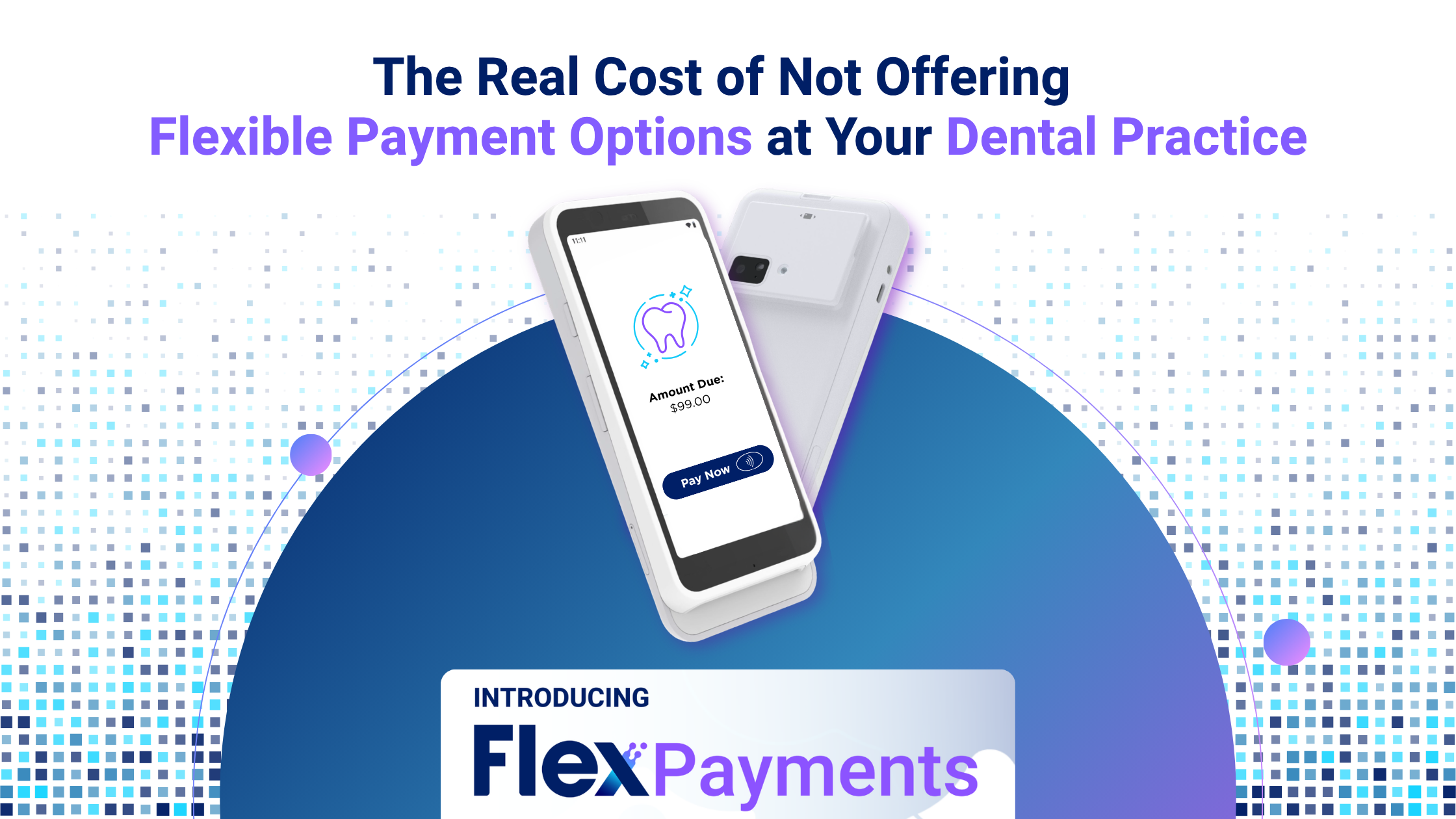
The Real Cost of Not Offering Flexible Payment Options at Your Dental Practice
Every time a patient says "let me think about it," there's a dollar amount attached to that pause.
It doesn't show up on a report. It doesn't get flagged in your end-of-month numbers. But it's there — in the treatment that doesn't get scheduled, the chair that sits empty on a Tuesday afternoon, and the production that your practice presented but never collected.
Most practices don't calculate this number. When they do, it's usually surprising.
What Unscheduled Treatment Actually Costs: The Math Most Practices Don't Run
Let's use a conservative example. Say your practice presents $60,000 in treatment each month and converts 38% of it — which is close to the national average for dental practices.
That means $37,200 in treatment is walking out the door every month. Some of it is patients who genuinely need more time. But a significant portion — studies suggest 30 to 40% — are patients who would have scheduled if cost hadn't been the barrier.
At 35% of that $37,200: that's roughly $13,000 in production per month that cost friction is costing your practice.
|
$13,000+ Estimated monthly production lost to cost-related treatment declination in an average $60K/month presenting practice |
Over a year, that's more than $156,000 in treatment your practice recommended, your patients needed, and nobody received — not because the care wasn't right, but because the payment conversation went nowhere.
That's not a staff problem. That's not a communication problem. That's a system problem.
The Payment Friction Problem: Why Outdated Collection Workflows Lose Revenue
Most dental practices are running payment workflows that haven't fundamentally changed in decades. Accept insurance. Collect at checkout. Follow up on balances. Repeat.
And while that workflow technically functions, it has a structural gap at exactly the wrong moment: when a patient is looking at a treatment cost they can't immediately absorb.
The traditional answer has been CareCredit or in-house payment plans. Both have their place. But CareCredit requires patients to already have the card — or to apply during a time when they're stressed, unfamiliar with the process, and looking for any reason to defer. In-house payment plans create collections risk and administrative overhead.
Neither option meets patients where they are in 2026 — accustomed to Buy Now, Pay Later from Affirm, Klarna, Afterpay, and dozens of other consumer platforms they use daily.
|
Patients who would never fill out a paper financing application will complete a 60-second Klarna eligibility check without hesitation. |
That's not a generational preference. That's a behavioral reality that modern practices are already capitalizing on — and traditional practices are leaving on the table.
What Buy Now, Pay Later Does to the Revenue Loop
Buy Now, Pay Later doesn't just make collections easier. It changes the moment patients make decisions.
The traditional dental revenue loop looks like this: treatment is presented → patient says they need to think about it → practice follows up → patient may not call back → treatment often doesn’t get scheduled.
With Buy Now, Pay Later integrated into the point-of-care payment experience, the loop tightens: treatment is presented → patient sees a manageable monthly option at checkout → patient books before leaving → practice collects → case closed.
The difference isn't the treatment. It isn't the clinical conversation. It's whether the patient sees a path from "I need this" to "I can afford this" before they walk out the door.
Flex Dental Solutions integrates Affirm and Klarna directly into FlexPayments — which means that path appears automatically, inside the checkout flow your team is already using, without any new system or manual step.
ROI Breakdown: What the Numbers Actually Look Like
The math on Buy Now, Pay Later adoption isn't complicated. Here's how it typically plays out for a practice that adds FlexPayments with Buy Now, Pay Later to their Open Dental workflow:
On a practice presenting $60,000 in treatment per month, a 15% lift in case acceptance means roughly $9,000 in additional production per month. That's production that existed in your charts already — you just didn't have the infrastructure to convert it.
Add in faster collections (because patients pay digitally at checkout rather than leaving with a balance), less A/R follow-up for your billing team, and fewer manual payment conversations at the front desk — and the operational impact compounds quickly.
The question practices should be asking isn't "can we afford to offer Buy Now, Pay Later?" It's "how much is it costing us not to?"
How Flex Makes It Simple
Flex Dental Solutions is built exclusively for Open Dental practices. FlexPayments — including Buy Now, Pay Later through Affirm and Klarna — integrates directly into your Open Dental workflow. There's no separate merchant account to manage, no training curve for your team, and no disconnected patient experience.
Patients see Affirm and Klarna options at checkout alongside the payment methods they already know. They complete their own eligibility check. The practice gets paid. Everything writes back to Open Dental automatically.
For practices already on FlexPayments, BNPL is part of your plan — no upgrade required. For practices considering Flex, it's one more reason the platform is built to close the gap between treatment presented and revenue collected.
The cost of doing nothing is documented every month in your unscheduled treatment reports. The fix is already built.
|
Stop leaving production in your treatment queue. See how FlexPayments with BNPL pays for itself. Book a demo → Talk to a Flexpert! |
.png)
.png)