Introduction: The Imperative of Efficiency in Modern Dentistry
In today's rapidly evolving healthcare landscape, the demands on dental practices are greater than ever. Patients expect seamless experiences, cutting-edge care, and transparent communication, while practice owners and staff navigate a complex web of administrative tasks, financial pressures, and the constant pursuit of clinical excellence. Amidst these challenges, efficiency in a dental office isn't merely a desirable operational metric; it's a fundamental imperative for survival and growth. Modern dentistry thrives on streamlined processes that optimize every aspect of the practice, from the initial patient interaction to the final billing cycle. This article will delve into proven strategies designed to boost dental office efficiency, transforming operations from reactive to proactive, and from chaotic to coordinated. We will explore how to harness technology, refine workflows, empower your team, and master financial management to create a high-performing, patient-centric dental practice that stands resilient in the face of contemporary demands.
Defining Dental Office Efficiency: Beyond Just Speed
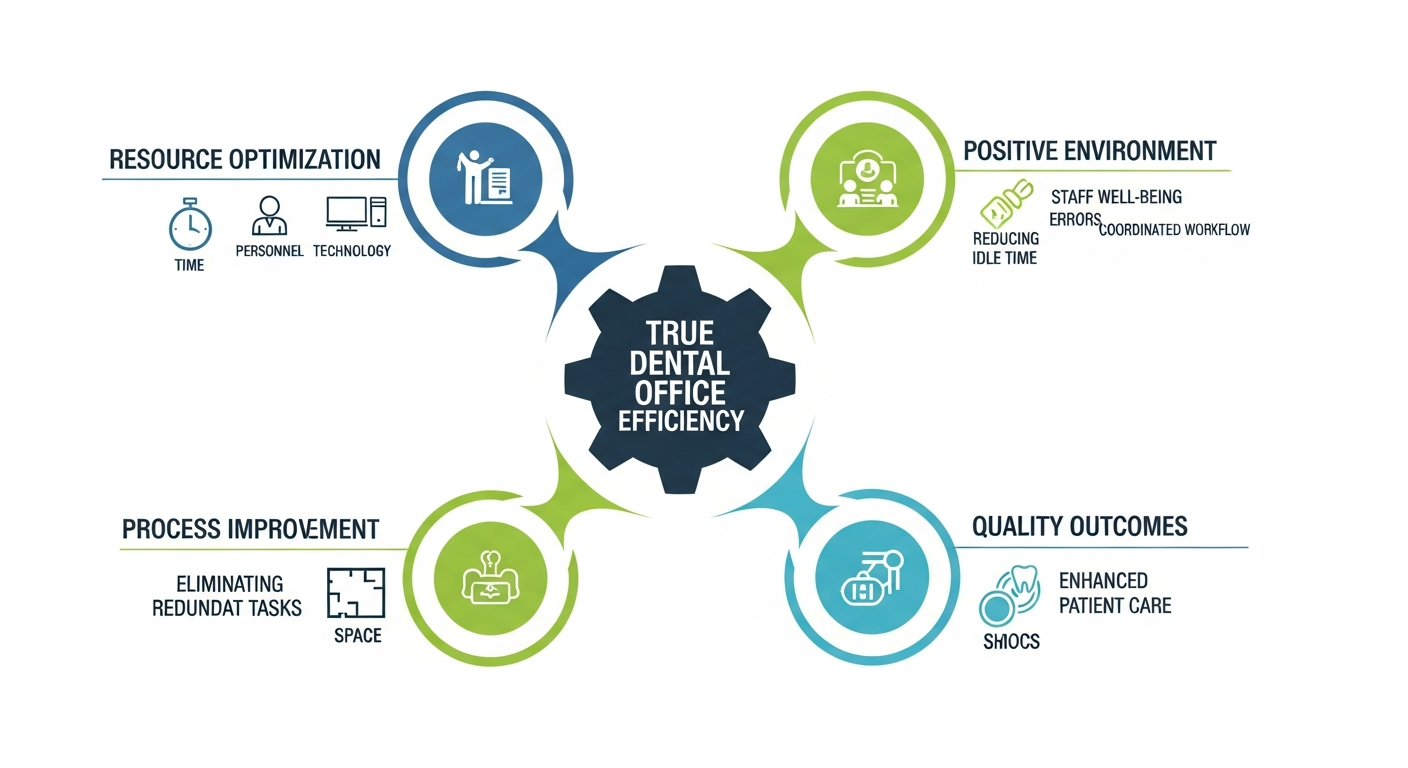 True efficiency is more than speed; it's a holistic system that optimizes resources, refines processes, and ensures quality outcomes for both patients and staff.
Dental office efficiency is often mistakenly equated with mere speed. While quicker processes can contribute, true efficiency encompasses a far broader scope. It's about optimizing the utilization of resources—time, personnel, technology, and physical space—to achieve the best possible outcomes with minimal waste. This means ensuring that every action taken within the dental office contributes meaningfully to patient care, practice profitability, and staff well-being. Efficiency involves reducing idle time, eliminating redundant tasks, minimizing errors, and fostering a smooth, coordinated flow of operations. It's a strategic approach to working smarter, not just harder, ensuring that the dental practice operates at its peak potential. This comprehensive definition recognizes that efficiency impacts every facet of the dental office, from the patient’s initial phone call to the successful completion of complex dental procedures.
Why Streamlined Operations are Crucial for Modern Dental Practices
The benefits of streamlined operations in a modern dental practice are multifaceted and far-reaching. For patients, efficiency translates into shorter wait times, more personalized attention, and a less stressful overall experience, which significantly boosts patient satisfaction and retention. According to recent statistics, the average attrition rate in the dental industry stands at 17% 10X Immersive, 2024, highlighting the critical importance of keeping patients engaged and satisfied through smooth operations. For the dental team, streamlined workflows reduce administrative burdens, minimize frustration, and decrease burnout, leading to a more engaged and productive workforce. Approximately three in four dental practices report difficulty maintaining full staffing levels, with many turning to flexible workforce solutions GoTu, 2025, underscoring the pressure on existing staff and the need for operational ease. Furthermore, efficient practices are more profitable. They minimize lost revenue due to no-shows or billing errors, optimize the use of valuable chairside time, and reduce operational costs. The dental services organization market size, estimated at USD 192.77 billion in 2025 and projected to reach USD 942.56 billion by 2035, illustrates the significant economic activity and the drive towards optimized business models within dentistry Precedence Research, 2026. Ultimately, streamlined operations are not just about enhancing day-to-day functioning; they are fundamental to the long-term sustainability, growth, and competitive edge of any dental practice.
The Core Pillars of a High-Performing Dental Office
Achieving peak efficiency within a dental office rests upon several interconnected pillars. Firstly, strategic space utilization and design is paramount, ensuring a logical flow for both patients and staff, and optimizing the use of every square foot. Secondly, the integration of cutting-edge technology is non-negotiable. This includes advanced diagnostic tools, digital imaging, and robust practice management software that automate tasks and centralize information. Thirdly, optimized workflows are the lifeblood of efficiency, defining how tasks are executed, from patient check-in to treatment completion and follow-up. Fourthly, a well-trained and empowered dental staff is crucial; their proficiency, communication, and collaborative spirit directly impact operational smoothness. Finally, effective management and leadership, characterized by clear goals, proactive problem-solving, and a commitment to continuous improvement, provide the overarching framework for sustained efficiency. These pillars are not independent; they function in synergy, and neglecting one can undermine the effectiveness of the others.
Optimizing Your Office's Foundation: Space, Technology, and Workflow
The physical and technological infrastructure of a dental office, coupled with the underlying operational pathways, forms the bedrock upon which all other efficiency efforts are built. A well-designed space minimizes unnecessary movement, a robust technological suite automates and enhances capabilities, and seamless workflows ensure that these elements work in harmony.
Strategic Office Design and Layout for Enhanced Workflow
The physical layout of a dental office profoundly impacts its efficiency. A well-designed space promotes a logical patient journey, minimizing bottlenecks and travel time for both patients and staff. Consider the flow from reception and waiting areas to treatment rooms, sterilization areas, and administrative offices. Ergonomics plays a vital role; designing operatories to reduce physical strain on dental professionals can significantly boost their Productivity and reduce long-term health issues. Clear signage and intuitive navigation are essential for patients, reducing their anxiety and the need for staff to provide constant directions. Efficient sterilization and supply management areas, strategically placed to be easily accessible from treatment rooms, can save valuable minutes during procedures. Furthermore, the waiting room should be designed for comfort and minimal perceived wait time, perhaps incorporating digital displays that provide appointment updates or educational content. Optimizing the office layout isn't just about aesthetics; it's a functional strategy that directly contributes to smoother operations and a better overall patient and staff experience.
Integrating Cutting-Edge Dental Technology for Clinical Efficiency
The adoption of cutting-edge dental technology is a cornerstone of modern dental office efficiency. Digital tools enhance diagnostics, treatment planning, and clinical procedures, leading to more precise, faster, and less invasive patient care. Advanced imaging technologies like digital X-rays and intraoral scanners provide immediate, high-quality visuals that aid in diagnosis and treatment planning, often reducing the need for multiple appointments. Computer-Aided Design/Computer-Aided Manufacturing (CAD/CAM) systems allow for the in-house fabrication of crowns, bridges, and other restorations with remarkable precision, sometimes achieving up to 95% accuracy in crown fabrication PMC, 2025, significantly reducing turnaround times and improving patient convenience. Laser dentistry and other minimally invasive technologies can reduce procedure times, improve patient comfort, and accelerate healing. The global dental practice management software market, valued at USD 2.57 billion in 2023 and projected to reach USD 6.88 billion by 2032, underscores the widespread recognition of technology's pivotal role in practice operations Market.us Media, 2026. Investing in such technologies not only elevates the quality of care but directly contributes to a more efficient and productive dental practice.
Leveraging Digital Tools for Faster Diagnostics and Treatment Planning
The impact of digital tools and artificial intelligence (AI) on diagnostic speed and treatment planning is transformative. AI-driven diagnostic software can analyze radiographs and intraoral scans to identify potential issues like cavities, periodontal disease, or even early signs of oral cancer, often reducing diagnostic times by up to 50% Open and Affordable Dental, 2025. This allows dentists to focus more on patient care and less on exhaustive manual analysis. Sophisticated treatment planning software enables dentists to visualize complex procedures, simulate outcomes, and present treatment options to patients with greater clarity and confidence. Digital tools and AI now enhance every aspect of dental care, from initial diagnostics to treatment planning and execution, potentially reducing procedure times by up to 40% while improving accuracy NOVA Computer Solutions, 2025. This acceleration in diagnostic and planning phases directly translates to more efficient chairside time utilization, quicker treatment delivery, and ultimately, a more streamlined patient journey from diagnosis to recovery.
Maximizing Dentist Productivity and Chairside Time with Tech Integration
Technology integration is key to maximizing dentist productivity and, crucially, chairside time. When clinical workflows are supported by efficient technology, dentists can perform more procedures with higher quality and less stress. Digital charting systems and electronic health records (EHRs) mean less time spent searching for patient information and more time focused on the patient. Integrated diagnostic equipment, like digital X-rays that display images instantaneously on a screen, eliminates the delays associated with traditional film processing. Furthermore, the use of advanced restorative technologies, such as CAD/CAM for same-day crowns, allows dentists to complete complex restorative procedures in a single visit, maximizing billable time and patient satisfaction. Practices that invest in modern technology solutions often see significant improvements in operational efficiency, with studies indicating up to 20% improved operational efficiency and 25% higher patient retention rates Smile Loft – Orangetown, 2026. By reducing administrative overhead and enhancing clinical capabilities, technology liberates dentists to perform at their highest level, directly impacting the practice's output and revenue.
Crafting a Seamless Patient Journey: From First Contact to Follow-Up
The patient experience is central to the success of any dental practice. Efficiency at every touchpoint, from initial inquiry to post-treatment care, not only enhances patient satisfaction but also drives loyalty and positive word-of-mouth referrals, crucial for long-term practice growth.
Revolutionizing Appointment Scheduling and Management
Effective appointment scheduling and management are foundational to a smooth-running dental office. Manual scheduling can be prone to errors, double bookings, and inefficient use of chairside time. Implementing a robust system, often integrated within practice management software, is essential. This can include online booking portals allowing patients to schedule appointments at their convenience, reducing the burden on the front desk staff. Advanced scheduling methods, such as block scheduling, can group similar procedures or patient types together, optimizing the use of specific equipment or staff expertise and minimizing patient transfers. Crucially, intelligent appointment reminders are vital for reducing no-shows. Automated systems, such as Flex Dental Solutions, that send personalized reminders via text, email, or phone calls a day or two before the appointment can significantly decrease missed appointments, which represent lost revenue and disrupted schedules. A well-defined method for handling cancellations and reschedules, coupled with a system for identifying and contacting patients on a waitlist for earlier openings, further optimizes schedule utilization and boosts overall productivity.
Enhancing Patient Communication and Engagement
Effective patient communication is a critical component of an efficient and patient-centered dental practice. Clear, timely, and personalized communication fosters trust, reduces anxiety, and ensures patients are well-informed about their oral health and treatment plans. Modern communication tools, including patient portals, secure messaging, and SMS capabilities, allow for convenient and immediate interaction. The front desk plays a pivotal role here, acting as the initial point of contact. A prompt and helpful response to inquiries, whether via phone, email, or online chat, sets a positive tone. Beyond administrative communication, proactive patient engagement—such as sending educational content about oral hygiene, post-operative care instructions, or reminders for routine check-ups—demonstrates a commitment to patient well-being. Utilizing these communication tools effectively ensures that patients feel valued and informed, which can significantly improve their adherence to treatment plans and increase their satisfaction with the dental office. The goal is to create a continuous loop of information, ensuring that response times are minimal and patient queries are handled efficiently and empathetically.
Streamlining Patient Intake and Documentation
The traditional paper-based patient intake process can be a significant bottleneck in a busy dental office, consuming valuable time for both patients and staff and increasing the risk of errors. Modern dental practices can dramatically improve efficiency by transitioning to digital intake forms and electronic health records (EHRs). Patients can complete their medical history, consent forms, and insurance information online before their appointment, or via a tablet or computer in the office. This digital method not only reduces paper waste and storage needs but also allows for faster data entry and integration into the practice management system. Digital forms can be pre-filled with known information for returning patients, further speeding up the check-in process. Ensuring all necessary documentation is readily accessible within the patient's digital record streamlines the clinician's workflow, allowing them to review critical information before the patient is even seated. This approach to intake and documentation minimizes administrative redundancy and ensures a smoother, more efficient start to every patient visit.
Empowering Your Dental Team for Peak Performance
A dental office's efficiency is inextricably linked to the performance and satisfaction of its staff. Investing in team development, fostering clear communication, and optimizing clinical workflows are essential for unlocking peak performance and creating a harmonious work environment.
Strategic Staffing, Training, and Development
The challenge of staff recruitment and retention is a significant hurdle for many dental practices; in 2024, 60% of dentists indicated staffing recruitment was their top challenge DrBicuspid.com, 2025. Strategic staffing involves not just hiring the right individuals but also investing in their ongoing training and development. Comprehensive onboarding processes, cross-training initiatives to ensure staff can perform multiple roles, and continuing education opportunities equip the team with the skills needed to adapt to new technologies and evolving practice protocols. This investment enhances staff versatility, reduces reliance on specific individuals, and improves the overall resilience of the dental practice. When staff feel supported, skilled, and valued, their engagement and productivity naturally increase, directly contributing to a more efficient and effective dental office.
Fostering Efficient Internal Communication and Collaboration
Effective internal communication is the glue that holds a high-performing dental team together. When communication channels are clear, open, and consistent, tasks are coordinated, misunderstandings are minimized, and collaboration flourishes. Daily huddles, even brief ones, can align the team on the day’s schedule, identify potential challenges, and ensure everyone is on the same page. Utilizing internal communication tools—such as team messaging platforms, shared digital task lists, or a well-managed email system—can facilitate quick information sharing and reduce the need for constant interruptions. Regular team meetings provide a forum for feedback, problem-solving, and addressing operational inefficiencies. When staff feel comfortable communicating concerns and ideas, they become active participants in identifying and implementing solutions, fostering a culture of continuous improvement. This collaborative approach ensures that every member of the dental team understands their role and how it contributes to the overall efficiency of the practice.
Optimizing Clinical Workflows and Delegation
Optimizing clinical workflows and strategic delegation are crucial for maximizing Productivity and ensuring patient care is delivered seamlessly. Clear protocols for every stage of a dental procedure, from patient seating and preparation to instrument handling and post-operative instructions, reduce variability and the potential for errors. This systematic approach also facilitates effective delegation. By clearly defining roles and responsibilities, dental hygienists, assistants, and administrative staff can take on appropriate tasks, freeing up the dentist's time for complex procedures and patient consultations. For example, ensuring that treatment rooms are prepped and sterilized by the dental assistant before the dentist enters, or that post-operative instructions are clearly explained by an assistant or hygienist, streamlines the entire clinical process. The practice management method should support this by enabling easy task tracking and handover. Efficient delegation not only boosts the dentist’s chairside productivity but also empowers the entire team, fostering a sense of shared responsibility and enhancing overall operational efficiency.
Mastering Financial Health: Billing, Insurance, and Cost Transparency
The financial health of a dental practice is a critical determinant of its long-term viability and its capacity to invest in efficiency improvements. Streamlining billing, expertly navigating insurance complexities, and maintaining cost transparency are essential components of robust financial management.
Streamlining Billing and Collections Processes
Efficient billing and collections are vital for ensuring a dental practice receives prompt payment for services rendered. Manual billing processes are time-consuming, error-prone, and can lead to significant delays in revenue cycle management. Implementing automated billing solutions, often integrated into practice management software, can transform this process. These systems can generate invoices, process payments electronically, and send automated follow-ups for overdue accounts. Offering multiple convenient payment options—such as online payment portals, payment plans, and acceptance of various digital payment methods—can significantly improve collection rates. A well-defined process for reviewing claims before submission and diligently following up on rejected claims is also critical. By optimizing these financial workflows, dental practices can reduce accounts receivable days, improve cash flow, and minimize the administrative burden associated with financial management. The revenue generated by dental offices in the United States is substantial, with each dentist responsible for approximately $2.4 million annually American Dental Association, 2022, emphasizing the importance of efficient financial operations.
Navigating Insurance Complexities with Ease
Navigating the intricate world of dental insurance is a significant challenge for many practices, often leading to claim denials, delayed payments, and administrative frustration. Effective insurance management requires a dedicated front desk staff member or team trained in verification processes and claims submission. Proactive insurance verification before or on the day of the appointment is crucial. This involves confirming patient eligibility, understanding coverage details, and identifying any pre-authorization requirements. Utilizing practice management software with integrated insurance verification tools can automate this process, saving time and reducing errors. A clear understanding of common claim denial codes and a systematic approach to resubmitting corrected claims are also essential. For practices that struggle with these complexities, outsourcing certain aspects of billing and insurance management to specialized third-party providers can be a strategic solution, allowing the internal staff to focus on patient care and other core functions.
Embracing Cost Transparency for Patient Satisfaction and Efficiency
Cost transparency is increasingly important for building patient trust and improving overall practice efficiency. When patients understand the costs associated with their dental treatment upfront, it reduces apprehension and minimizes billing-related disputes. Providing clear, itemized treatment plans that detail services, associated costs, and expected insurance coverage allows patients to make informed decisions. The front desk staff play a crucial role in communicating this information effectively, explaining payment options, and addressing any patient concerns about costs. This transparency not only enhances patient satisfaction—as they feel respected and well-informed—but also streamlines the financial aspect of the visit. It reduces the likelihood of surprise bills, which can lead to patient dissatisfaction and potential financial hardship for them. For dental practices, clear pricing and efficient communication about costs can lead to better patient adherence to treatment plans and a smoother financial cycle, ultimately contributing to both patient well-being and practice profitability.
Leveraging Data and Innovation for Continuous Improvement
In the dynamic world of dentistry, embracing data-driven decision-making and staying abreast of emerging innovations are paramount for sustained efficiency and long-term success. This involves utilizing powerful software tools, adopting efficient management methodologies, and exploring forward-thinking technological advancements.
Implementing Practice Management Software and Analytics for Data-Driven Decisions
Practice management software (PMS), such as Open Dental, is no longer just a digital filing cabinet; it's a central hub for operational intelligence. Robust PMS solutions provide comprehensive analytics that offer deep insights into every facet of a dental practice’s performance. By tracking key performance indicators (KPIs) such as patient wait times, appointment fill rates, treatment plan acceptance rates, and revenue per procedure, practices can identify areas of strength and weakness. This data allows for informed decision-making, moving beyond anecdotal evidence to implement targeted improvements. For example, analytics might reveal a pattern of frequent no-shows for specific appointment types, prompting a review of the appointment reminder system. Similarly, data on treatment plan acceptance can inform discussions about patient education and communication strategies. The effective use of PMS analytics empowers practice management to proactively address inefficiencies, optimize resource allocation, and drive continuous improvement across the entire dental office.
Adopting Lean Management Principles for Process Efficiency
Lean management, a philosophy focused on maximizing customer value while minimizing waste, offers a powerful framework for enhancing dental office efficiency. Originating from manufacturing, its principles can be effectively adapted to healthcare settings. Identifying and eliminating waste—whether it's wasted time, unnecessary movement, excess inventory, or process defects—is central to Lean. For example, a lean approach might involve mapping out the sterilization process to identify steps that can be combined or eliminated, thus reducing turnaround time. Similarly, analyzing patient flow can reveal areas where waiting times can be minimized. By empowering staff to identify and report inefficiencies, and by implementing a culture of continuous improvement, dental practices can achieve significant gains in productivity and reduce operational costs. This method of operation emphasizes standardization of processes and a constant pursuit of refinement, ensuring that resources are used effectively to deliver the highest value to patients.
Exploring Advanced AI Solutions for Future-Proofing Your Practice
The integration of artificial intelligence (AI) is rapidly reshaping the healthcare landscape, and dentistry is no exception. AI offers unprecedented opportunities for boosting efficiency and enhancing patient care. Beyond diagnostic assistance, AI can automate administrative tasks like appointment scheduling, insurance verification, and even patient billing, freeing up staff time for more complex and patient-facing duties. Predictive analytics, powered by AI, can help forecast patient demand, optimize staffing levels, and identify potential operational bottlenecks before they occur. Furthermore, AI-driven chatbots can provide instant answers to common patient queries 24/7, improving engagement and reducing the workload on the front desk. By exploring and strategically adopting advanced AI solutions, dental practices can position themselves at the forefront of innovation, ensuring future-proof operations that are more responsive, efficient, and capable of delivering exceptional care.
Conclusion: The Future of Your Efficient Dental Practice
The pursuit of efficiency in a dental office is not a one-time project but an ongoing journey, driven by a commitment to continuous improvement. By strategically integrating optimized space, cutting-edge technology, streamlined workflows, empowered staff, and intelligent financial management, dental practices can create an environment where operations flow seamlessly, patient satisfaction soars, and the team thrives. The integration of digital tools, from advanced diagnostic equipment to robust practice management software, coupled with a focus on clear communication and effective delegation, forms the bedrock of this high-performance model. As the dentistry landscape continues to evolve, embracing innovation and data-driven insights will be crucial for maintaining a competitive edge and ensuring long-term success.
Recap: The Holistic Benefits of an Efficient Dental Office
An efficient dental office is characterized by a harmonious interplay of optimized systems and motivated people. This holistic approach yields significant benefits: enhanced patient experience through reduced wait times and clearer communication, improved staff morale and reduced burnout due to streamlined tasks, and increased profitability stemming from maximized chairside time and efficient revenue cycle management. The core pillars—strategic space, advanced technology, optimized workflows, empowered staff, and effective management—work in concert to create a practice that is not only productive but also resilient and adaptable to the demands of modern dentistry.
The Journey Ahead: Sustaining Efficiency for Long-Term Success
Sustaining efficiency requires a proactive and adaptable mindset. Regularly review your workflows, solicit feedback from your staff and patients, and stay informed about technological advancements. Implementing regular performance analytics, embracing lean principles for continuous process refinement, and strategically adopting new AI solutions will pave the way for future-proofing your practice. The journey towards peak efficiency is continuous, but the rewards—a thriving practice, satisfied patients, and a dedicated, energized team—are well worth the effort. By making efficiency a core value, you invest in the sustainable success and growth of your dental practice.