Introduction: Streamlining Your Dental Journey with Online Forms
Navigating dental appointments can sometimes feel like a maze of paperwork. Traditionally, this involved stacks of forms to fill out in the waiting room, often leading to delays and repetitive data entry. However, the dental landscape is rapidly evolving, embracing digital solutions to enhance efficiency and patient experience. Understanding and utilizing dental forms, especially through online channels, is now a cornerstone of modern dental care. This guide will demystify dental forms, explain their critical roles, and show you how to leverage online capabilities for a smoother, more informed dental journey. As of 2023, about 65.5% of adults and 86.9% of children aged 2–17 had a dental exam or cleaning within the past year in the U.S. CDC, 2025, highlighting the constant need for streamlined patient management.
The Essential Role of Dental Forms in Your Care
Dental forms are far more than bureaucratic necessities; they are fundamental tools that ensure your dental care is personalized, safe, and effective. They serve as the initial bridge between you, the patient, and your dental practice, laying the groundwork for every subsequent interaction and treatment decision. These documents are meticulously designed to capture vital information, enabling your dental team to understand your unique health profile, medical history, and treatment preferences. Without this comprehensive data, providing optimal oral health care would be significantly more challenging, potentially impacting diagnostic accuracy and treatment efficacy.
Embrace the Convenience: Why Download & Fill Online?
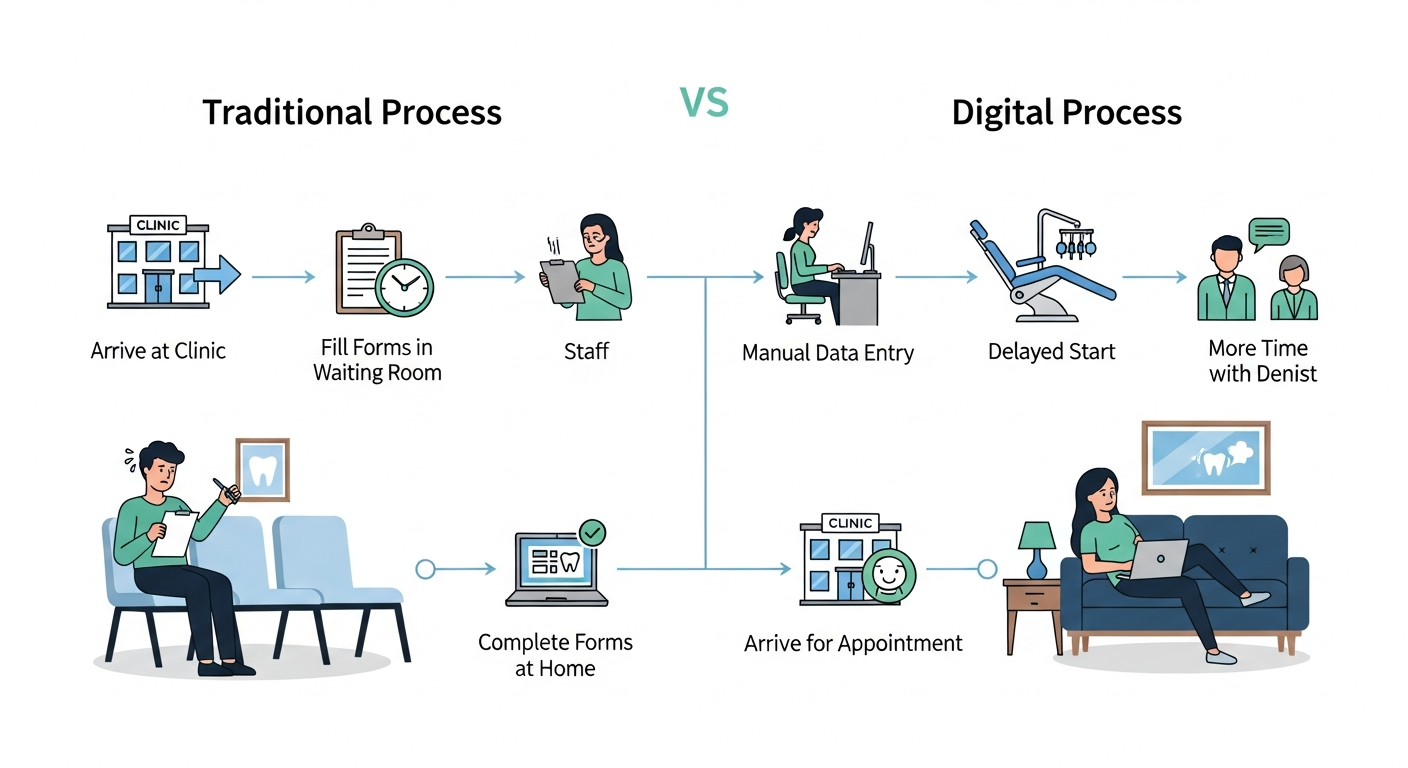 A side-by-side comparison of the traditional paper-based workflow versus the streamlined digital form process.
The shift towards downloading and filling dental forms online represents a significant leap in convenience for both patients and dental practices. Gone are the days of deciphering handwritten notes or filling out the same information repeatedly across different visits. Online forms empower patients to complete these essential documents from the comfort of their own homes, at their own pace, and prior to their appointment. This not only saves valuable time during your visit, allowing for more direct interaction with your dental provider, but also reduces the administrative burden on the dental office staff. This digital approach facilitates immediate access and review of information, streamlining the entire patient experience.
Why Every Dental Form Has a Purpose: Benefits for You and Your Practice
Understanding the purpose behind each dental form illuminates their crucial role in the delivery of high-quality dental care. These documents are not arbitrary; they are carefully constructed to gather specific, actionable information that directly impacts your health and the efficiency of the dental practice.
For the Patient: Ensuring Personalized, Safe, and Transparent Care
For patients, meticulously completed dental forms are the key to receiving care that is tailored to their specific needs and health status. Your medical history, including current medications and allergies, is vital for the dentist to anticipate potential complications and select the safest, most effective treatment options. For instance, certain medications can affect oral tissues, while pre-existing conditions might influence surgical procedures. By providing this information upfront, you ensure your treatment plan is safe and appropriate. Furthermore, forms detailing your dental history and concerns allow the practice to understand your past experiences and priorities, leading to a more empathetic and effective patient-provider relationship. This transparency extends to financial policies and insurance information, ensuring clarity regarding costs and coverage before services are rendered. In 2023, 13% of Americans cited cost as a barrier to dental care, much higher than for other healthcare services American Dental Association (via Benevis), 2024, making clear financial communication through forms essential.
For the Dental Practice: Enhancing Workflow and Quality Care Delivery
Dental practices rely on forms to maintain accurate patient records, streamline operations, and ensure compliance. Efficiently managed forms reduce the time staff spends on administrative tasks, freeing them to focus on patient care and support. Accurate medical and dental histories allow the clinical staff to prepare for appointments more effectively, anticipate patient needs, and make informed diagnostic and treatment decisions. Digital forms, in particular, reduce errors associated with manual data entry and improve the organization and accessibility of patient records. Flex Dental Solutions, a leader in dental patient engagement, offers digital forms that streamline the patient experience. This digital integration contributes to a smoother workflow, from initial patient registration to appointment scheduling and billing. As many as 87% of the U.S. population had dental insurance in 2023 NADP, 2024, making accurate insurance information capture through forms a critical component of practice revenue cycles.
Decoding the Core: A Comprehensive Guide to Essential Dental Forms
Understanding the different types of dental forms will help you prepare for your appointments and appreciate the depth of information gathered to support your oral health.
New Patient Registration & Welcome Packet Forms
These are typically the first forms a new patient encounters. They gather essential demographic information, contact details, emergency contacts, and often include a brief overview of the dental office's policies and services. This packet helps establish your basic profile within the practice's system and introduces you to their operational procedures.
Medical and Dental History Forms: Your Health Blueprint for Optimal Oral Health
These forms are arguably the most critical for ensuring your safety and the effectiveness of your dental treatment. You'll be asked about current and past medical conditions, surgical history, allergies to medications or materials, and a comprehensive list of all medications you are currently taking, including prescriptions, over-the-counter drugs, and supplements. Information about lifestyle habits, such as smoking or alcohol consumption, is also included. This comprehensive health blueprint allows your dental provider to understand how your overall health impacts your oral health and to tailor treatments accordingly, avoiding potential contraindications or adverse reactions.
Consent Forms: Understanding and Authorizing Your Treatment Choices
Consent forms are legal documents that ensure you understand and agree to proposed dental treatments. This includes general consent for routine dental care and specific consent for more complex procedures like surgery, root canals, or orthodontic treatments. They outline the nature of the procedure, potential risks and benefits, alternative treatment options, and the expected outcomes. By signing a consent form, you acknowledge that you have been informed and authorize the dental professional to proceed with the agreed-upon treatment plan.
Financial Policy & Insurance Information Forms
These forms clarify the financial aspects of your dental care. They typically detail the practice's payment policies, accepted payment methods, and any payment plans available. Crucially, they also collect your dental insurance information, including the provider, policy number, and group details. This allows the dental office to verify your coverage, estimate your out-of-pocket expenses, and facilitate the claims submission process.
Privacy Practices (HIPAA) & Information Release Forms
Adherence to privacy regulations is paramount in healthcare. Dental offices provide a Notice of Privacy Practices (NPP) detailing how your Protected Health Information (PHI) is used and disclosed, in compliance with HIPAA. You will likely be asked to sign an acknowledgment of receipt of this notice. If you wish for your dental records to be shared with another healthcare provider or for any other specific purpose, you may need to complete an Information Release Authorization form. Over 93% of healthcare organizations have experienced data breaches in the past five years Western I.T., 2023, underscoring the importance of these protective measures.
Specialized and Ongoing Care Forms (Examples)
Beyond the foundational forms, dental practices may use specialized forms for specific treatments or ongoing care management. These can include referral forms for specialists, forms for requesting copies of your dental records, or specific questionnaires related to treatments like orthodontics, prosthetics (dentures/implants), or endodontic procedures. They ensure that all relevant details pertaining to specialized care are documented and communicated effectively.
Your Digital Gateway: How to Download & Fill Dental Forms Online
Accessing and completing dental forms online offers unparalleled convenience, saving you time and reducing the stress often associated with administrative tasks.
Where to Find and Access Digital Dental Forms
Most modern dental offices provide digital access to their patient forms. You can typically find these on:
- The Dental Practice’s Website: Look for a dedicated "Patient Forms" or "New Patient" section.
- Patient Portals: Many practices offer secure online portals where you can log in, access, fill, and submit forms electronically.
- Email Links: Some offices may send direct links to forms via email when you book an appointment.
- Links to Download: While filling online is often preferred, sometimes a downloadable PDF version is provided for offline completion before a scheduled appointment.
Best Practices for Completing Forms Online
To ensure your online form submission is efficient and accurate, follow these simple guidelines:
- Use a Stable Internet Connection: This prevents interruptions during the completion process.
- Utilize a Compatible Browser: Most modern web browsers are suitable, but check if the practice recommends a specific one.
- Allow Sufficient Time: Don't rush the process. Take the time to carefully read and respond to each question.
- Save Progress If Possible: Some online forms allow you to save your work and return later.
Smart Tips for Accurate & Efficient Form Completion
Ensuring the accuracy and completeness of your dental forms is crucial for your care. Here are some tips to make the process as smooth as possible.
Gather Your Information Before You Start
Before you begin filling out any form, gather all necessary documents and information. This includes your insurance card, a list of current medications (with dosages), known allergies, and details about past surgeries or significant medical conditions. Having this readily available will prevent interruptions and ensure you don't miss any critical details.
Read Carefully and Ask Questions
Take the time to read each question thoroughly. If anything is unclear, don't hesitate to seek clarification. Dental office staff are there to help. If you are filling out forms online, look for a "Help" or "FAQ" section, or contact the dental office directly. Clear communication ensures accurate data entry.
Be Thorough and Honest
Provide complete and truthful information. Inaccurate or incomplete medical and dental history can lead to incorrect diagnoses, inappropriate treatment plans, or adverse reactions. The more accurate the information, the better the dental team can serve your oral health needs.
Review Before Submitting
Before clicking the submit button, take a moment to review all your answers. Check for any typos, missing information, or inconsistencies. A final review ensures that the information sent to your dental practice is accurate and complete, contributing to a seamless experience.
Your Privacy Matters: HIPAA and Understanding Your Rights
Protecting your personal health information is a legal and ethical imperative in the dental field.
What is HIPAA? Why it's Important for You
The Health Insurance Portability and Accountability Act of 1996 (HIPAA) is a federal law that establishes national standards for electronic health care transactions and the security and privacy of health data. For you, this means your personal health information, including your dental records, is protected. This protection ensures that your sensitive information is not shared without your explicit consent, except under specific circumstances outlined by law.
Understanding the Notice of Privacy Practices (NPP)
Your dental practice will provide you with a Notice of Privacy Practices (NPP). This document explains how your dental office may use and disclose your protected health information (PHI), your rights regarding your information, and how you can access it. It's essential to read this notice to understand your privacy rights within the context of your dental care.
How Dental Offices Protect Your Data
Dental offices employ various security measures to protect your digital and physical records. These can include secure, encrypted databases, password-protected access controls for staff, secure internet connections for online forms, and regular training for staff on privacy protocols. While over 93% of healthcare organizations have experienced data breaches in the past five years Western I.T., 2023, stringent adherence to HIPAA and robust cybersecurity practices are critical. For example, the largest dental-related HIPAA breach of 2023 involved 8.9 million patient records from MCNA Dental, exposed in a ransomware attack Darkhorse Tech, 2023, underscoring the need for vigilance from both providers and patients.
Beyond Submission: What Happens After You Submit Your Forms?
Once you've completed and submitted your dental forms, the information becomes an active part of your patient record, directly influencing your care and administrative processes.
How Your Forms Streamline Your Appointment and Treatment
The information you provide in your forms is reviewed by the dental staff and your dentist before your appointment. This allows them to prepare, anticipate any specific needs or concerns based on your medical history, and even pre-authorize certain treatments if necessary. For example, if your history indicates a high risk for cavities, the dentist might plan for fluoride treatment during your visit. This preparation ensures that your appointment is more efficient and focused on your oral health needs.
The Role of Forms in Insurance Claims and Reimbursement
Accurate insurance information captured on your forms is vital for the dental practice to process claims with your provider. This allows the practice to bill your insurance company for covered services, verify your benefits, and determine your co-pay or deductible responsibility. While most dental insurance plans currently pay only 17% of claims digitally Echo Health, 2024, the initial data collection through forms remains a critical first step in the reimbursement process. Accurate form completion can expedite claim processing and minimize billing errors.
Getting Help: Support for Your Dental Form Questions
Navigating any administrative process can sometimes lead to questions or technical difficulties. Fortunately, support is readily available to ensure a smooth experience.
Your dental office staff is your primary resource for assistance. Whether you are struggling with a specific question on a medical history form, need help accessing the online patient portal, or have inquiries about the financial policy, the front desk staff, administrative assistants, or dental hygienists can provide guidance. Many dental practices also offer support in multiple languages, including Spanish, to accommodate a diverse patient base. If you encounter technical issues with online forms, such as login problems or submission errors, don't hesitate to contact the dental office directly. They can guide you through the process or troubleshoot any technical glitches.
Conclusion
Embracing online dental forms is a significant step towards a more convenient, efficient, and informed dental care experience. These forms are not mere paperwork; they are essential tools that empower both patients and dental practices to ensure personalized, safe, and effective oral health management. By understanding their purpose, preparing your information, and utilizing the digital options available, you actively contribute to a streamlined appointment process, better communication, and ultimately, superior oral health outcomes. Utilize the convenience of downloading and filling forms online, familiarize yourself with the different types, prioritize accuracy and honesty, and always leverage the support systems available. Your proactive engagement with dental forms is a key component of a proactive approach to your overall well-being.