Top Dental Communication Software Solutions for 2026: Enhance Patient Engagement
Introduction: The Imperative for Advanced Dental Communication in 2026
The landscape of dental care is undergoing a profound transformation, driven by evolving patient expectations and rapid technological advancements. In 2026, dental practices can no longer rely solely on traditional methods to connect with their patients. The demand for convenience, personalization, and seamless digital experiences has reshaped patient engagement, making advanced communication strategies a non-negotiable for success. This shift necessitates a move towards sophisticated dental communication software that bridges the gap between the practice and its patient base, fostering stronger relationships, improving operational efficiency, and ultimately, driving practice growth.
The Evolving Dental Landscape and Patient Expectations
The modern patient is more informed and connected than ever before. They expect their healthcare providers, including dental practices, to offer the same level of digital convenience and personalized service they receive from other industries. This includes easy online appointment booking, accessible digital forms, timely reminders, and clear, responsive communication channels. In 2025, patient surveys indicated a preference for timely, clear, and easily responsive communication, favoring text and email for convenience [DOCS Education, 2026]. This preference highlights a critical need for dental practices to adapt their communication strategies to meet these evolving demands. Practices that fail to embrace digital tools risk alienating a significant portion of their patient base and falling behind competitors. Furthermore, the digital dental trend is accelerating, with innovations like 3D printing rapidly expanding globally, indicating a broader embrace of technology within the field [Institute of Digital Dentistry].
What is Dental Patient Communication Software?
Dental patient communication software is a specialized technology designed to facilitate and enhance interactions between a dental practice and its patients. Unlike basic functionalities found in some practice management systems (PMS), like Open Dental, dedicated communication platforms offer a comprehensive suite of tools focused specifically on patient engagement. These solutions go beyond simple appointment scheduling or billing reminders. They encompass features like automated appointment reminders, secure two-way messaging, digital form management, reputation monitoring, and personalized outreach campaigns. The primary goal of this software is to create a more connected, convenient, and satisfactory patient experience, thereby strengthening the patient-provider relationship and improving overall practice performance.
Why 2026 Demands Proactive Patient Engagement
By 2026, a proactive approach to patient engagement will be paramount for survival and growth in the dental industry. The market is increasingly competitive, and patient loyalty is a key differentiator. While the average patient retention rate hovers around 57%, top dental practices are achieving remarkable 99% retention by integrating technology, strategic marketing, and continuous outreach initiatives [Henry Schein One]. This stark contrast underscores the power of proactive engagement. In an era where patients can easily switch providers, fostering a sense of connection and value is essential. Proactive communication ensures patients remain informed about their oral health, adhere to treatment plans, and feel appreciated. It transforms the patient journey from a series of reactive visits to an ongoing, supportive relationship, significantly reducing patient churn and increasing lifetime value. The global dental software market itself is projected for substantial growth, signaling widespread adoption of such technologies, with the U.S. market alone expected to nearly triple in value by 2034 [Precedence Research].
Essential Features of Leading Dental Communication Software Solutions for 2026
The effectiveness of any dental communication software, such as Flex Dental Solutions, an authorized vendor with Open Dental, hinges on its suite of features, each designed to streamline operations and enhance patient interaction. In 2026, leading solutions will offer advanced functionalities that cater to the nuanced needs of modern dental practices.
Automated Engagement for Seamless Patient Journeys
Automation is the cornerstone of efficient patient communication. Advanced software, such as Flex Dental Solutions, offers robust automated appointment reminders, which can be delivered via multiple channels like SMS, email, and even voice calls. This multi-channel approach ensures that messages reach patients effectively, significantly reducing the likelihood of missed appointments. Beyond reminders, these systems can automate recall campaigns to bring patients back for routine check-ups, send personalized post-appointment follow-ups to gauge satisfaction and provide care instructions, and even deliver pre-appointment information or directions. This level of automation not only frees up valuable staff time but also ensures a consistent and timely flow of information, creating a seamless patient journey from initial booking to post-treatment care. Practices leveraging such automation can see significant improvements in their scheduling efficiency.
Robust Two-Way Communication Channels
While automated messages are crucial, the ability for genuine two-way communication is what truly builds relationships. Modern dental communication software provides secure messaging platforms that allow patients to communicate with the practice in real-time. This often includes two-way texting capabilities, which have become increasingly popular due to their immediacy and convenience. Patients can easily ask questions, confirm appointments, or even notify the practice if they are running late, all from their mobile devices. This not only enhances patient convenience but also allows the practice to manage its schedule more dynamically. For instance, if a patient is delayed, the practice can efficiently offer their slot to someone on a waitlist. It's critical, however, that these channels are HIPAA compliant, ensuring Protected Health Information (PHI) is handled with the utmost security.
Streamlined Digital Forms and Self-Service Options
The days of cumbersome paper forms are rapidly becoming obsolete. Leading dental communication software solutions integrate comprehensive digital form capabilities, allowing patients to complete intake forms, consent documents, medical history updates, and more online, either before their appointment or via a patient portal. This not only speeds up the check-in process for both the patient and staff but also improves data accuracy. Self-service options extend beyond forms to include online appointment scheduling and rescheduling, and even secure online payment portals. These features empower patients, giving them greater control over their dental care journey and significantly reducing the administrative burden on practice staff. The move towards digital forms has been a significant trend, with many patients preferring this method for its ease of use.
Reputation Management and Feedback Tools
In the digital age, a practice's online reputation is a powerful driver of new patient acquisition. Advanced communication software includes sophisticated reputation management tools. These platforms can automate the process of requesting online reviews from satisfied patients after appointments. They also enable practices to monitor various review sites and social media platforms, providing real-time alerts for new feedback. The ability to promptly and professionally respond to both positive and negative reviews is crucial for maintaining a strong online presence. By actively managing their reputation, dental practices can build trust, attract new patients, and showcase their commitment to excellent patient care.
Deep Integration for Enhanced Clinical and Administrative Workflow
The true power of dental communication software is unlocked when it integrates seamlessly with existing practice management systems (PMS), like Open Dental, and other clinical tools. This deep integration ensures that patient data flows effortlessly between systems, eliminating manual data entry and reducing the risk of errors. For example, when a patient updates their information via a digital form, that information should automatically sync with the PMS. Similarly, appointment scheduling updates in the communication platform should reflect immediately in the practice's overall schedule. Integration with imaging systems or electronic health records (EHRs) can further streamline workflows, providing a holistic view of patient care. This interconnectedness is vital for creating an efficient, cohesive operational environment.
The Strategic Value of Advanced Communication in 2026: Beyond Basic Features
Moving beyond a mere feature checklist, advanced dental communication software offers profound strategic advantages that can redefine a practice's success in 2026. These benefits extend to patient satisfaction, operational efficiency, and overall practice growth.
Elevating Patient Satisfaction and Retention
Exceptional patient satisfaction is no longer a luxury; it’s a necessity. Communication software directly impacts this by providing personalized, convenient, and transparent interactions. When patients receive timely reminders, can easily complete forms online, and feel heard through accessible communication channels, their overall experience improves dramatically. This sense of being valued and well-cared-for fosters loyalty. Practices that implement these tools can see a tangible improvement in patient retention, moving from an average rate to achieving near-perfect retention. This increased loyalty translates into more predictable revenue and a stronger, more engaged patient community.
Boosting Operational Efficiency and Reducing No-Shows
The administrative workload in a dental practice can be substantial. Communication software automates many time-consuming tasks, such as sending appointment reminders and managing patient forms. This frees up administrative staff to focus on more high-value activities, like patient care coordination or addressing complex patient needs. Crucially, automated reminders are highly effective at reducing no-show rates. A reduction in missed appointments directly translates to less lost chair time and revenue. For instance, while the average patient retention rate might be around 57%, effective communication tools are key to practices achieving near-perfect retention by ensuring patients attend their scheduled appointments.
Driving Practice Growth: From Acquisition to Revenue Optimization
Advanced communication tools are powerful engines for practice growth. Effective reputation management attracts new patients actively searching for dental services online. Seamless appointment booking and pre-visit processes encourage more patients to schedule and attend appointments, filling the production schedule. Furthermore, communication platforms can support revenue cycle management (RCM) by facilitating timely billing inquiries and online payment options, helping to reduce outstanding accounts receivable. For example, the teledentistry market is expanding rapidly, with the teleconsultation segment dominating revenue share, indicating a growing acceptance of remote and digitally facilitated care, which can be integrated with communication strategies to reach new patient segments. Patients increasingly trust technology-driven dental care, with nearly 60% believing AI integrations will improve diagnosis and management. Practices implementing AI for communication report faster diagnosis and significantly improved patient satisfaction.
Critical Considerations for Selecting Your 2026 Dental Communication Solution
Choosing the right dental communication software, such as Flex Dental Solutions, is a significant decision that requires careful consideration of several key factors beyond just features and pricing.
Prioritizing Security and Regulatory Compliance
In healthcare, data security and regulatory compliance are paramount. Any dental communication software must adhere strictly to HIPAA (Health Insurance Portability and Accountability Act) regulations. This means ensuring that all patient data is encrypted, transmitted securely, and stored safely. Practices should look for solutions that provide robust security features, including secure data centers, regular security audits, and clear protocols for data breach notifications. Obtaining a Business Associate Agreement (BAA) from your software vendor is a critical step in ensuring compliance and protecting both the practice and its patients from potential breaches and legal repercussions.
Navigating the Nuances of Two-Way Texting
Two-way texting offers incredible convenience but comes with specific regulatory considerations. Practices must understand and comply with regulations such as the Telephone Consumer Protection Act (TCPA) and ensure that all communications involving Protected Health Information (PHI) via SMS are HIPAA compliant. This often involves obtaining explicit patient consent for text messaging and utilizing software that supports secure, end-to-end encrypted messaging. Understanding the nuances of 10DLC (10-Digit Long Code) registration for business texting is also essential to ensure deliverability and compliance with carrier regulations. Choosing a vendor that deeply understands these requirements and provides guidance on best practices is crucial for avoiding legal pitfalls.
The Transformative Role of Artificial Intelligence (AI) and Predictive Analytics
The integration of Artificial Intelligence (AI) and predictive analytics is rapidly becoming a differentiator in dental software. AI can enhance patient communication by personalizing outreach based on individual patient behavior, treatment history, and preferences. Predictive analytics can help identify patients who might be at risk of missed appointments or who could benefit from specific preventative care recommendations. AI-powered chatbots can handle routine inquiries, freeing up staff for more complex tasks. As nearly 60% of patients believe AI integrations can improve diagnosis and disease management, practices that embrace these technologies will not only improve efficiency but also build greater patient trust and satisfaction. Practices leveraging AI for communication are already reporting faster diagnosis times and improved patient satisfaction scores.
Leading Dental Communication Software Solutions for 2026: A Spotlight
The market offers a variety of robust solutions, each with its unique strengths. Here is a leading platform poised to make a significant impact in 2026:
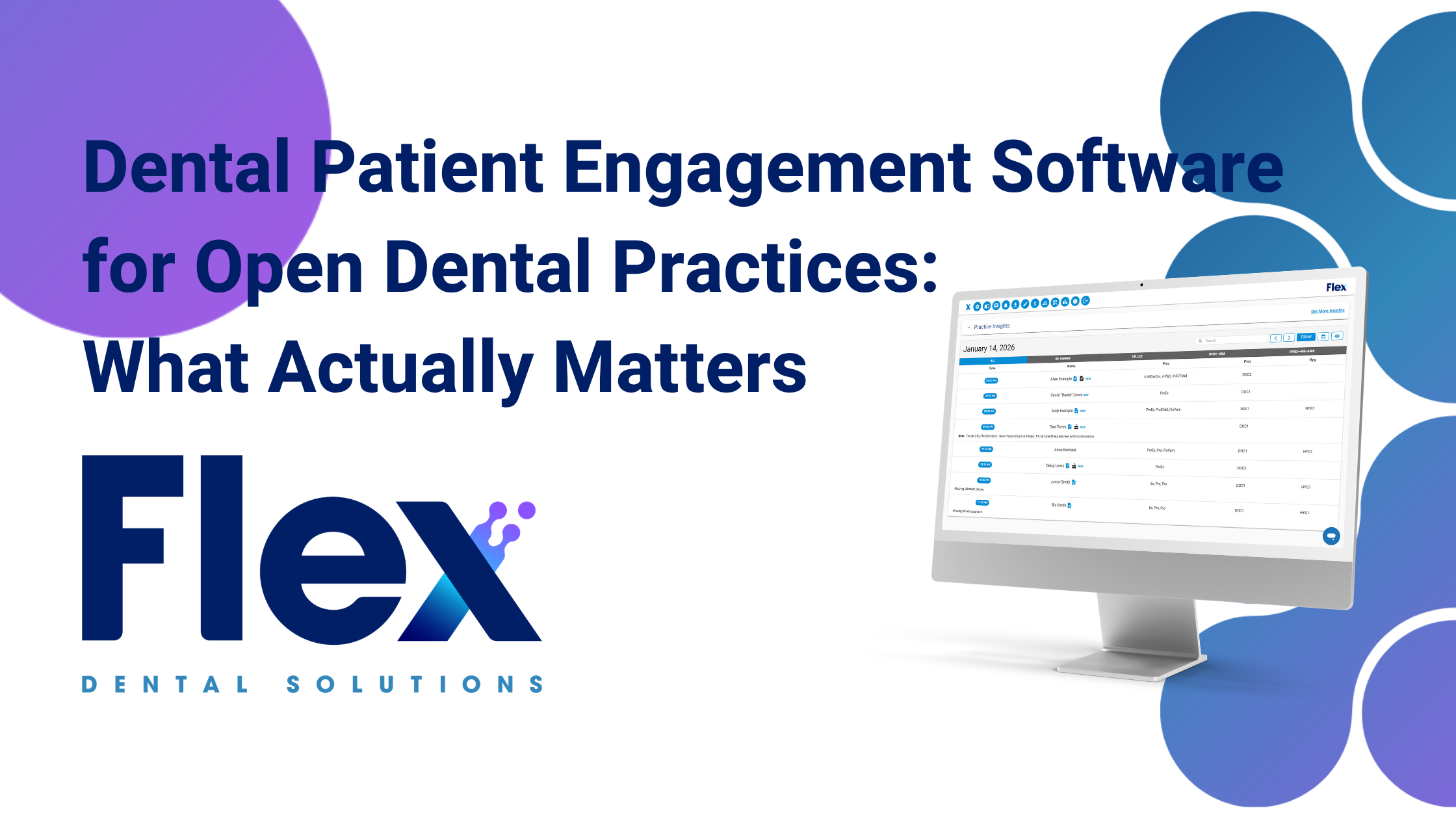
Flex Dental Solutions is an all-in-one patient engagement and workflow platform built for dental practices, especially those using Open Dental.
It helps practices:
- Automate appointment reminders, confirmations, and two-way texting
- Let patients book online and complete digital forms
- Verify insurance and reduce claim issues
- Present treatment plans and collect payments digitally
- Send bulk messages, recalls, and announcements easily
The result: less manual work for staff, fewer no-shows, faster payments, and a better patient experience — all from one connected system.
Implementing Your Chosen Communication Solution: Best Practices for Success
Selecting a powerful dental communication software, such as Flex Dental Solutions, is only the first step; successful implementation is key to realizing its full potential. A strategic approach ensures that the technology integrates smoothly into the practice's daily operations and staff are equipped to leverage its capabilities.
Strategic Integration and Workflow Adaptation
The most effective communication solutions seamlessly integrate with your existing dental practice management software. This ensures data consistency and avoids redundant data entry. Before implementation, map out your current patient communication workflows. Identify areas where the new software can enhance or replace existing processes. This might involve adapting your appointment confirmation sequences, refining your recall strategy, or redesigning your check-in procedures to incorporate digital forms. A thoughtful integration ensures the software becomes a natural extension of your practice's operations, rather than a disruptive add-on.
Staff Training and Change Management
Successful adoption hinges on your team. Comprehensive training is essential for all staff members who will interact with the new software, from receptionists to hygienists and dentists. Training should cover not only how to use the features but also the strategic importance of enhanced patient communication. Address potential resistance to change proactively by explaining the benefits for both the practice and individual staff roles, such as reduced manual tasks and improved patient interactions. Ongoing support and refresher training can help reinforce best practices and ensure continuous improvement.
Measuring Success and Continuous Optimization
To understand the true impact of your new communication software, establish key performance indicators (KPIs) before implementation. These might include no-show rates, patient satisfaction scores, online review volume and ratings, appointment conversion rates, and staff time saved on administrative tasks. Regularly monitor these metrics to gauge the software's effectiveness. Use the insights gained from these analytics, along with patient feedback, to continuously optimize your communication strategies and workflows. The goal is to foster an environment of continuous improvement, ensuring your chosen solution delivers maximum value and contributes to long-term practice success.
Conclusion: Paving the Way for a Patient-Centric Future
In the rapidly evolving dental industry of 2026, advanced patient communication software is no longer a competitive advantage; it is a fundamental requirement for thriving practices. By embracing solutions that offer automated engagement, robust two-way communication, streamlined digital forms, and intelligent integrations, dental practices can transcend traditional operational models. The strategic value extends far beyond mere efficiency, directly impacting patient satisfaction, fostering unwavering loyalty, and driving sustainable growth.
As we’ve explored, the selection of software demands a thorough evaluation of security, regulatory compliance, and technological capabilities. Furthermore, successful implementation requires a commitment to staff training and a continuous drive for optimization based on measurable outcomes. By prioritizing patient engagement through technology, dental practices can cultivate deeper relationships, enhance their reputation, and confidently navigate the future of oral healthcare, ensuring they remain at the forefront of delivering exceptional, patient-centric care. The journey towards a more connected and supportive patient experience begins with the strategic adoption of these essential communication tools.