Introduction: The Unseen Costs of Manual Dental Insurance Verification
The administrative burden in modern dental practices is a silent saboteur, often consuming valuable time and resources that could otherwise be dedicated to patient care or practice growth. At the heart of this administrative maze lies dental insurance verification. While essential for financial health, the traditional manual approach to verifying patient coverage is fraught with inefficiencies, inaccuracies, and significant hidden costs. This process, which forms a critical junction in the patient journey and the practice's revenue cycle, is ripe for transformation. In a landscape where dental insurance plans are ever-evolving, and the sheer volume of verifications is staggering—the dental industry conducted an estimated 1.2 billion eligibility and benefit verifications in 2023 alone [Videa AI, 2023]—relying on manual methods is no longer a viable strategy for forward-thinking dental practices. This article delves into the world of dental insurance verification automation, exploring its impact, essential features, the revolutionary role of AI, and how to select the best tools to optimize your practice, secure your bottom line, and enhance the patient experience.
The Unseen Costs of Manual Dental Insurance Verification
The daily grind of calling insurance companies, navigating complex phone trees, and meticulously documenting coverage details is a familiar scene in many dental offices. However, the true cost of this manual verification process extends far beyond the immediate labor involved, creating ripple effects throughout the entire practice.
The Ever-Increasing Complexity of Dental Insurance and Its Impact on Dental Practices
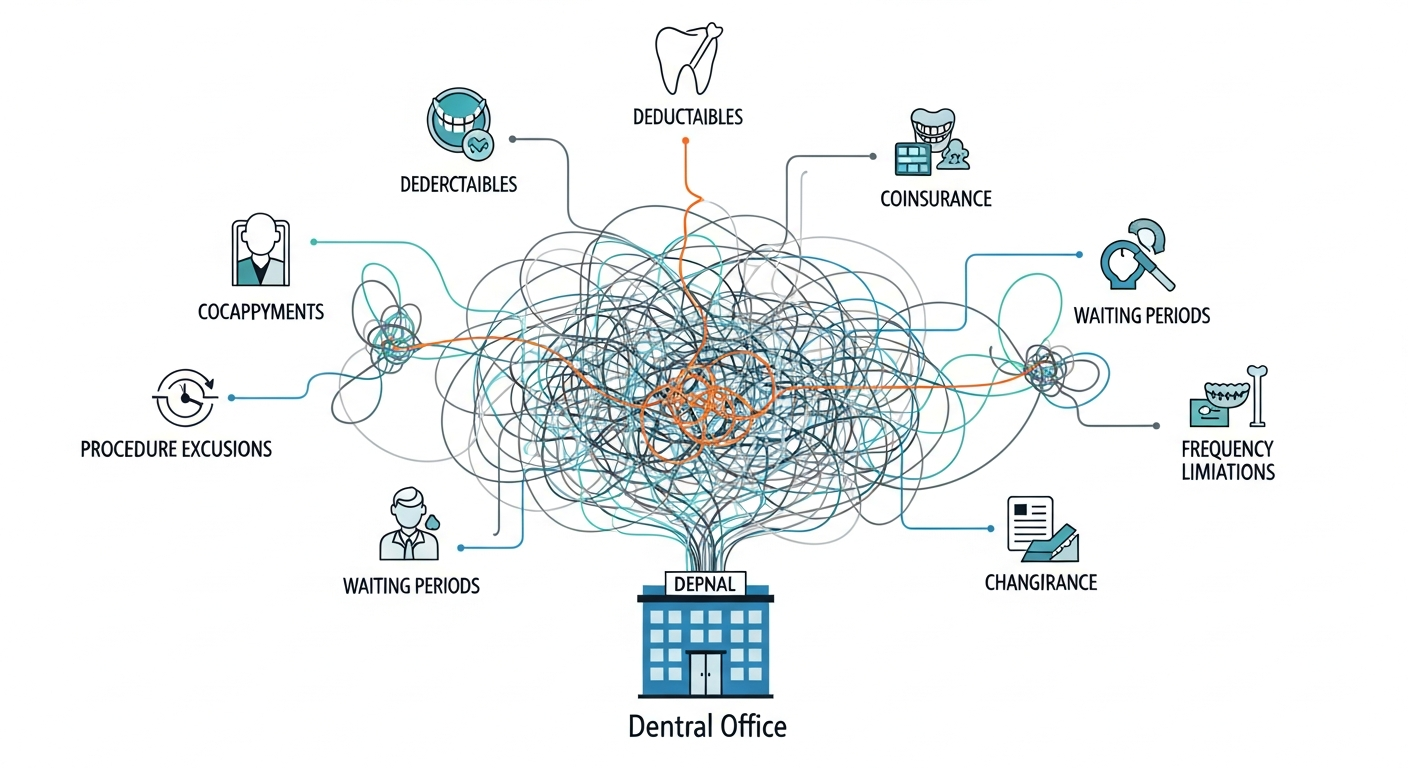 The landscape of dental insurance is an intricate web of changing rules, coverage details, and limitations, making manual verification a complex and error-prone task.
The landscape of dental insurance is a dynamic and often bewildering territory. Insurance companies continually update their plans, add new restrictions, and change their administrative procedures. For dental practices, this means that staying current with the nuances of various plans—understanding deductibles, copayments, coinsurance, annual maximums, and specific procedure coverage—requires constant vigilance. This complexity directly impacts the verification process, making it increasingly time-consuming and prone to error. The inability to accurately ascertain coverage details upfront can lead to a cascade of problems, from misquoting patients to unexpected claim denials. This intricate web of policies means that even a seemingly simple procedure can involve layers of administrative work to ensure proper reimbursement.
The True Cost of Manual Verification: Financial Drain and Operational Headaches
The financial implications of manual dental insurance verification are substantial and often underestimated. Each verification attempt can consume a significant portion of a front desk team member's time, often taking anywhere from 5 to 15 minutes or more per patient, depending on the complexity of the plan and the responsiveness of the insurance company. When you multiply this by the number of patients seen daily, weekly, and monthly, the hours spent on this single task become immense. This translates directly into higher labor costs and, critically, lost revenue.
Dental claim rejection rates average 5–10% nationwide, and a significant portion of these rejections can be directly attributed to issues arising from insufficient upfront verification [Zentist, 2025]. When claims are denied or rejected due to inaccurate eligibility or benefit information, the practice must then dedicate even more resources to resubmitting claims, appealing decisions, and chasing down payments. This cycle not only delays reimbursement but also directly impacts the practice's bottom line. Furthermore, automation has been shown to reduce claim errors by up to 30%. The operational headaches are equally taxing. Staff can become bogged down in repetitive, low-value tasks, leading to burnout and decreased job satisfaction. This diversion of resources means less time for patient engagement, strategic planning, and other critical aspects of running a thriving practice.
The Impact on Patient Experience and Trust
The consequences of manual insurance verification extend beyond the operational and financial realms, profoundly affecting the patient experience. When verifications are inaccurate or incomplete, patients may be presented with unexpected out-of-pocket costs after their treatment. This can lead to feelings of being misled or deceived, eroding trust in the dental practice. Patients expect transparency regarding their financial obligations, and a significant surprise bill can damage relationships and lead to negative word-of-mouth referrals.
Conversely, accurate upfront verifications allow dental practices to provide patients with clear and precise estimates of their expected financial responsibility. This transparency empowers patients to make informed decisions about their care and budget accordingly. Practices that leverage automation to provide these accurate estimates often see a decrease in payment-related disputes and an overall improvement in patient satisfaction. Furthermore, automation can reduce no-show rates by enabling more efficient and automated appointment reminders, with comprehensive automation strategies leading to a 35-50% decrease in such occurrences [Zentist, 2025]. A smoother, more predictable financial experience contributes to a positive overall perception of the practice, fostering loyalty and repeat business.
What is Dental Insurance Verification Automation, and Why Your Practice Needs It
In response to the escalating complexities and costs associated with manual dental insurance verification, automation has emerged as a transformative solution for dental practices. It represents a fundamental shift in how verifications are handled, moving from time-intensive manual processes to efficient, technology-driven workflows.
Defining Automated Dental Insurance Verification Software
Automated dental insurance verification software is a technology solution designed to streamline and expedite the process of confirming a patient's dental insurance coverage and benefits. Instead of human agents manually contacting insurance companies via phone or web portals, this software interfaces directly with payer systems, either electronically or through advanced data parsing, to retrieve eligibility and benefit information in real-time or near real-time. This includes details such as active coverage dates, copayments, deductibles, coinsurance percentages, annual maximums, and limitations on specific procedures. The goal is to automate as much of the verification process as possible, reducing manual intervention and increasing accuracy and speed.
Core Functionality: How Automation Transforms Your Practice's Workflow
The core functionality of automation in dental insurance verification revolves around replacing manual data entry and communication with sophisticated digital processes. When a patient schedules an appointment or arrives for one, the verification software can instantly check their eligibility against the relevant insurance company. This typically involves the system accessing patient demographic data (often pulled directly from the practice management system) and submitting an electronic request to the payer.
The system then receives and interprets the payer's response, extracting key coverage details. This information is then presented in an easy-to-understand format within the software or directly integrated back into the practice management system (PMS). This seamless flow of information dramatically reduces the need for front desk staff to make phone calls or log into multiple payer portals. It transforms the verification process from a time-consuming bottleneck into a swift, integrated component of patient intake and appointment management. This efficiency directly impacts the revenue cycle, ensuring that claims are submitted with accurate information from the outset, thereby minimizing claim denials.
Key Benefits Across Your Practice: From Revenue Cycle to Patient Satisfaction
The implementation of dental insurance verification automation yields a multitude of benefits that touch nearly every facet of a dental practice.
- Enhanced Revenue Cycle Management: By ensuring accurate coverage details and eligibility upfront, automation significantly reduces claim denials and rejections. This leads to faster payments and improved cash flow, directly boosting the practice's bottom line. The revenue cycle becomes more predictable and efficient.
- Increased front desk efficiency: Automating this tedious task frees up front desk staff from repetitive phone calls and data entry. They can then dedicate more time to patient interaction, appointment scheduling, and other high-value administrative duties, enhancing overall practice productivity.
- Improved Patient Experience: Accurate financial estimates provided through automated verifications lead to greater transparency and fewer surprise bills for patients. This builds trust and improves overall patient satisfaction, fostering loyalty.
- Reduced Errors and Increased Accuracy: Automated systems minimize human error inherent in manual verifications. This leads to more precise billing and fewer discrepancies, reducing administrative overhead associated with correcting mistakes. McKinsey studies indicate that automation can reduce claim errors by up to 30% [Ventus AI Blog, 2024].
- Better Treatment Planning and Acceptance: When dentists and hygienists have a clear understanding of a patient's dental insurance benefits, they can discuss treatment options more effectively, taking into account coverage and out-of-pocket costs. This can lead to higher treatment acceptance rates.
- Operational Streamlining: Integrating verification software with practice management systems (PMS) creates a more cohesive operational workflow, reducing duplicate data entry and enhancing data integrity across the practice.
Essential Features to Look for in Automated Verification Tools
Selecting the right verification software is crucial for maximizing the benefits of automation. Not all tools are created equal, and understanding key features will help you identify a solution that aligns with your practice's specific needs.
Comprehensive Real-Time Eligibility and Detailed Benefit Breakdown
The cornerstone of any effective dental insurance verification automation tool is its ability to provide accurate, real-time eligibility checks and comprehensive benefit breakdowns. This means the software should not only confirm if a patient's insurance is active but also furnish detailed information about their specific benefits. This includes:
- Active Coverage Dates: Verifying that the policy is currently in force.
- Copayments: The fixed amount a patient pays for covered services.
- Deductibles: The amount a patient must pay out-of-pocket before their insurance begins to cover services.
- Coinsurance: The percentage of costs a patient shares with the insurer after meeting their deductible.
- Annual Maximums: The total amount the insurance plan will pay for services within a year.
- Service-Specific Limitations: Information on whether certain procedures are covered, any pre-authorization requirements, and frequency limitations (e.g., X-rays covered every two years).
Access to this granular data at the point of service or scheduling allows the practice to provide accurate estimates, manage patient expectations, and ensure proper billing and payments.
Seamless Integration with Your Practice Management Systems (PMS)
For true automation and maximum efficiency, the verification software must integrate seamlessly with your existing practice management system (PMS). This integration is vital for several reasons:
- Eliminates Duplicate Data Entry: When the verification tool can pull patient demographic information directly from the PMS, it eliminates the need for staff to re-enter data, saving time and reducing errors.
- Synchronizes Information: Data from the verification process (eligibility, benefits, patient responsibility) can be automatically logged back into the patient's record in the PMS. This ensures that all team members have access to the most up-to-date information.
- Streamlines Workflows: A smooth integration means the verification process becomes an almost invisible part of the patient intake and scheduling workflow, rather than an isolated task. This enhances the overall operational efficiency of the practice.
- Improves Data Accuracy: By reducing manual transfers of information, integration minimizes the risk of data discrepancies and errors, leading to more accurate claims and billing.
Look for tools that offer robust, bi-directional integration capabilities with the leading PMS platforms used by dental practices.
Robust Payer Network Coverage and Multichannel Data Delivery
The effectiveness of any verification software is directly tied to its ability to connect with a wide array of insurance companies. A robust payer network ensures that you can verify coverage for the majority of your patient base. Key considerations include:
- Breadth of Coverage: Does the tool support national payers, regional plans, and even smaller, specialty insurance providers relevant to your patient demographic?
- Depth of Information: Beyond basic eligibility, does it provide detailed benefit breakdowns as discussed earlier?
- Real-Time vs. Batch Processing: While real-time verification is ideal for immediate feedback, some tools might offer efficient batch processing for less urgent needs. The ability to choose or utilize both can be advantageous.
- Data Delivery Methods: How is the verification information delivered? Is it displayed directly within the software's interface, pushed to your PMS, or provided via reports? Flexibility in data delivery can cater to different workflow preferences.
A comprehensive payer network, coupled with reliable and versatile data delivery, ensures that your automation efforts cover the vast majority of your patient encounters, maximizing the impact on your revenue cycle and patient experience.
Advanced Reporting, Analytics, and Reimbursement Tracking
Beyond the immediate task of verifying eligibility, powerful verification software offers advanced reporting and analytics capabilities. These features provide invaluable insights into your practice's performance and help optimize the revenue cycle.
- Verification Volume and Turnaround Times: Track how many verifications are being performed and how quickly they are completed.
- Payer Performance: Identify which insurance companies are causing the most delays or denials, allowing for targeted interventions.
- Patient Responsibility Tracking: Monitor the accuracy of patient estimates and track outstanding balances.
- Claim Denial Trends: Analyze patterns in claim denials to identify root causes, which can often be linked back to initial verification issues.
- ROI Calculation: Tools that provide clear metrics on time saved, reduced denials, and improved collections can help demonstrate the return on investment for the automation solution.
- Reimbursement Tracking: Some advanced tools can even assist in tracking the status of submitted claims and the subsequent payments, offering a more holistic view of the revenue cycle.
These analytical capabilities transform the verification process from a simple administrative task into a strategic tool for improving financial health and operational efficiency.
Data Security, HIPAA Compliance, and Reliable Support
In today's data-sensitive environment, ensuring the security and compliance of any verification software is paramount. Dental practices handle Protected Health Information (PHI), and any tool used must adhere to stringent security protocols.
- HIPAA Compliance: The software must be fully compliant with the Health Insurance Portability and Accountability Act (HIPAA) regulations, ensuring the privacy and security of patient data. This includes secure data transmission, storage, and access controls.
- Data Encryption: Look for robust encryption methods (e.g., AES-256) for data both in transit and at rest.
- Access Controls: The system should allow for role-based access, ensuring that only authorized personnel can view sensitive information.
- Audit Trails: The ability to track who accessed what data and when is crucial for accountability and security monitoring.
- Reliable Support: When issues arise or questions surface, responsive and knowledgeable customer support is essential. This includes technical support for integration, troubleshooting, and assistance with understanding the software's functionalities. A dedicated support team can significantly ease the transition and ongoing use of the automation tool.
Prioritizing these security and support aspects ensures a safe, compliant, and user-friendly experience with your chosen verification software.
The Game-Changing Role of Artificial Intelligence (AI) in Dental Verification
While automation itself offers significant advantages, the integration of Artificial Intelligence (AI) is elevating dental insurance verification to new heights, promising unprecedented accuracy, efficiency, and predictive capabilities. AI is moving beyond simply automating existing processes to fundamentally reimagining them.
Beyond Basic Checks: How AI Elevates Accuracy and Efficiency
Traditional automation excels at tasks that follow clear, predefined rules. AI, however, can handle more complex, nuanced, and variable data. In dental insurance verification, this translates to:
- Enhanced Data Interpretation: AI algorithms can interpret complex policy language, identify subtle variations in benefits across different plans, and even understand unstructured text in insurance documents more effectively than rule-based systems. This leads to a more accurate understanding of coverage details.
- Intelligent Data Extraction: AI can extract relevant information from various sources, including scanned documents, handwritten notes, or even spoken language, with greater precision, reducing the need for manual data correction.
- Anomaly Detection: AI can identify unusual patterns or potential discrepancies in verification data that might escape human attention, flagging them for review and preventing potential claim denials.
- Predictive Accuracy: By analyzing vast datasets of past verifications and claims, AI can learn to predict the likelihood of a claim being approved or denied based on the specific benefits and patient history.
These AI-driven enhancements mean that verifications are not just faster, but also significantly more accurate and insightful, leading to fewer errors and a more robust revenue cycle.
AI-Powered Predictive Analytics for Claim Approvals and Pre-Authorizations
One of the most transformative applications of AI in dental verification is its ability to provide predictive analytics. This capability moves the practice from a reactive to a proactive stance in managing claims and billing.
- Predicting Claim Approval Likelihood: AI can analyze a patient's specific insurance plan, the proposed treatment, and historical claims data to estimate the probability of a claim being approved. This allows the practice to anticipate potential issues and address them before submitting the claim, reducing claim denials.
- Optimizing Pre-Authorization Workflows: Many procedures require pre-authorization from insurance companies. AI can help predict which procedures are most likely to require pre-authorization and even identify the specific documentation needed, streamlining this often cumbersome process. This foresight can prevent significant delays in treatment and payments.
- Identifying High-Risk Claims: AI can flag claims that exhibit characteristics often associated with denials, allowing the front desk or billing team to perform a more thorough review and make necessary adjustments before submission. This proactive approach safeguards the practice's bottom line.
By leveraging AI for predictive analytics, dental practices can significantly reduce the uncertainty and administrative overhead associated with claims processing and reimbursement.
Emerging AI Applications: Voice AI, Radiographic Data Integration, and Practice Intelligence
The evolution of AI continues to unlock new possibilities for dental verification and overall practice management.
- Voice AI: Imagine a system that can understand spoken requests for verifications, making the process even more intuitive. Voice AI could allow staff to verbally confirm patient details or ask specific benefit questions, further streamlining interactions.
- Radiographic Data Integration: In the future, AI may be able to analyze radiographic images to cross-reference with insurance plan requirements. For example, if an X-ray is required for a specific procedure according to the policy, AI could flag this necessity during the verification process. This integration bridges the gap between clinical data and administrative verifications.
- Practice Intelligence: AI can synthesize data from various sources—including insurance verification, billing history, patient demographics, and even clinical notes—to provide a comprehensive view of practice performance. This "practice intelligence" can highlight trends, identify areas for improvement, and inform strategic decision-making, moving beyond simple verifications to holistic practice optimization.
These emerging AI applications promise to make dental insurance verification an even more integrated and intelligent component of modern dental practices, driving efficiency and improving patient care.
Finding Your Best Fit: A Strategic Approach to Tool Selection
Choosing the right dental insurance verification automation tool is not a one-size-fits-all decision. A strategic approach, grounded in understanding your practice's unique needs and thoroughly evaluating available solutions, is essential for success.
Step 1: Assess Your Practice's Unique Needs and Goals
Before diving into product comparisons, take a step back and critically assess your practice. Consider:
- Practice Size and Volume: Are you a solo practitioner, a small group, or a large multi-location practice? The volume of verifications and the complexity of your operations will influence the type of solution you need.
- Current Technology Stack: What practice management system (PMS) are you using? What are its capabilities and limitations regarding integrations? The chosen verification software must work harmoniously with your existing systems.
- Primary Pain Points: What are your biggest challenges with the current verification process? Is it time spent by staff, claim denials, inaccurate patient estimates, or something else? Prioritize solutions that directly address your most pressing issues.
- Budget: What is your allocated budget for administrative software and automation? Consider not only the upfront cost but also ongoing subscription fees and potential implementation expenses.
- Team Capabilities and Training Capacity: How tech-savvy is your team? Will they require extensive training, or can they adapt quickly to new software?
- Specific Payer Mix: Do you serve a patient population with a particular set of dominant insurance companies? Ensure the chosen tool has strong coverage for these payers.
By clearly defining your needs and goals, you can narrow down the options and focus on tools that will provide the most value to your specific practice.
Step 2: Key Evaluation Criteria for Comparing Verification Platforms
Once you have a clear understanding of your needs, use the following criteria to systematically evaluate different dental insurance verification automation tools:
- Accuracy and Completeness of Verification Data: Does the tool provide real-time, accurate eligibility and detailed benefit breakdowns? How often is the data updated?
- Payer Network Breadth and Depth: Does it cover your primary insurance companies? Does it offer comprehensive benefit details for each payer?
- Integration Capabilities: How well does it integrate with your PMS? Is the integration robust, bi-directional, and reliable?
- Ease of Use and User Interface (UI): Is the software intuitive and easy for your Front Desk and billing staff to navigate and use efficiently?
- Automation Features: Beyond basic eligibility, what other aspects of the verification process does it automate? Does it offer batch processing or AI-driven insights?
- Reporting and Analytics: What kind of reports and data insights does it provide? Can it help you track ROI and identify areas for improvement in your revenue cycle?
- Data Security and HIPAA Compliance: Is the tool demonstrably secure and fully HIPAA compliant?
- Customer Support and Training: What level of support is offered? Are there comprehensive training resources available?
- Pricing and Value: Does the pricing structure align with your budget and offer good value for the features provided?
- Scalability: Can the tool grow with your practice?
By applying these criteria consistently, you can conduct a thorough comparison and make an informed decision that will positively impact your practice's efficiency, profitability, and patient experience.
Top Dental Insurance Verification Automation Tools: A Curated Overview
The market offers a range of solutions designed to automate dental insurance verification. These tools can broadly be categorized by their primary strengths, helping you identify potential fits for your practice.
For Comprehensive AI-Powered Insights and Clinical Intelligence
Tools in this category leverage advanced Artificial Intelligence to go beyond basic eligibility checks. They often integrate clinical data or offer predictive analytics to enhance claim accuracy and provide deeper practice intelligence. If your practice is looking to harness the cutting edge of AI for optimized revenue cycle management and informed decision-making, these solutions are worth exploring. They aim to provide foresight into claim outcomes and streamline complex pre-authorization processes.
For Integrated Practice Management & Verification Solutions
For practices prioritizing a unified system, solutions that tightly integrate dental insurance verification with their core practice management systems (PMS), such as Open Dental, are ideal. These tools often function as modules or extensions of popular PMS platforms, ensuring seamless data flow, minimal duplicate entry, and a cohesive workflow. If your goal is to enhance your existing PMS with robust verification automation without adding a separate, standalone system, this category offers streamlined options that directly support your front desk and billing operations.
For Enhanced Patient Experience & Front Desk Efficiency
These solutions are often designed with a strong emphasis on empowering the front desk team and improving patient interactions. They focus on delivering accurate patient responsibility estimates quickly, streamlining check-in processes, and reducing manual tasks for staff. If enhancing the patient experience through clear financial communication and improving the daily efficiency of your front office are your top priorities, tools in this category will be particularly appealing. They often include features like automated appointment reminders, which can help reduce no-show rates.
For Robust Claim & Revenue Cycle Management
Practices focused on optimizing their entire revenue cycle, from verification to final payment, will find value in tools that offer comprehensive features for claim management and reimbursement tracking. These solutions often provide advanced reporting, denial management tools, and analytics to help pinpoint inefficiencies. If your primary objective is to reduce claim denials, accelerate cash flow, and gain deeper insights into your financial performance, these tools offer a powerful suite of functionalities to support your bottom line.
Other Notable Solutions and Emerging Players
The dental insurance verification market is dynamic, with new solutions and innovative approaches continually emerging. Beyond the broad categories, many providers offer specialized features, such as advanced AI capabilities for specific claim types, unique payer network strengths, or particularly user-friendly interfaces. It's always advisable to research current market offerings, attend industry webinars, and request demos from a variety of vendors to ensure you are aware of the latest advancements and find the best fit for your evolving practice needs.
Implementation Best Practices and What to Expect
Adopting any new technology requires careful planning and execution. Implementing dental insurance verification automation is no different. A thoughtful approach will ensure a smooth transition and maximize the benefits for your practice.
Planning for a Smooth Transition and Seamless Integration
Before launching a new verification software, meticulous planning is essential. This begins with selecting a tool that demonstrably integrates well, like Flex Dental Solutions, with your existing practice management system (PMS), such as Open Dental. If integration is a concern, consult with both the verification software vendor and your PMS provider to understand the technical requirements and potential challenges.
Develop a clear implementation timeline, outlining key milestones such as data migration (if applicable), system configuration, and testing phases. Identify a dedicated internal champion or a small team responsible for overseeing the implementation process. This team will serve as the primary point of contact for the vendor and ensure that the practice's specific needs are met during setup.
Communicate clearly with your entire team about the upcoming changes, explaining the rationale behind adopting automation and the benefits it will bring to their roles and the practice as a whole. Address any concerns or questions they may have proactively. A phased rollout, starting with a pilot group or a limited set of functionalities, can also be a prudent strategy to identify and resolve any initial issues before a full deployment.
Conclusion
The era of manual dental insurance verification is rapidly giving way to the efficiency, accuracy, and intelligence offered by automation. The complexities of modern dental insurance plans, coupled with the significant costs associated with manual processes—from wasted staff time and operational headaches to increased claim denials and a compromised patient experience—demand a more sophisticated approach. Automated dental insurance verification software not only streamlines the verification process but also fundamentally enhances the revenue cycle, boosts front desk efficiency, and improves patient satisfaction through transparent billing and accurate payment estimates.
The integration of Artificial Intelligence is further revolutionizing this field, offering predictive analytics, enhanced accuracy, and a deeper level of practice intelligence that moves beyond simple task automation. By carefully assessing your practice's unique needs and evaluating tools based on essential features like real-time eligibility, seamless PMS integration, robust payer coverage, and strong security, you can identify the best-fit solution. Investing in the right automation tool is not just about improving an administrative task; it's a strategic decision that fortifies your practice's bottom line, empowers your team, and elevates the care and experience you provide to your patients. Embrace automation to navigate the evolving landscape of dental insurance and pave the way for a more efficient, profitable, and patient-centered future.