Embarking on a journey towards better oral health often begins with a crucial document: your dental treatment plan. Far more than a simple list of proposed procedures, this plan serves as your personalized roadmap, meticulously crafted by your dental professional to address your unique needs. It's a comprehensive guide that outlines recommended dental treatments, explains the rationale behind them, and provides a pathway to achieving and maintaining optimal oral health. In a world where dental care can seem complex, understanding your treatment plan is paramount. It empowers you, the patient, to make informed decisions, actively participate in your care, and ultimately, achieve the healthy, confident smile you deserve. This article will demystify the process, taking you through what to expect from your initial examinations to the final implementation and maintenance of your dental care, and crucially, how to choose the treatment plan that best aligns with your individual goals and circumstances.
Beyond a Simple Check-up: What a Dental Treatment Plan Means for You
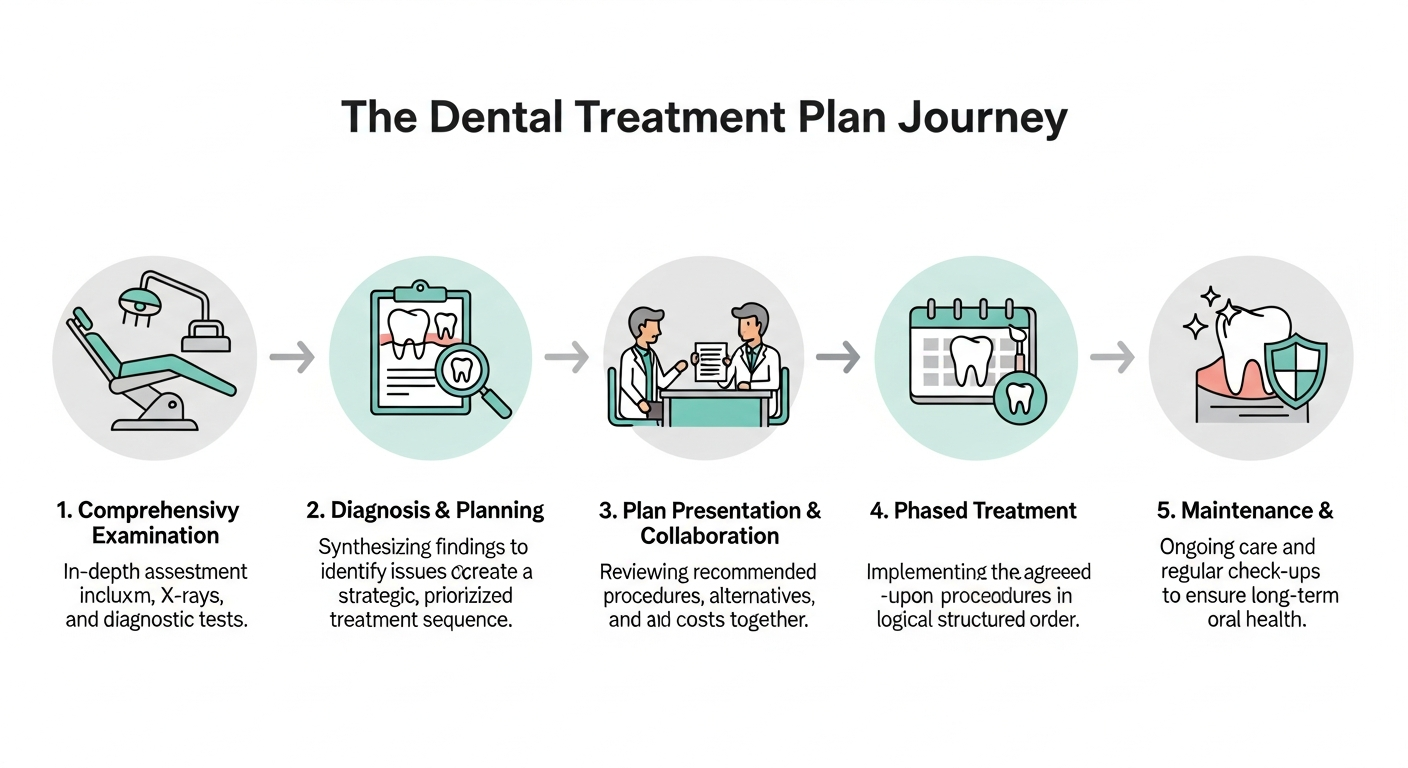 Your dental treatment plan is a structured journey from initial diagnosis to long-term health.
A dental treatment plan is the cornerstone of modern dentistry, moving beyond a reactive approach to one that is proactive and personalized. It signifies a commitment from your dental practice to provide comprehensive patient care, tailored specifically to your oral health status. While a routine check-up might identify immediate issues, a treatment plan delves deeper. It’s a detailed document that synthesizes findings from examinations and diagnostic tools to create a strategic sequence of procedures designed to address current problems, prevent future ones, and improve your overall oral well-being. For the patient, this plan is an essential tool for understanding the scope of recommended dental treatments, the reasons behind each suggestion, and the expected outcomes. It fosters transparency and builds trust within the dentist-patient relationship, ensuring you are an active partner in your dental journey, rather than a passive recipient of care.
Empowering Your Journey to Optimal Oral Health
Your journey to optimal oral health is deeply personal, and your dental treatment plan is designed to empower you throughout this process. It transforms the often-daunting prospect of dental procedures into a structured, understandable path. By clearly outlining what needs to be done, why it needs to be done, and the potential benefits, your dentist provides you with the knowledge to take control. This empowerment stems from understanding – understanding your current oral health condition, the implications of various dental treatments, and the choices available to you. When you comprehend your treatment plan, you can engage in meaningful discussions with your dental professional, ask pertinent questions, and feel confident in the decisions you make regarding your dental care. This collaborative approach to treatment planning ensures that your individual needs, preferences, and goals are at the forefront, leading to greater satisfaction and more successful long-term outcomes for your oral health.
The Diagnostic Journey: What Happens Before Your Plan is Presented
The foundation of any effective dental treatment plan is a thorough and accurate diagnosis. Before any recommendations are made, your dental professional will embark on a comprehensive diagnostic journey to understand the full scope of your oral health. This meticulous process ensures that the subsequent treatment plan is precisely tailored to your needs, addressing not just surface-level issues but also underlying problems that might not be immediately apparent.
Initial Examinations and Comprehensive Assessments
Your dental visit typically begins with initial examinations and comprehensive assessments, which are critical steps in understanding your current oral health status. This goes far beyond a quick glance. A thorough examination involves a visual inspection of your teeth, gums, tongue, cheeks, and throat for any signs of disease, decay, or abnormalities. Your dentist will check for cavities, gum disease (such as gingivitis or periodontitis), signs of oral cancer, and any unusual lumps or lesions. Periodontal probing is often conducted to measure the depth of the gum pockets, an indicator of gum health. Bite analysis and assessment of existing restorations are also part of this comprehensive evaluation. The goal is to gather a complete picture of your oral condition, ensuring no significant issues are overlooked before treatment planning begins. This foundational step is vital for effective patient care.
Diagnostic Tools: Unveiling Your Oral Health Story with X-rays and More
To gain a more profound understanding of your oral health, dentists employ a range of sophisticated diagnostic tools. Among the most crucial are X-rays. Different types of X-rays, such as bitewing, periapical, and panoramic, provide invaluable insights that are invisible to the naked eye. Bitewing X-rays are excellent for detecting decay between teeth and assessing bone levels in the posterior areas. Periapical X-rays show the entire tooth, including the root and surrounding bone, aiding in the diagnosis of infections or abscesses. Panoramic X-rays offer a broad view of the entire jaw, including all teeth and the temporomandibular joint, useful for identifying impacted teeth, cysts, or tumors. Increasingly, Cone Beam Computed Tomography (CBCT) scans provide three-dimensional images, offering unparalleled detail for complex cases, implant planning, or root canal evaluations. Beyond X-rays, intraoral cameras allow both the dentist and the patient to see detailed images of the mouth in real-time, aiding comprehension. Dental explorers help detect the texture of tooth surfaces, identifying soft spots indicative of decay. These diagnostic tools collectively paint a comprehensive picture of your oral health, forming the basis for accurate treatment planning.
Understanding Your Diagnosis: Identifying Your Specific Dental Problems
Once the examinations and diagnostic imaging are complete, your dental professional will synthesize this information to identify your specific dental problems. This diagnosis is the critical bridge between the diagnostic phase and the creation of your dental treatment plan. It involves pinpointing issues such as tooth decay leading to the need for fillings or restorations, periodontal disease requiring deep cleaning or surgical intervention, cracked or worn teeth that might necessitate crowns, missing teeth that could be replaced with an implant or bridge, or impacted wisdom teeth requiring extractions. The diagnosis will also highlight any conditions that, while not immediately causing pain, pose a risk to your long-term oral health. Clearly understanding this diagnosis is the first step in appreciating the necessity and scope of the proposed dental treatments.
Decoding Your Dental Treatment Plan: What to Expect During the Discussion
With a thorough diagnosis in hand, your dental team will present you with your personalized dental treatment plan, which is available through Flex Dental Solutions. This is a pivotal moment where complex diagnostic findings are translated into actionable steps. The discussion surrounding your plan is designed to be transparent, informative, and collaborative, ensuring you fully understand the proposed course of action and feel confident in moving forward.
Understanding Treatment Recommendations and Exploring Your Options
During the discussion of your dental treatment plan, your dentist will clearly articulate the recommended dental treatments and the rationale behind each. They will explain why certain procedures are necessary, what problems they will solve, and what the expected outcomes are for your oral health. Importantly, where multiple treatment options exist, your dentist will present these to you. This might involve discussing different materials for restorations, varying approaches to address periodontal issues, or alternatives for replacing missing teeth. The goal is to ensure you understand the pros, cons, timelines, and costs associated with each viable option, empowering you to participate actively in the decision-making process. This open dialogue is central to effective dentistry and patient care.
Common Dental Treatments Explained: From Fillings to Implants
Your dental treatment plan will likely outline various procedures to address your specific needs. Understanding what these entail is crucial. For cavities, fillings are the most common solution, where decayed tooth structure is removed and replaced with a restorative material like composite resin or amalgam. More extensive decay or damage might necessitate restorations like inlays or onlays. When a tooth is significantly damaged, fractured, or has undergone root canal therapy, a crown is often recommended to protect and strengthen it. This prosthetic cap covers the entire visible portion of the tooth. For severely damaged or decayed teeth that cannot be saved, extractions may be necessary. In cases of missing teeth, a dental implant offers a durable and aesthetic replacement. An implant is a titanium post surgically placed into the jawbone, which then supports a crown or bridge. Other common procedures include root canals to treat infected pulp, and periodontal treatments to manage gum disease. Each of these dental treatments plays a specific role in restoring and maintaining your oral health.
The Phased Approach: Why Treatment Isn't Always One-and-Done
Often, a dental treatment plan is not a single, immediate event but rather a phased approach. This means that your dental professional may recommend a sequence of procedures spread over time. There are several reasons for this. Urgency is a primary factor; immediate issues like severe pain or infection requiring extractions or root canals will take precedence. However, sometimes the mouth needs to be stabilized first. For example, severe gum disease must be managed before extensive restorative work can be done. Phasing also allows for better financial planning for the patient. Furthermore, it enables the dental team to monitor how the mouth responds to initial treatments before proceeding with more complex or costly interventions. This strategic sequencing ensures the most predictable and successful long-term outcomes for your oral health, making the treatment planning process both practical and effective.
Visual Aids and Digital Imaging: Seeing is Believing in Your Treatment Plan
To enhance your understanding of your dental treatment plan, many modern dental practices utilize visual aids and digital imaging. Seeing is often believing when it comes to dental procedures. Intraoral cameras can capture high-resolution images of your teeth and gums, allowing your dentist to show you precisely where the issues are – be it a cavity, a worn filling, or early signs of gum recession. Digital X-rays, including 3D CBCT scans, provide detailed anatomical views that clearly illustrate the condition of your teeth, roots, and bone structure. When your dentist can visually demonstrate the problem and then show you simulations or examples of the proposed restorations, crowns, or even implants, it significantly demystifies the dentistry process. These tools foster a shared understanding, making it easier for you, the patient, to grasp the necessity and benefits of the recommended dental treatments and engage more confidently in your treatment planning.
Informed Consent: Your Right to Understand and Agree
A critical component of any dental treatment plan is informed consent. This principle ensures that you, as the patient, have received all necessary information about the proposed dental treatments and have voluntarily agreed to undergo them. Informed consent involves a clear explanation of:
- The diagnosis and the specific dental problems identified.
- The recommended procedures and the expected benefits.
- The risks and potential complications associated with each procedure.
- Any alternative treatment options, including the option of no treatment, and their respective risks and benefits.
- The expected costs of the dental treatments.
Your dentist has a professional and ethical obligation to ensure you understand these aspects thoroughly. You have the right to ask questions until you are fully satisfied and to decline any treatment. This ensures that your decisions about your oral health are made with complete knowledge and personal autonomy, forming the basis of ethical patient care within the dental practice.
Empowering Your Choice: How to Select the Right Treatment Plan for YOU
The presentation of your dental treatment plan is a collaborative starting point, not a final decree. Selecting the right plan is an empowered decision that requires active participation from you, the patient. It involves aligning your dentist’s professional recommendations with your personal goals, lifestyle, and financial considerations. This section focuses on equipping you with the tools to navigate this crucial choice effectively.
Defining Your Oral Health Goals and Personal Desires
Before diving into the specifics of treatment options, take a moment to define your personal goals for your oral health. Are you primarily focused on alleviating pain and maintaining basic function? Are you interested in improving the aesthetics of your smile, perhaps through cosmetic dentistry? Do you prioritize long-term durability and prevention, or are you looking for the most immediate and cost-effective solutions? Understanding what you hope to achieve from your dental care will help you weigh the different treatment options presented in your plan. For instance, if aesthetics are paramount, you might prioritize composite restorations over amalgam or explore cosmetic procedures. If long-term function and stability are key, you might lean towards a dental implant over a bridge. Aligning the clinical recommendations with your personal desires ensures your dental treatment plan supports your overall well-being and satisfaction.
Key Questions to Ask Your Dental Professional
To fully grasp your dental treatment plan and make an informed decision, it’s essential to ask targeted questions. Don't hesitate to engage your dental professional in a dialogue. Here are some key questions to consider:
- Diagnosis: "Can you explain my diagnosis in detail? What are the specific problems you've identified with my oral health?"
- Recommendations: "Why are these specific dental treatments recommended for me? What are the potential consequences if I don't proceed with this treatment?"
- Treatment Options: "Are there other treatment options available for my condition? Can you explain the pros and cons of each, including their longevity and maintenance requirements?"
- Procedures: "What does each procedure (e.g., crown, filling, extraction, implant) involve? What is the typical recovery time?"
- Phasing: "If this is a phased treatment plan, what is the recommended order, and why? Can we adjust the timeline based on my preferences or financial constraints?"
- Materials: "What materials will be used for my restorations or other procedures, and what are their advantages and disadvantages?"
- Maintenance: "What are the long-term maintenance requirements for the proposed dental treatments?"
- Costs: "Can you provide a detailed breakdown of the costs for each recommended procedure?"
- Insurance: "How much can I expect my dental insurance to cover for these procedures?"
Asking these questions ensures you receive comprehensive information, facilitating a confident choice regarding your dental care.
Understanding Treatment Costs and Transparent Financial Details
The financial aspect of dental treatments is a significant consideration for most patients. A crucial part of selecting the right dental treatment plan involves understanding the costs involved and ensuring transparency from your dental practice. Your dentist should provide a detailed breakdown of the estimated costs for each recommended procedure, from simple fillings to complex implants. This breakdown should clearly itemize the fees associated with diagnostics, materials, laboratory work, and the professional services rendered. National dental spending surpassed $174 billion in 2023 and continues its upward trajectory into 2025 Henry Health, 2025, highlighting the substantial investment in oral health. Understanding these figures allows you to budget effectively and make informed financial decisions alongside your clinical choices. Open communication about pricing helps build trust and prevents unexpected expenses, ensuring your treatment planning is realistic and manageable.
Navigating Dental Insurance Coverage: Estimates, Predeterminations, and Out-of-Pocket
Dental insurance plays a vital role in making dental treatments more accessible. However, navigating coverage can sometimes be complex. Your dental practice can typically provide an estimate of what your insurance is likely to cover for the recommended procedures within your dental treatment plan. It's important to understand that these are estimates, and actual coverage can vary. Many dental plans, especially Preferred Provider Organizations (PPOs), have annual maximums. For example, 73% of consumers enrolled in dental PPOs have an annual maximum of $1,500 or more, up from 67% in the prior year NADP's 2025 Dental Benefits Report: Plan Design. The U.S. dental insurance market is substantial, estimated at USD 97.7 billion in 2025 Precedence Research, 2025. For more significant treatments, you may want to request a predetermination from your insurance company. This process provides a more definitive answer on coverage before treatment begins, helping you understand your out-of-pocket expenses. Be aware that some cosmetic procedures may not be fully covered by insurance. Clarifying these details ensures you have a clear picture of your financial responsibility for your chosen dental care plan.
Weighing Alternatives and Making a Confident Decision
The final step in selecting your dental treatment plan is weighing all the alternatives and making a confident decision. This involves integrating the clinical recommendations, your personal oral health goals, and the financial realities. Consider the long-term implications of each choice. For example, while a composite filling might be less expensive initially than a crown, a crown might offer greater durability and longevity for a severely compromised tooth. Similarly, a dental implant is a significant investment but often provides the most natural and enduring solution for a missing tooth compared to a removable partial denture. The global cosmetic dentistry market, valued at USD 32.36 billion in 2025 Fortune Business Insights, 2025, indicates a growing interest in aesthetic improvements, which may influence some choices. Discuss any lingering uncertainties with your dentist. Making a confident decision means feeling comfortable with the chosen path, understanding the expected results, and being prepared for the financial commitment. It's about choosing a plan that not only addresses your dental issues but also aligns with your life.
Beyond the Consultation: Implementing and Maintaining Your Oral Health
Once you’ve agreed upon a dental treatment plan, the journey continues beyond the consultation room. Successful oral health outcomes depend on consistent implementation, diligent follow-up, and a commitment to long-term maintenance. This phase involves active patient responsibility and a continued partnership with your dental team.
Scheduling Your Appointments and Embracing Patient Responsibility
Implementing your dental treatment plan hinges on scheduling and attending your appointments as recommended. This might involve a series of visits for various procedures, from extractions and fillings to the placement of crowns or implants. It is your responsibility as a patient to book these appointments promptly and adhere to the schedule. Consistent attendance ensures that treatment planning progresses smoothly and efficiently, maximizing the effectiveness of each stage. Missing appointments can disrupt the sequence of care, potentially increasing costs or compromising the outcome of earlier procedures. Embracing this responsibility demonstrates your commitment to your oral health and allows your dental practice to deliver the best possible care within the agreed-upon treatment plan.
The Importance of Dental Follow-ups and the Maintenance Phase
The completion of active dental treatments outlined in your plan marks the beginning of a crucial maintenance phase. Regular dental follow-ups are paramount, even if you feel your oral health is excellent. These appointments allow your dentist to monitor the success of the procedures, check for any early signs of new problems, and provide professional cleanings. Oral diseases impact nearly 3.5 billion people worldwide WHO, 2022, underscoring the ongoing need for vigilance. During these follow-ups, your dentist can identify issues like the early stages of decay or gum inflammation that might not be noticeable to you, preventing them from escalating into more serious problems requiring extensive dental treatments. The maintenance phase is where preventive dentistry truly shines, ensuring the long-term success of your treatment plan and contributing to lifelong oral health.
Building a Partnership for Lifelong Oral Health
Your relationship with your dental practice extends far beyond the completion of a specific dental treatment plan. Building a partnership for lifelong oral health is about fostering open communication, mutual respect, and a shared commitment to your well-being. This partnership means you feel comfortable bringing any concerns to your dentist, and they, in turn, are dedicated to providing you with the best possible ongoing dental care. It involves regular check-ups, diligent home care, and a willingness to adapt your treatment planning as your needs evolve. A strong partnership ensures that your oral health remains a priority, contributing not only to a healthy smile but also to your overall quality of life. This continuous collaboration is the most effective strategy for preventing future dental issues and maintaining the results of your implemented dental treatments.
Conclusion: Take Control of Your Dental Journey
Navigating the world of dental treatments can feel complex, but understanding your dental treatment plan is your key to empowered patient care. It is a personalized roadmap, built on thorough diagnostics and tailored to your unique oral health needs. From the initial examinations and X-rays to the detailed discussion of procedures like fillings, crowns, extractions, and implants, your plan serves as a guide to achieving optimal well-being. By actively engaging in discussions, asking pertinent questions, and understanding your treatment options, you move from being a passive recipient to an active participant in your dental journey. Remember that financial transparency and a clear understanding of insurance coverage are vital components of this decision-making process. Ultimately, selecting the right dental treatment plan is about aligning clinical necessity with your personal goals and lifestyle. Beyond the consultation, consistent follow-up appointments and a commitment to maintenance are crucial for long-term success. By building a strong partnership with your dental professional, you are investing in a lifetime of healthy smiles and overall well-being. Take control of your dental journey today by embracing the clarity and empowerment that a well-understood dental treatment plan provides.