The traditional dental office is often defined by the familiar sight of a clipboard, a pen, and a crowded front desk. While this manual approach has been the industry standard for decades, it now represents a significant bottleneck. In an era where patient expectations are shaped by seamless digital experiences in retail and banking, the dental practice must evolve. Modernizing patient intake is no longer just about digitizing paper; it is about reclaiming lost time, reducing staff burnout, and elevating the quality of clinical care through improved data accuracy.
Why Modern Dental Practices Are Moving Away from Paper
Reducing "Front-Desk Friction" and Staff Burnout
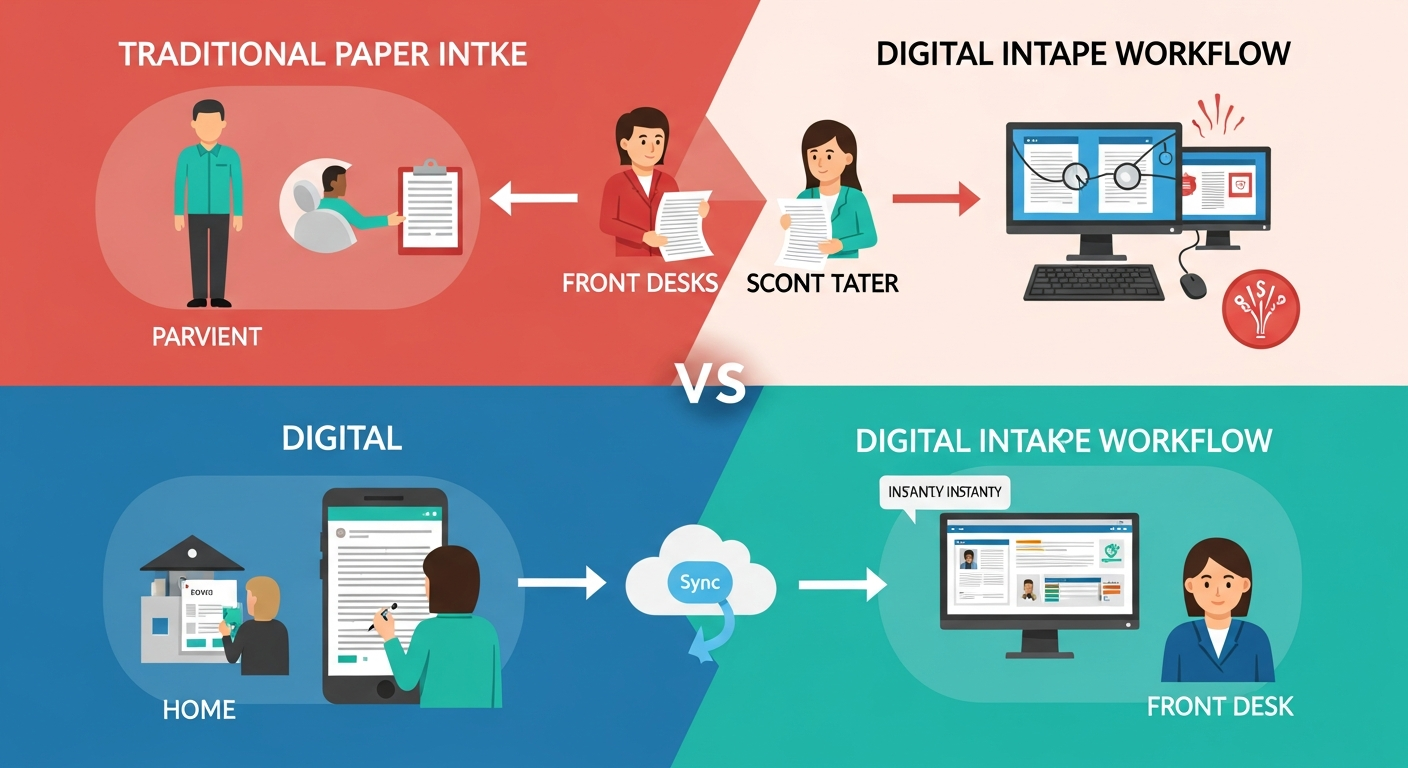 Comparing the traditional paper intake bottleneck with a streamlined digital workflow.
For the administrative team, the "paper bottleneck" is a primary driver of workplace stress. Manually tracking down forms, scanning documents, and re-keying data into a practice management system (PMS) creates endless cycles of administrative work. Digital forms eliminate this friction by allowing data to flow directly from the patient’s device into the patient’s record. By removing the manual labor of digitizing paper, you empower your staff to focus on higher-value tasks, such as patient education, treatment coordination, and personalized care, rather than clerical maintenance.
Elevating the First Impression: Patient Experience 2.0
The patient experience begins long before the patient sits in the dental chair. When a new patient enters your office, being handed a clipboard and asked to fill out repetitive forms feels dated and cumbersome. Implementing online forms signals that your practice is forward-thinking and values the patient's time. By allowing patients to complete their information from the comfort of their home, you transform the "intake process" from a chore into a seamless, modern convenience that reflects the high standard of care provided inside the clinical suite.
The Cost of Inefficiency: Why Manual Data Entry Drains Revenue
Manual data entry is a silent profit killer. Every minute your front-desk staff spends typing addresses, insurance IDs, or health histories is a minute they are not spending on filling schedule gaps or managing insurance claims. Beyond the labor costs, human error is an inevitable byproduct of manual entry. A single mistyped digit on an insurance claim can lead to a rejection, delayed payments, and unnecessary friction. Digital forms minimize these errors, ensuring that the information entered is accurate, verified, and ready for immediate processing.
Key Components of a Comprehensive Digital Intake Ecosystem
Essential Forms: Medical History, Demographics, and HIPAA Consent
A comprehensive intake ecosystem starts with the basics. Modern digital intake solutions must consolidate medical history, demographic updates, and HIPAA consent forms into a single, mobile-responsive portal. By using a sophisticated Form Builder, you can implement conditional logic, ensuring patients only see questions relevant to their specific health history, which significantly increases completion rates and data accuracy.
Insurance Management: Card Capture and ID Card Scanning
Insurance verification is the cornerstone of dental revenue management. Digital forms, like the ones from Flex Dental Solutions, should empower patients to snap a photo of their insurance card, which is then securely attached to their file. This instant capture allows the front-desk team to verify coverage before the patient arrives, ensuring the financial aspects of the visit are settled early and reducing the likelihood of surprises at checkout.
Specialized Documentation: Treatment Agreements for Implants and Crown Bridges
Clinical documentation requires more than just standard intake sheets. Whether obtaining informed consent for a complex implant procedure or an agreement for a crown and bridge, digital forms allow you to include detailed disclosures that patients can review and sign at their leisure. This ensures that documentation is thorough, legally sound, and readily accessible for clinical review.
COVID-19 and Health Pre-screening Surveys
In the modern dental landscape, agility is vital. Health pre-screening surveys allow practices to quickly deploy updated safety protocols or wellness checks. Because digital platforms are modular, you can update these questions in real-time, ensuring your office remains compliant with public health guidelines without printing or re-distributing paper materials.
The Technical Foundation: Security and HIPAA Compliance
HIPAA-Secure Infrastructure and Encrypted Submissions
Security is non-negotiable. An effective digital system must utilize end-to-end encryption for all data transfers. Information must be encrypted both at rest and in transit, ensuring that sensitive patient data is protected from unauthorized access at every point of the journey.
Legally Binding E-Signatures and Digital Signature Technology
Electronic signatures must meet rigorous legal standards. Advanced digital signature technology provides an audit trail that records exactly when and how a form was signed. This creates a legally defensible record that is superior to a physical signature, as it is time-stamped and linked to the patient’s authenticated account.
Data Privacy and Multi-Factor Authentication (MFA)
Protecting patient data requires a "defense-in-depth" approach. Multi-Factor Authentication (MFA) is essential for accessing the administrative side of your digital forms dashboard. By requiring an extra layer of verification for staff access, you minimize the risk of a data breach, safeguarding both the practice’s reputation and your patients' sensitive information.
Maximizing Operational Efficiency with PMS/EHR Integration
The Power of Automatic Writebacks: Eliminating Data Entry Errors
The true value of electronic forms lies in the "writeback" capability. When a patient completes their information, it should automatically push that data into the appropriate fields in your practice management system. This eliminates the need for any manual re-typing, drastically reducing the possibility of clerical errors and keeping your records pristine.
Seamless Integration with Practice Management Systems (Open Dental)
Your intake tool should operate as an extension of your existing software, not a separate island of data. Leading solutions offer robust APIs for popular systems like Open Dental. This deep integration ensures that updates to the patient’s address, insurance, or medical history are reflected instantly in the software your clinical team relies on every day.
Facilitating Clinical Review and Real-Time Treatment Planning
When digital intake is integrated, the hygienist and dentist can review the patient's medical history in real-time before entering the operatory. By identifying medication changes or underlying conditions via the electronic intake dashboard, the clinical team is better prepared, allowing for safer, more efficient, and more personalized treatment planning.
Automating the Pre-Visit Workflow to Reduce No-Shows
Scheduled Automatic Reminders via SMS/Text and Email
A great intake workflow is proactive. Automated reminders, which are made easy with Flex Dental Solutions, sent via SMS or email significantly increase the likelihood that patients will complete their forms before they arrive at the office. By prompting patients 48 or 24 hours in advance, you minimize the risk of having a patient arrive and then spend their first twenty minutes in your lobby filling out paperwork.
The Benefits of Digital Pre-visit Forms: Completion Before the Appointment
When a patient walks into your office with all their administrative requirements already satisfied, the front desk is free to greet them warmly rather than instructing them to sit in the waiting room with a clipboard. This shift enhances the patient experience and allows for a quicker, smoother transition into the clinical chair.
Automated Recalls and Patient Communication Strategies
Digital systems facilitate more than just intake; they enable automated recall management. By leveraging the data collected through intake forms, practices can segment their patient list and automate communication cycles, ensuring that patients are prompted to book their next hygiene visit, which maintains steady clinical flow.
Optimizing the In-Office Experience
On-Site Convenience: Kiosk Mode and Tablet-Based Registration
For patients who may not have completed their digital forms ahead of time, a "Kiosk Mode" on a dedicated tablet provides a clean, secure interface for on-site registration. This prevents the need for paper and maintains the consistency of your digital workflow, regardless of when the patient fills out the information.
QR Codes and Mobile-Friendly Forms: Let Patients Use Their Own Devices
For practices looking to minimize hardware costs, QR codes are a simple, effective solution. Placing a QR code at the front desk allows patients to scan and pull up their forms instantly on their personal smartphones. This "Bring Your Own Device" (BYOD) strategy is highly efficient and minimizes physical contact within the office.
Moving Beyond Clipboards: Implementing Digital Intake Forms at the Front Desk
Transitioning to digital forms is a significant change, but it is one that yields high returns. Staff resilience is key here; provide training that emphasizes how these tools make their daily lives easier. Start by replacing one paper form at a time—such as the registration packet—to help the team build confidence with the new technology before expanding to more complex clinical documentation.
The Financial Impact: Data Integrity and Faster Reimbursement
Improving Insurance Claim Accuracy to Reduce Rejections
Data integrity is the key to prompt reimbursement. By capturing insurance information accurately at the point of intake, you drastically reduce the number of denied claims caused by simple clerical errors. Clean, verified data means faster processing times and fewer calls to insurance companies to troubleshoot billing discrepancies.
Securely Capturing Patient Credit Card and Payment Information
Digital intake also allows for the secure capture of credit card information to be kept on file for balance processing. By collecting this information digitally and encrypting it, you can streamline the checkout process and improve your practice’s overall accounts receivable performance.
Scaling the Practice: Using Digital Data Collection for Growth
As your practice grows, the ability to collect and analyze data becomes a competitive advantage. Digital intake allows you to track patient trends, streamline operations, and identify areas where your workflow can be further optimized. By investing in a robust digital foundation today, you are preparing your practice to handle increased patient volume without sacrificing the quality of your personalized care.
Conclusion
Transitioning to digital forms is not merely a technical update; it is a fundamental shift in how your dental practice functions. By moving away from the friction of paper, you reduce staff burnout, improve the accuracy of vital patient data, and provide an elevated experience that sets your practice apart from competitors. The financial and operational benefits—ranging from decreased claim rejections to improved front-desk efficiency—offer a compelling ROI that extends far beyond the initial implementation.
To successfully navigate this transition, begin by auditing your current manual bottlenecks and selecting a platform that integrates deeply with your existing practice management system. Prioritize security, ensure your staff is properly trained, and use the time saved to double down on what matters most: patient relationships. When your team is no longer tethered to clipboards and data entry, they are free to focus on clinical excellence and practice growth, ensuring your dental office remains a modern, thriving, and patient-centric business.