Achieving and maintaining a healthy smile is paramount to overall well-being, impacting everything from nutrition and speech to self-confidence. However, the pursuit of optimal dental health often comes with significant financial considerations. For the average patient, particularly those without comprehensive dental insurance, the cost of necessary dental care can present a formidable barrier. This is where patient financing options emerge as a critical tool, bridging the gap between essential treatments and a patient's budget. Understanding these options is not just about managing immediate expenses; it's about empowering individuals to make informed decisions regarding their oral healthcare journey.
This article delves into the diverse landscape of dental financing, exploring the various avenues available to patients. We will navigate the realities of dental care costs, examine the unique benefits and considerations of in-house financing and third-party lenders, and discuss alternative strategies like personal loans, credit cards, and tax-advantaged accounts. Ultimately, our goal is to equip you with the knowledge necessary to confidently check and choose the payment solution that best aligns with your financial situation and healthcare needs, ensuring that a healthy smile remains an accessible reality.
Navigating the Cost of a Healthy Smile: Why Dental Financing Matters for the Average Patient
The pursuit of optimal oral health is a fundamental aspect of overall well-being, yet it is frequently complicated by financial realities. For many individuals, the prospect of significant dental care expenses can lead to postponement of treatment, potentially exacerbating issues and increasing future cost and complexity. Understanding financing options is therefore not a luxury, but a necessity for the average patient seeking to maintain their oral healthcare.
The Realities of Dental Care Costs Without Insurance
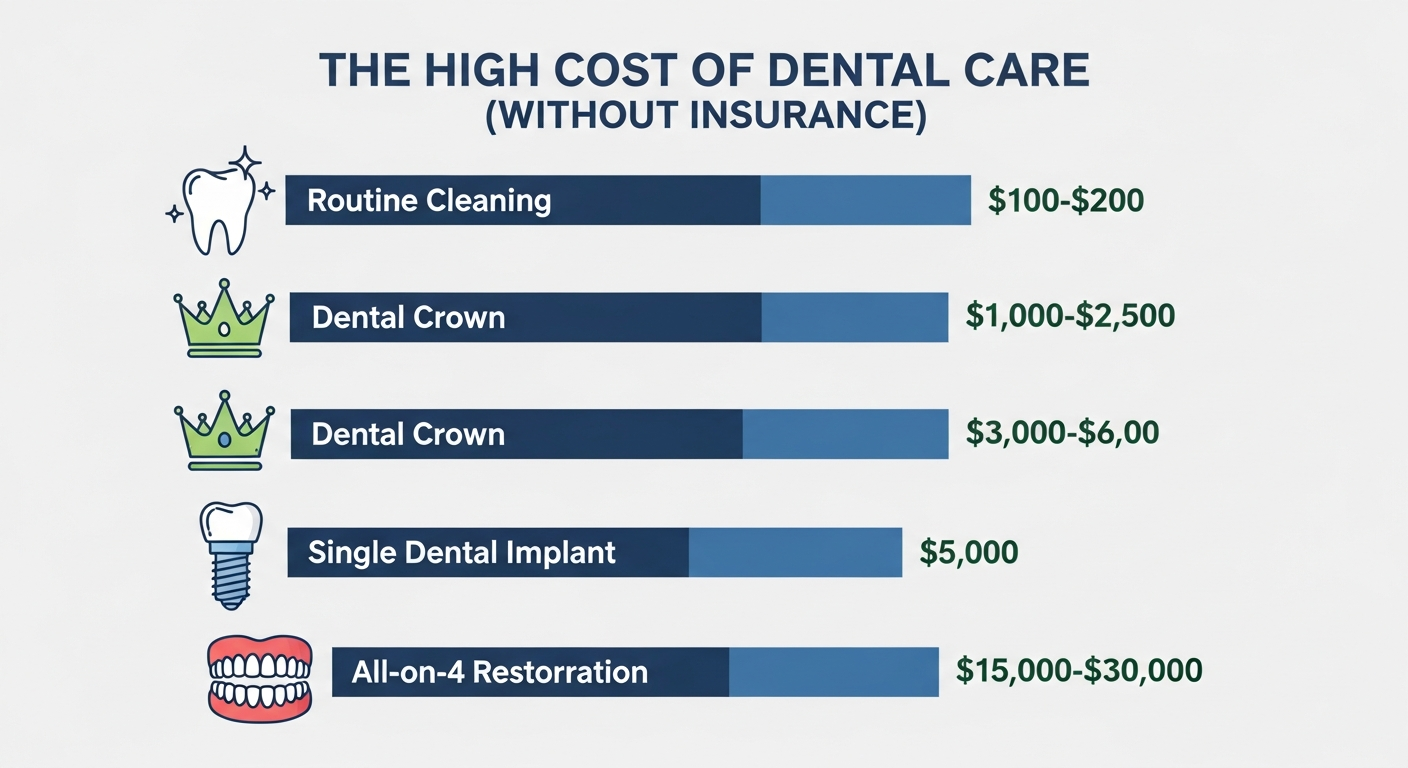 Without insurance, the cost of major dental work can be substantial, highlighting the need for patient financing options.
The significant cost of dental care is a well-documented challenge, especially for those without adequate insurance coverage. Dental procedures, ranging from routine cleanings and fillings to more complex interventions like crowns, root canals, or implants, can accumulate substantial expenses. For instance, single dental implants typically range from $3,000 to $6,000, while full arch restorations using the All-on-4 technique can range from $15,000 to $30,000 per arch. Americans spend approximately $137 billion on dental care each year Source: American Dental Association, 2025. Without insurance, these figures represent a direct out-of-pocket expenditure, placing a considerable burden on personal money and budget.
The absence of insurance often means that patients face the full rate of fees charged by dentists and dental practices. Even with dental insurance, limitations such as annual maximums can leave substantial balances unpaid. For example, 73% of consumers enrolled in dental PPOs have an annual maximum of $1,500 or more Source: NADP, 2025. These limitations, coupled with deductibles and co-pays, mean that even insured patients may need additional payment options to cover comprehensive treatment. The consequence of this financial hurdle is dire: over 90% of Americans delay dental treatment due to its cost Source: Online Dentist Academy, 2025. Delaying necessary care can lead to progression of dental diseases, increased pain, tooth loss, and ultimately, more expensive and complex healthcare interventions down the line.
The "Average" Patient's Financial Landscape
Understanding the "average" patient's financial landscape is crucial for tailoring financing options. This persona typically refers to an individual or family who may have some money allocated for healthcare, but not enough to cover unexpected or significant dental care expenses without careful planning. They might have a modest emergency fund, a stable income, but lack the disposable money to absorb a several-thousand-dollar bill. Their budget is likely tight, with priorities set for essential living expenses, and any additional large expenditure requires careful consideration and often, a payment plan.
For this average patient, the decision to seek dental care is often weighed against other financial obligations. The high cost of procedures means that immediate payment is often unfeasible. This is where understanding the nuances of financing becomes paramount. They need options that are accessible, transparent, and manageable within their existing budget. The goal is not just to get the treatment done, but to do so without jeopardizing their overall financial stability. This requires a comprehensive overview of available financing, clear communication from the dentist's office, and a pragmatic assessment of their own financial capacity.
In-House Financing: Your Dentist as a Direct Partner
Many dental practices recognize the financial challenges their patients face and offer direct financing options to facilitate access to dental care. In-house financing represents a direct partnership between the patient and their dentist's office, simplifying the process and often providing a more personalized approach to managing payment.
What is In-House Financing?
In-house financing, like Wisetack offered by Flex Dental Solutions, also known as direct dental practice financing, refers to payment options arranged directly by the dental office itself. Instead of relying on an external lender, the practice extends credit to patients to cover the cost of their dental care. This model allows the dentist and their staff to manage the financing process internally, often with fewer bureaucratic steps than traditional credit providers.
How In-House Options Typically Work
When a dental practice offers in-house financing, the patient will usually complete an application as part of the treatment check-in or consultation process. This application helps the practice assess the patient's ability to repay. Approval is often based on the practice's own criteria, which might include credit checks or simply a demonstration of consistent payment history. If approved, the dentist will work with the patient to establish a payment plan. These plans typically involve a down payment, followed by a series of regular installments over a predetermined period. The terms can vary widely, with some offering interest-free periods and others charging a modest rate to cover administrative fees and the cost of capital.
Advantages for Patients
The primary advantage of in-house financing for patients is convenience and accessibility. The financing process is managed within the familiar environment of the dental office, often streamlining the application and approval stages. For patients with less-than-perfect credit scores, in-house options may be more flexible than traditional lenders, as the practice can sometimes look beyond a strict credit check and consider the patient's overall financial situation and relationship with the practice. Direct communication with the dental office staff ensures that any questions about payment terms or fees can be addressed promptly and clearly. This direct partnership can foster trust and make the money aspect of dental care less daunting.
Potential Considerations
Despite its benefits, in-house financing is not without its potential considerations for patients. The terms offered by a dental practice might not always be as competitive as those from specialized healthcare lenders. Some in-house plans may carry higher interest rates or shorter repayment periods, which could increase the overall cost of the dental care. It is essential for patients to carefully review the terms and conditions, including any associated fees and the total payment required, before accepting an in-house financing offer. Understanding these details ensures that the chosen payment option aligns with the patient's budget and long-term financial goals.
Third-Party Financing Companies: Specialized Healthcare Lenders
Beyond the dental practice itself, a robust ecosystem of third-party financing companies exists specifically to support healthcare expenses. These specialized lenders are a crucial resource for patients seeking dedicated financial solutions for their dental care needs.
Understanding Third-Party Financing
Third-party financing companies are independent providers that partner with dental practices to offer patients a range of credit options. These companies specialize in healthcare financing and often have established relationships with numerous dentists and practices. Their core business is providing money to patients for medical and dental treatments, which the patient then repays over time according to the agreed-upon terms. These providers often cater to a wide spectrum of credit profiles, from excellent to fair.
How Third-Party Financing Options Function
The process of obtaining third-party financing typically begins with the dental office introducing the patient to available providers. The patient then applies directly to the lender, usually through an online portal or a mobile app. This application involves providing personal and financial information, often including a credit check. Based on the credit assessment and the lender's policies, the patient is presented with pre-approved financing options, detailing the loan amount, repayment terms, interest rate (APR), and any applicable fees. If the patient accepts an option, the lender disburses the money directly to the dental practice, allowing the patient to proceed with their dental care. The patient then makes regular payments directly to the third-party lender.
Key Providers and Their General Offerings
The market for third-party healthcare financing is populated by several prominent providers. Companies like Wisetack, CareCredit, Cherry, and Sunbit are well-known names that frequently partner with dental offices. These providers often offer a variety of financing options, including:
- Promotional No-Interest Plans: Many lenders offer plans that provide 0% APR for a specified introductory period (e.g., 6, 12, or 18 months). If the entire balance is paid off within this promotional window, the patient effectively pays only the principal amount, without any interest charges.
- Standard Loan Options: For longer repayment needs, these providers offer installment loans with fixed monthly payments and interest rates. The APR for these standard loans can vary significantly depending on the patient's creditworthiness and the loan terms.
- Flexible Loan Amounts: Third-party lenders typically accommodate a wide range of loan amounts, from a few hundred dollars to tens of thousands, suitable for everything from routine procedures to extensive restorative work.
It's important for patients to understand that while these providers aim to make dental care affordable, the terms, including interest rates and fees, can differ considerably among them.
Benefits for Dental Patients
Third-party financing companies offer several significant benefits to dental patients. One of the most substantial advantages is the potential for access to credit even for individuals who may not qualify for traditional bank loans or in-house financing. Many of these providers are designed to approve a higher percentage of applicants, making dental care accessible to a broader demographic. Furthermore, the availability of promotional 0% APR options allows patients to spread the cost of dental care over an extended period without incurring additional interest charges, provided they can adhere to the repayment schedule. This predictability in payment and the ability to secure necessary healthcare without immediate large outlays are key advantages for patients managing their budget.
Important Considerations and Potential Drawbacks
While third-party financing can be an invaluable tool, patients must approach it with a clear understanding of potential drawbacks. The most significant concern is the Annual Percentage Rate (APR) on non-promotional plans. If the full balance is not paid off within the introductory 0% APR period, the interest rate can increase substantially, sometimes exceeding 20% or even 29% [as seen with some credit cards, a relevant comparison point for high APRs]. This can significantly inflate the total cost of the dental care. Additionally, some lenders may charge origination fees, late payment fees, or even prepayment penalties, which add to the overall expense. It is imperative for patients to thoroughly review all terms and fees before accepting a financing option and to be diligent about making timely payments to avoid additional charges and potential negative impacts on their credit score.
Beyond Dedicated Options: Personal Loans and Credit Cards
While in-house financing and specialized third-party healthcare lenders are designed specifically for medical and dental expenses, other general credit options can also be utilized to manage the cost of dental care. These include personal loans from banks or credit unions and, with extreme caution, standard credit cards.
Using Personal Loans for Dental Expenses
Personal loans offer a flexible way to finance a wide range of expenses, including significant dental care costs. When a patient obtains a personal loan, they receive a lump sum of money from a bank, credit union, or online lender, which they then use to pay the dentist's office. The patient then repays the loan to the lender over a fixed period, typically with a consistent monthly payment. The interest rate on personal loans is generally determined by the borrower's credit score and the loan terms. For individuals with good credit, personal loans can offer competitive interest rates and predictable repayment schedules, making them a viable option for financing larger dental procedures where other options may not be suitable or sufficient.
Leveraging Credit Cards (with Caution)
Using credit cards for dental care is a common approach, primarily due to their widespread availability and the ease with which payments can be made. Many dentists and practices accept major credit cards, allowing patients to settle their bills instantly. Some credit cards also offer rewards programs, such as cashback or travel points, which can provide a small benefit. However, this option comes with significant risks. Standard credit card interest rates are often very high, and if the balance is not paid in full by the due date, the accumulated interest fees can quickly escalate the overall cost of the dental care. For example, APRs can reach up to 29% [a relevant benchmark for high interest rates]. Therefore, using credit cards for dental financing is generally advisable only for smaller expenses that can be paid off within the billing cycle or if the card offers a specific 0% introductory APR period for purchases.
When These Options Make Sense for the Average Patient
Personal loans and credit cards can be appropriate financing options for the average patient under specific circumstances. Personal loans are a strong contender when a patient has a good credit score, needs a substantial amount of money for complex dental care, and prefers a fixed, predictable repayment schedule with a potentially lower interest rate than some specialized healthcare lenders might offer after promotional periods. They provide a clear path to managing the cost without the immediate pressure of a short-term promotional window.
Credit cards are best suited for smaller dental expenses that can be paid off quickly, thus avoiding interest charges altogether. Alternatively, if a patient can secure a card with a 0% introductory APR offer and is confident in their ability to pay off the balance before the promotional period ends, it can function similarly to a short-term, interest-free loan. It is crucial for patients to assess their creditworthiness, the total cost including all fees and potential interest, and their ability to manage the payment before choosing these more general financing options over dedicated healthcare financing.
Proactive Planning: Harnessing HSAs and FSAs for Dental Care
Beyond immediate financing options, strategic planning through Health Savings Accounts (HSAs) and Flexible Spending Accounts (FSAs) offers a tax-advantaged approach to managing the cost of dental care. These accounts allow individuals to set aside money on a pre-tax basis, effectively reducing the overall expense of healthcare services, including dental treatments.
Health Savings Accounts (HSAs)
Health Savings Accounts (HSAs) are tax-advantaged savings accounts available to individuals enrolled in high-deductible health plans (HDHPs). Contributions made to an HSA are tax-deductible, the funds grow tax-free, and qualified withdrawals for eligible healthcare expenses are also tax-free. This triple tax advantage makes HSAs a powerful tool for managing medical and dental care costs. Eligible expenses for HSAs include a wide range of services, from routine check-ups and cleanings to more significant procedures like braces, crowns, and even dental implants. The money in an HSA rolls over year after year, and the account is owned by the individual, providing long-term financial flexibility for future healthcare needs.
Flexible Spending Accounts (FSAs)
Flexible Spending Accounts (FSAs) are employer-sponsored benefit programs that allow employees to set aside pre-tax money from their paychecks to pay for qualified healthcare expenses. Like HSAs, FSAs offer a tax advantage, as contributions reduce an individual's taxable income. Eligible expenses for FSAs are similar to those for HSAs and include most dental care fees, such as examinations, cleanings, fillings, and orthodontics. A key difference from HSAs is that FSAs typically operate on a "use-it-or-lose-it" basis, meaning that funds not spent by the end of the plan year (or a short grace period) are forfeited. Therefore, individuals with FSAs need to be diligent in estimating their anticipated dental care costs for the year to maximize their benefits.
Integrating Tax-Advantaged Accounts into Your Financial Strategy
Integrating HSAs and FSAs into your financial strategy for dental care can significantly reduce the out-of-pocket cost. By contributing to these accounts regularly, patients build a dedicated fund for dental expenses. This pre-tax money effectively lowers the overall cost of treatment by providing an immediate discount through tax savings. For example, saving $2,000 in an HSA or FSA can result in an actual saving of $400 to $600, depending on the individual's tax bracket. These accounts can be used in conjunction with other financing options; for instance, a portion of a dental procedure's cost can be paid from an HSA/FSA, with the remaining balance financed through a third-party lender or an in-house payment plan. This combined approach offers a robust and cost-effective way to manage dental care expenses.
Hybrid Financing Models: Tailored Solutions for Broader Accessibility
Recognizing that no single financing option suits every patient, many dental practices and healthcare lenders are adopting hybrid financing models. These approaches combine elements from different financing structures to create more flexible and accessible payment solutions, catering to a wider range of financial situations and dental care needs.
Defining Hybrid Financing
Hybrid financing models refer to strategies that blend two or more distinct financing approaches to create a comprehensive payment solution for patients. This could involve combining in-house financing with a third-party lender, or integrating the use of HSAs/FSAs with external loan options. The core idea is to leverage the strengths of each individual financing type to address potential gaps or limitations, thereby offering a more complete and adaptable financial framework for dental care.
How Hybrid Models Can Work in Practice
In practice, a hybrid model might look like this: A patient needs extensive restorative work, the cost of which exceeds their HSA/FSA balance and their immediate budget. The dental office could first encourage the patient to utilize their available HSA/FSA funds for a portion of the cost. For the remaining balance, the practice might offer a short-term in-house payment plan to cover a small amount, with the larger remainder financed through a partnership with a third-party lender offering extended terms and promotional rates. Another scenario could involve a patient using a personal loan for the bulk of the cost and a credit card for smaller, incidental fees. These combinations aim to break down a significant financial burden into more manageable payment components.
Benefits for the Average Patient
The primary benefit of hybrid financing models for the average patient is enhanced accessibility and flexibility. By allowing patients to combine different payment strategies, these models can make more extensive or expensive dental care attainable. For instance, combining tax-advantaged savings with a low-interest loan can reduce both the immediate out-of-pocket expense and the long-term cost of financing. This tailored approach acknowledges that individual financial circumstances vary widely and provides patients with more options to find a payment solution that fits their unique budget and needs. It promotes a proactive approach to dental care, empowering patients to seek necessary treatment without being solely constrained by the limitations of a single financing type.
Making the Smart Choice: A Decision-Making Framework for Patients
Navigating the array of dental financing options can feel overwhelming. To make the most informed decision, patients need a structured approach that considers their personal financial situation, the specific dental care required, and the terms of each financing option. A clear framework empowers you to confidently choose the best payment strategy.
Assessing Your Personal Financial Situation
The first crucial step is a thorough assessment of your personal financial situation. This involves scrutinizing your current budget and available money. How much disposable income do you have each month that can be allocated towards dental care payments? What is your current credit score? A higher credit score generally unlocks more favorable interest rates and terms from lenders. Consider your existing savings, including any balances in HSAs or FSAs, which can be used to offset immediate costs. Evaluate the urgency of the dental care needed. Is it for a routine check-up, a necessary procedure, or a cosmetic enhancement? The urgency might influence your willingness to accept a higher rate for faster treatment. Understanding your financial capacity is the foundation for selecting the most appropriate financing option.
Key Questions to Ask Your Dental Office and Financing Providers
Once you have a clear picture of your finances and needs, engage in direct communication. When speaking with your dental office, ask pointed questions:
- "What financing options do you offer directly, or which third-party providers do you typically partner with?"
- "What are the typical terms and payment schedules for in-house financing?"
- "Are there any administrative fees or hidden costs associated with the practice's payment options?"
- "Can you provide an estimated breakdown of the total cost for the proposed dental care?"
When you interact with third-party lenders or other providers, be equally thorough:
- "What is the Annual Percentage Rate (APR) for this loan or credit line?"
- "Are there any upfront fees (e.g., origination fees) or recurring fees (e.g., annual fees, late payment fees)?"
- "What is the total cost of the loan over its entire repayment term?"
- "What happens if I miss a payment, or if I want to pay off the balance early (prepayment penalties)?"
- "What is the impact of this application or loan on my credit score?"
Asking these questions diligently ensures you have a complete understanding of the money involved and the terms of any financing.
Decoding the Fine Print and Avoiding Pitfalls
The allure of immediate dental care can sometimes overshadow the importance of meticulously reviewing the terms and fees associated with financing options. Understanding the fine print is not just a matter of due diligence; it's a critical step in safeguarding your financial well-being and ensuring that the cost of your dental care remains manageable.
Understanding APR vs. Interest Rate
While often used interchangeably, the Annual Percentage Rate (APR) and the nominal interest rate are distinct. The interest rate is the percentage charged on the principal loan amount. The APR, however, provides a more comprehensive picture of the true borrowing cost, as it includes the interest rate plus any additional fees associated with the loan, such as origination fees or discount points, spread out over the loan's life. For patients, understanding the APR is crucial for accurately comparing different financing options because it reflects the total annual cost of borrowing. A loan with a seemingly low interest rate might have a higher APR if it includes substantial upfront fees.
Fees: Origination, Late Payment, Annual, and Prepayment Penalties
Beyond the interest rate, various other fees can impact the total cost of dental financing. Origination fees are charged at the beginning of the loan to cover administrative costs. Late payment fees are incurred if a payment is missed or made after the due date, and these can be substantial. Some financing options, particularly credit cards or certain loan products, may also have annual fees. Furthermore, patients should be aware of prepayment penalties, which are fees charged if you pay off the loan or balance in full before the agreed-upon maturity date. Understanding all these potential fees allows patients to accurately calculate the total cost of their financing and avoid unexpected expenses that could disrupt their budget.
Promotional Periods: What Happens When They End?
Many third-party financing providers offer attractive 0% APR promotional periods. While these can significantly reduce the immediate cost of dental care, it is vital for patients to know what happens when these periods expire. If the entire balance is not paid off before the promotional rate ends, the remaining amount is typically subject to a much higher, standard APR. This can lead to a sharp increase in monthly payments and a considerable rise in the total cost of the financing. For example, a $3,000 dental procedure financed with a 12-month 0% APR offer might transition to a 20% APR if not fully paid within that year, leading to significant interest charges. Patients must plan their repayment strategy accordingly to avoid this financial pitfall.
Impact on Credit Score
Applying for and managing financing options can have a direct impact on a patient's credit score. When you apply for a loan or credit line, the lender will typically conduct a hard credit check, which can temporarily lower your score. Subsequently, making timely payments on your financing will positively affect your credit history, demonstrating responsible credit management. Conversely, missing payments or defaulting on your financing can severely damage your credit score, making it more difficult and expensive to secure future credit, loans, or even rent an apartment. Therefore, it is crucial for patients to only borrow what they can comfortably repay and to prioritize on-time payments.
Beware of Predatory Lending
In the pursuit of financing, patients must be vigilant against predatory lending practices. Predatory lenders may offer seemingly attractive options but hide exorbitant fees, extremely high interest rates, or unfair terms that trap borrowers in cycles of debt. Red flags include pressure to sign immediately, unclear or complex loan documents, and offers that seem too good to be true. It is always advisable to work with reputable providers, such as established third-party healthcare lenders or well-regarded financial institutions, and to thoroughly understand all aspects of a financing agreement before committing.
The Dental Office's Role: Guiding You Through Financing
The relationship between a patient and their dental office extends beyond clinical care; it often encompasses guidance through the financial aspects of dental care. A knowledgeable and transparent dental practice can significantly ease the burden of navigating financing options, fostering trust and enabling patients to make informed decisions about their oral healthcare.
How Practices Present Solutions
Progressive dental practices understand that the cost of dental care is a primary concern for their patients. To address this, many proactively offer or facilitate access to financing options. This can range from providing clear explanations of in-house payment plans to partnering with reputable third-party healthcare lenders and presenting these options to patients during consultations. A practice's approach should be educational rather than purely transactional, focusing on helping the patient understand the available choices, their implications, and how they can fit into the patient's budget.
The Value of Knowledgeable Office Staff
The administrative and financial staff at a dental office play a vital role in demystifying financing. They are often the first point of contact for patients inquiring about payment methods. Well-trained staff can explain the various options, guide patients through the application process for in-house or third-party financing, and answer questions regarding terms, fees, and estimated payment amounts. Their ability to communicate complex financial information in an accessible and empathetic manner is invaluable. This expertise helps patients feel more confident and less stressed about managing the money aspect of their dental care.
Fostering Transparency and Trust in the Financing Discussion
Transparency is key to building trust when discussing financing. A dental practice that is open about its payment options, including any associated costs or limitations, empowers patients. This means clearly outlining all fees, explaining how financing works, and being honest about which options might be most suitable based on the patient's circumstances. When practices prioritize clear communication and offer a range of financing solutions, patients are more likely to feel respected and understood. This supportive environment encourages patients to proceed with necessary dental care, knowing that their financial well-being is being considered alongside their oral health.
Proactive Planning for Long-Term Dental Health and Financial Wellness
The discussion around dental financing options often focuses on addressing immediate costs. However, a truly comprehensive approach to oral healthcare involves proactive planning that integrates regular dental care with sound financial management to ensure long-term wellness. This forward-thinking perspective helps prevent larger, more expensive issues from arising, making dental care more affordable and manageable over time.
Beyond Immediate Needs: Budgeting for Regular Check-ups and Preventive Care
Consistent dental care, including regular check-ups, cleanings, and preventive treatments, is the cornerstone of maintaining oral health and avoiding costly interventions later on. Patients should aim to integrate these regular visits into their annual budget, much like any other essential healthcare expense. By establishing a consistent payment for routine dental care, patients can significantly reduce the likelihood of developing serious dental problems that would require extensive and expensive treatments, such as root canals or extractions. This proactive approach to budgeting for preventative healthcare is a smart financial strategy that pays dividends in both oral health and cost savings.
The Connection Between Consistent Dental Care and Avoiding Larger, More Expensive Issues
The link between consistent dental care and avoiding significant future costs is undeniable. Minor issues, such as small cavities or early signs of gum disease, are far less expensive and invasive to treat than advanced decay, abscesses, or severe periodontal disease. For instance, the cost of a simple filling is a fraction of that for a root canal and crown, or a dental implant necessitated by tooth loss due to neglect. By regularly visiting the dentist and addressing problems in their nascent stages, patients can prevent the escalation of dental conditions. This not only preserves their oral health and the integrity of their natural teeth but also dramatically reduces the overall money spent on dental care over a lifetime.
Sustainable Dental Health and Financial Planning
Achieving sustainable oral health and financial well-being requires a holistic view. This means understanding that dental care is an ongoing investment, not just a response to immediate problems. By exploring the various financing options available for both routine and complex treatments, and by prioritizing preventative care, patients can build a robust strategy. Whether utilizing in-house financing, third-party lenders, personal loans, or tax-advantaged accounts like HSAs and FSAs, the goal is to make dental care accessible and affordable. Embracing proactive planning and smart financial management ensures that maintaining a healthy smile remains a realistic and achievable objective throughout life, contributing to overall health and confidence.
Conclusion
Navigating the financial landscape of dental care is a reality for most patients, particularly those without comprehensive insurance. This article has illuminated the diverse array of financing options available, from the direct partnership offered by in-house financing at your dentist's office to the specialized services of third-party healthcare lenders. We've explored the potential of personal loans and the cautious utility of credit cards, alongside the tax-advantaged strategies of HSAs and FSAs, and the flexibility of hybrid financing models.
The core message is clear: the cost of dental care should not be an insurmountable barrier to achieving and maintaining a healthy smile. By understanding the nuances of each option, diligently reviewing terms and fees, and assessing your personal financial situation, you are empowered to make informed decisions. Engaging in transparent conversations with your dental practice and financing providers is paramount. Prioritizing regular, preventive dental care not only safeguards your oral health but also mitigates the likelihood of future, more expensive treatments. Ultimately, a proactive approach to both oral healthcare and financial planning is the most effective strategy for ensuring long-term wellness and accessibility to the dental care you need.