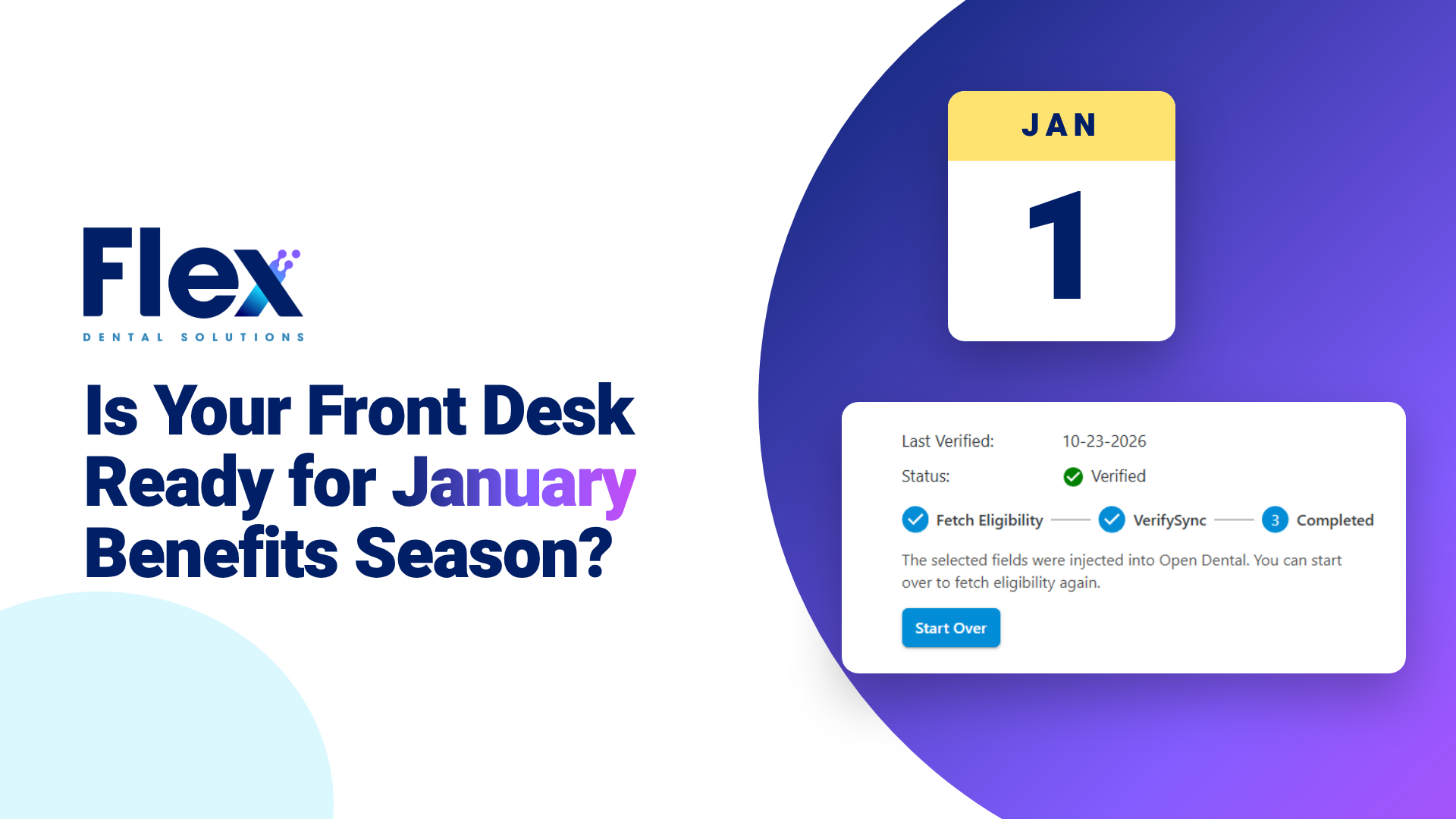
For most patients, dental insurance benefits reset on Jan. 1, which makes January the busiest insurance verification month of the year. Deductibles start over, annual maximums refill, frequency limits restart and some patients switch plans. The best way to prepare is to check insurance portal logins, verify early-January appointments in December, and ask every patient about insurance changes.
Every front desk has a January story. The first Monday back, a full schedule, three new insurance cards before 9 a.m. and an insurance portal that had changed its login over the holidays. January isn't a rush you survive. It's a December project. The offices that have a calm January did the work in the weeks before it.
Key Takeaways
- Most dental plans run on a calendar year, so benefits reset on Jan. 1. Some plans use a different plan year.
- Patients verified in December should be reverified for January visits if their plan year resets.
- A manual dental eligibility check takes an average of 12 minutes per patient (2024 CAQH Index).
- Across healthcare, registration and eligibility errors are the #1 cause of claim denials, roughly 1 in 4 (Optum 2024).
- Preparing in December (logins, early checks, patient reminders) prevents a January backlog.
When Do Dental Insurance Benefits Reset?
Dental insurance benefits reset on Jan. 1 for most patients, because most plans run on a calendar year. Some employer plans use a different plan year, such as July 1 to June 30. When you're unsure, check the plan year in the benefit details or confirm with the payer.
What Changes When Dental Benefits Reset?
When dental benefits reset, several plan amounts and limits start over at once:
| What resets | What changes | What your team should check |
| Deductible | Patients owe their deductible again | Remaining deductible before quoting estimates |
| Annual maximum | The yearly benefit limit refills | Maximum available for planned treatment |
| Frequency limits | Counts for cleanings, X-rays and exams restart | Service history and frequency rules |
| Plan or employer | Some patients have new coverage | New subscriber, group and payer details |
| Waiting periods | New plans may delay coverage for some services | Waiting periods on any new plan |
The deductible is the one that causes the hardest conversations. A patient who paid nothing out of pocket in November can owe real money for the same visit in January, and they'll hear about it from your front desk, not their insurance company. Getting that number right before the visit is how you keep their trust.
Why Is January the Busiest Month for Insurance Verification?
January is the busiest month because nearly every patient on the schedule needs a fresh check at the same time. Reset deductibles and maximums change estimates, new plans need full verification, and schedules fill with patients eager to use new benefits.
How Much Time Does Manual Insurance Verification Take in January?
Manual insurance verification takes an average of 12 minutes per patient, according to the 2024 CAQH Index. Here's what that means for a typical day:
| Patients per day | Minutes of manual verification | Hours per day |
| 15 | 180 | 3 |
| 25 | 300 | 5 |
| 40 | 480 | 8 |
Estimates use the CAQH average of 12 minutes per check. Your numbers will vary.
Errors cost more than time. Across healthcare, registration and eligibility errors are the #1 cause of claim denials, roughly 25% (Optum 2024 Revenue Cycle Denials Index).
Look at the 25-patient row. That's most of a person's day, in the month your team is also answering the most phone calls. That's why the prep has to happen before January, not during it.
How Should a Dental Front Desk Prepare for January?
Use this six-step checklist in December:
- Audit every insurance portal login. Confirm each login works and that MFA codes go to a phone or email your team can reach.
- Make sure more than one person can fix a login. A broken login shouldn't wait for one person's schedule.
- Verify early-January appointments in December. Then plan to recheck anyone whose plan year resets on Jan. 1.
- Ask about insurance changes when you confirm appointments. "Has your insurance changed for the new year?" catches new plans early.
- Remind patients to bring new insurance cards. Add it to appointment reminders for the first weeks of January.
- Set a daily verification routine. Decide who works the queue each morning and how to handle new plans.
If you only do two of these, do the first and the fourth. A working login and one honest question at confirmation prevent most of the January surprises I've seen.
What's a Good December-to-January Timeline?
| When | Focus |
| First week of December | Audit insurance portal logins and name a backup for each |
| Mid-December | Verify the first two weeks of January appointments |
| Week of Dec. 21 | Send reminders asking patients about insurance changes and new cards |
| Week of Dec. 28 | Recheck early-January patients whose plans reset |
| First week of January | Verify daily, update estimates for reset deductibles, watch for portal changes |
Do You Need to Reverify Insurance in January?
Yes, for patients whose plan year resets on Jan. 1. A December verification shows last year's deductible, maximum and frequency counts, which may no longer apply. Reverify before the January visit, especially for patients with planned treatment.
How Can Automation Help During Benefits Season?
Automation helps by running eligibility checks before appointments so your team spends January reviewing, not dialing. FlexVerification, built exclusively for Open Dental practices, checks eligibility automatically, shows the payer's response next to what's in Open Dental in VerifySync, and updates only the fields your team selects. Connection alerts flag a broken insurance portal login right away, and the Verification Report shows your whole queue on one screen.
Automation doesn't replace the December prep. It makes January sustainable once you've done it. Already using FlexVerification? Check that every portal is connected and that the right people can manage connections. For a day-to-day plan, see the post on a daily verification routine.
Frequently Asked Questions
When do dental insurance benefits reset?
For most patients, dental benefits reset on Jan. 1 because most plans run on a calendar year. Some employer plans use a different plan year, so check the plan year in the benefit details or confirm with the payer.
Do we need to reverify patients we already verified in December?
Yes, if their plan year resets on Jan. 1. A December check reflects last year's deductible, annual maximum and frequency counts. Reverify before the January appointment, especially for patients with planned treatment.
What resets when dental benefits renew?
Typically the deductible, the annual maximum and frequency limits for services such as cleanings, exams and X-rays. Patients who changed employers or plans may also have new coverage, payer details and waiting periods.
How long does manual dental insurance verification take?
A manual dental eligibility check takes an average of 12 minutes per patient, according to the 2024 CAQH Index. At 25 patients a day, that's about five hours of front desk time.
How can a dental office speed up verification in January?
Verify early-January appointments in December, keep insurance portal logins current, make sure more than one person can update them, ask patients about insurance changes, and automate eligibility checks where you can.
How early should we verify insurance before an appointment?
Many offices verify two to three business days before the visit, which leaves time to fix problems. In January, start earlier for patients with planned treatment or known plan changes.
The Bottom Line
Your front desk can't control when benefits reset, but it can control how ready it is when they do. A few hours in December buys back days in January, and it means your patients hear accurate numbers instead of apologies. If you'd like to see how FlexVerification helps Open Dental practices through benefits season, book a demo.