Modern dentistry is in constant flux, driven by technological advancements that promise greater precision, efficiency, and patient satisfaction. At the forefront of this evolution lies digital treatment planning (DTP), a sophisticated approach that is rapidly transforming how dentists diagnose, strategize, and deliver care. Gone are the days of purely analog guesswork; today's sophisticated digital tools empower clinicians to visualize outcomes before ever touching a patient, creating a pathway to more predictable and successful results. This guide is designed to illuminate the power of DTP, providing dentists with a comprehensive roadmap to understand, implement, and leverage its capabilities to elevate their practice and redefine patient care.
The Dawn of a Digital Practice
The integration of digital technologies, such as Flex Dental Solutions, has permeated nearly every facet of professional life, and dentistry is no exception. For the modern dentist, embracing digital innovation is not merely an option but a strategic imperative. Digital treatment planning stands as a cornerstone of this digital transformation, offering a paradigm shift in how dental care is conceived and executed.
The Evolution of Dental Care: From Traditional to Digital
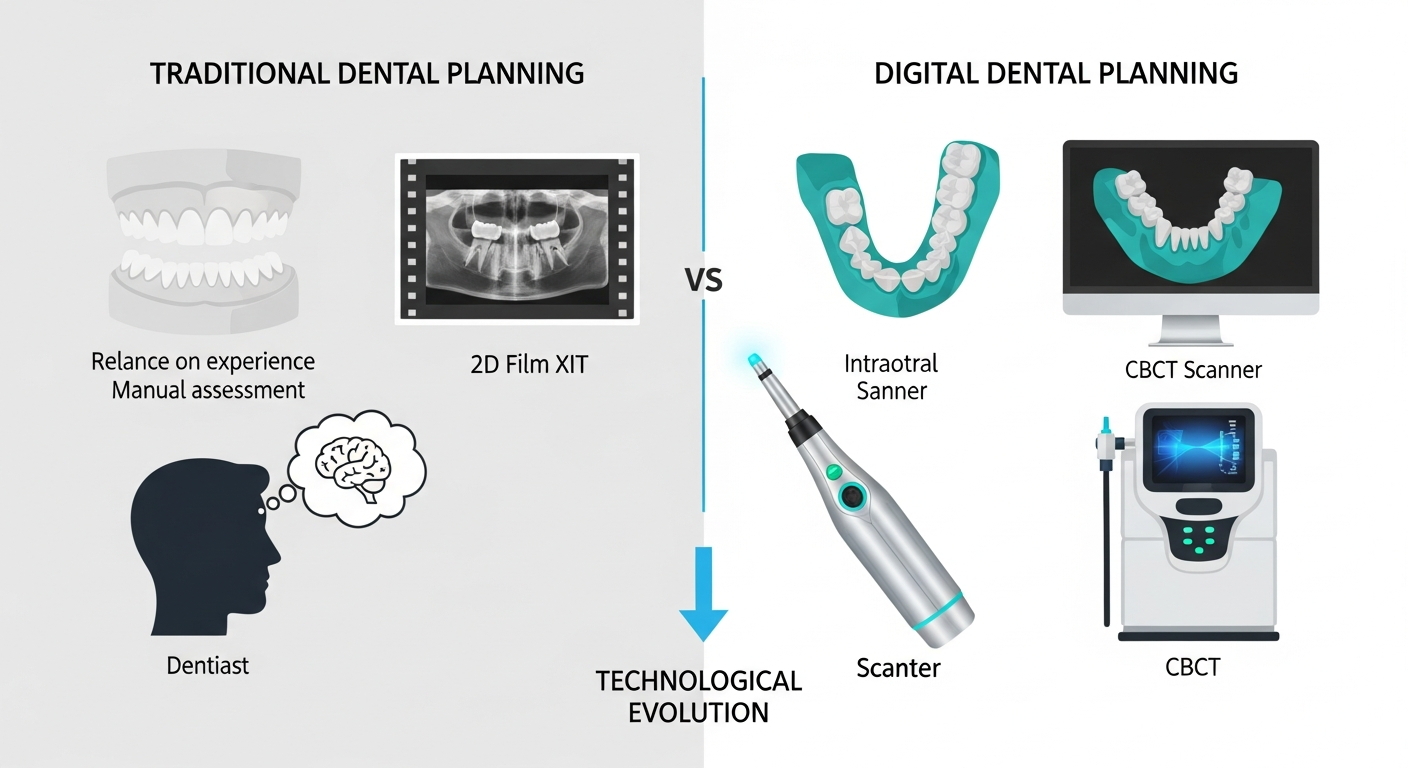 The evolution from analog methods to a precision-driven digital workflow in dental treatment planning.
Historically, dental treatment planning relied on two-dimensional radiographs, plaster models, and clinical experience. While effective, these methods often involved inherent limitations in diagnostic detail and predictability. The advent of digital imaging, including panoramic and intraoral X-rays, marked the first significant leap. This was followed by the revolutionary introduction of Cone-Beam Computed Tomography (CBCT) for detailed 3D imaging, intraoral scanners replacing traditional impressions, and sophisticated CAD/CAM systems for precise fabrication of restorations. This progression has moved dentistry from a reactive model to a proactive, precision-driven discipline.
Why Digital Treatment Planning is No Longer Optional
The benefits of digital treatment planning extend far beyond mere technological adoption. It fundamentally enhances diagnostic accuracy, leading to more predictable outcomes, particularly in complex cases like implant dentistry. Improved visualization through 3D modeling allows for meticulous pre-surgical planning, minimizing surprises and reducing chair time. Furthermore, DTP significantly elevates patient communication. Presenting clear, visual treatment plans fosters trust, improves understanding, and dramatically increases case acceptance rates. In essence, DTP is the engine driving greater efficiency, improved patient satisfaction, and ultimately, substantial practice growth.
What This Guide Will Cover: Your Roadmap to Practice Elevation
This comprehensive guide will navigate you through the essential aspects of digital treatment planning. We will define its core concepts, explore the foundational technologies that power it, detail a step-by-step workflow, outline the strategic advantages it offers, and provide practical guidance on implementation. Whether you are new to digital dentistry or looking to optimize your existing DTP processes, this roadmap is designed to equip you with the knowledge and confidence to elevate your practice.
Understanding Digital Treatment Planning (DTP): The Core Concept
At its heart, digital treatment planning is a systematic approach that leverages digital technologies to create a detailed, visually guided roadmap for a patient's dental care. It moves beyond the traditional, often linear, planning process to embrace a more integrated and predictive methodology.
Defining Digital Treatment Planning: Precision, Predictability, and Patient-Centricity
Digital Treatment Planning (DTP) is the process of using digital diagnostic information, such as intraoral scans and CBCT data, in conjunction with specialized software to meticulously plan and visualize all phases of a patient's dental treatment. Its core tenets are precision, ensuring exact measurements and placement; predictability, minimizing variables and anticipating potential issues; and patient-centricity, aligning treatment goals with individual needs and expectations through enhanced communication. This methodology underpins advancements in all areas of dentistry, from simple restorative procedures to complex implant surgeries.
The "Big Picture" vs. "Deep Dive": Holistic Treatment Planning and Detailed Procedure Planning
DTP facilitates two crucial levels of planning. The "big picture" refers to holistic treatment planning, where the dentist considers the patient's overall oral health, aesthetic goals, and long-term well-being. This involves analyzing how various treatment components interact within the broader context of the patient's dentition and facial structure. The "deep dive" focuses on detailed procedure planning, meticulously mapping out each specific step for a given intervention, such as the precise angle, depth, and position for an implant or the exact preparation margins for restorations. DTP seamlessly integrates these two levels, ensuring that individual procedures contribute effectively to the overarching treatment vision.
The Fundamental Shift: How DTP Redefines the Traditional Treatment Plan
The traditional treatment plan often presented a static document with limited visual aids. DTP transforms this into a dynamic, interactive, and highly visual experience. Instead of static X-rays, clinicians work with interactive 3D models. Instead of mere descriptions, they can simulate procedures virtually. This shift fundamentally alters the planning process from one of interpretation to one of simulation and validation, leading to a more robust and reliable treatment plan.
Key Principles of DTP: Accuracy, Efficiency, and Integrated Information
The success of DTP hinges on several key principles. Accuracy is paramount, derived from high-fidelity digital imaging and intraoral scanning, allowing for measurements and placements with unparalleled precision. Efficiency is achieved through streamlined workflows, reduced chair time for impressions, and minimized remakes due to predictable outcomes. Finally, Integrated Information is crucial; DTP consolidates all relevant patient data – clinical findings, digital imaging, patient preferences – into a single, accessible digital environment, providing a comprehensive foundation for decision-making.
The Foundational Technologies Powering DTP
The power of digital treatment planning is realized through a suite of interconnected technologies that capture, process, and utilize patient data.
Data Acquisition: Capturing the Digital Patient
Accurate treatment planning begins with accurate data. Digital imaging, including highly detailed CBCT scans, provides a three-dimensional view of the patient's anatomy, crucial for assessing bone density, nerve proximity, and anatomical variations, particularly vital for implant placement. Intraoral scanners have revolutionized the process of capturing tooth anatomy, replacing conventional impressions with rapid, accurate, and comfortable digital scans. These scanners create precise digital models of the teeth and soft tissues, serving as the foundation for virtually all DTP.
Advanced Software: The Brains Behind the Plan
Specialized software is the engine that drives DTP. Treatment planning software, such as Flex Dental Solutions, integrates data from digital imaging and intraoral scanners, allowing dentists to virtually manipulate anatomical structures, design restorations, plan surgical trajectories, and simulate treatment outcomes. Imaging software aids in the interpretation of CBCT scans, while CAD/CAM software is integral for designing and preparing for the fabrication of prosthetics. This ecosystem of software enables the dentist to visualize and refine the treatment plan before any physical intervention occurs.
Digital Manufacturing: Bringing the Plan to Life
The meticulous digital plan is brought to fruition through digital manufacturing technologies, most notably CAD/CAM (Computer-Aided Design/Computer-Aided Manufacturing). Once the restorative design is finalized in software, it can be milled from blocks of ceramic or other materials, or 3D printed. For surgical procedures, DTP allows for the creation of custom surgical guides that are fabricated based on the planned implant position, ensuring precise execution during surgery. This seamless integration from planning to manufacturing ensures that the final result aligns perfectly with the digital blueprint.
The Digital Treatment Planning Workflow: A Step-by-Step Guide for the Modern Clinician
Implementing DTP involves a structured workflow that leverages digital tools from initial capture to final follow-up, enhancing every stage of patient care.
Comprehensive Digital Data Collection: Intraoral Scans, CBCT, and Patient Records
The initial phase involves gathering all pertinent information. This typically begins with an intraoral scanner to capture highly accurate digital impressions of the patient's dentition. Concurrently, digital imaging, including CBCT scans for complex cases or implant planning, is performed. These digital datasets are then integrated with the patient's medical history and existing clinical records, creating a complete digital patient profile. This comprehensive data collection forms the bedrock of precise treatment planning.
Integrated Diagnosis and Virtual Treatment Planning
With all digital data consolidated, the dentist can engage in integrated diagnosis. Software platforms allow for the overlay of CBCT data with intraoral scans, providing a unified 3D view. Here, diagnostic models are created, pathologies identified, and the "big picture" of the patient's oral health assessed. Subsequently, the detailed procedure planning commences. For implant cases, this involves virtual placement of implants, considering bone support, adjacent structures, and prosthetic implications. For restorative work, the design of restorations begins, optimizing aesthetics and function. This virtual simulation allows for multiple scenarios to be explored and the most optimal treatment plan to be formulated.
Patient Communication and Enhanced Case Acceptance
One of the most significant advantages of DTP is its impact on patient communication. Visualizations generated from the DTP process – 3D models, simulated outcomes, and even short video animations – enable patients to clearly understand their diagnosis, proposed treatment options, and anticipated results. This clarity fosters trust and transparency, transforming passive recipients of information into active participants in their care. The ability to present a well-defined, digitally planned treatment plan significantly boosts case acceptance rates, as patients feel more confident and informed about the procedures recommended.
Digital Execution: From Surgical Guides to Final Restoration
The finalized digital treatment plan directly guides the execution phase. For implant surgery, the virtual plan is used to design and fabricate highly accurate surgical guides. These guides ensure precise positioning of the implant during surgery, minimizing invasiveness and enhancing predictability. In restorative dentistry, the digitally designed restorations are manufactured using CAD/CAM technology. This closed-loop system ensures that the physical outcome precisely matches the virtual plan, leading to superior fit, function, and aesthetics. The entire workflow is characterized by a remarkable degree of accuracy.
Post-Treatment Assessment and Digital Record Keeping: Electronic Health Records and Digital Records
The benefits of DTP extend beyond treatment completion. Post-treatment assessments can be performed using digital tools, comparing the outcome with the initial virtual plan. Comprehensive digital records, including all imaging, planning files, and treatment plan iterations, are securely stored within electronic health record (EHR) systems. This creates a detailed history for each patient, facilitating recall appointments, monitoring long-term oral health, and providing valuable data for future treatment decisions or for insurance and legal purposes.
Elevating Your Practice: Strategic Advantages and Tangible ROI
Embracing digital treatment planning is not just about adopting new technology; it's a strategic investment that yields significant returns in efficiency, patient satisfaction, and profitability.
Boosting Efficiency and Productivity
DTP streamlines numerous aspects of the dental workflow. Eliminating traditional impressions saves valuable chair time and reduces lab turnaround times for restorations. Precise pre-operative planning for surgery, especially for implants, minimizes surprises and reduces operative time. Furthermore, the integration of information into digital platforms speeds up record retrieval and administrative tasks, allowing the dentist and team to focus more on patient care and less on manual processes. This enhanced efficiency directly translates to increased patient throughput and higher productivity.
Enhancing Patient Experience and Satisfaction
The patient experience is significantly elevated by DTP. The comfort and speed of intraoral scanners replace the discomfort of traditional molds. The clarity and visual nature of DTP-driven communication empower patients, reducing anxiety and building confidence in the dentist and the proposed treatment plan. Predictable outcomes and aesthetically pleasing restorations contribute to higher patient satisfaction, fostering loyalty and encouraging positive word-of-mouth referrals. Patients appreciate the modern, technologically advanced approach to their oral health.
Driving Practice Growth and Profitability
The cumulative effect of increased efficiency, higher case acceptance, and enhanced patient satisfaction is a direct driver of practice growth and profitability. By performing more procedures with greater predictability and fewer complications, the practice can increase revenue. The ability to confidently handle more complex cases, such as advanced restorative dentistry and implant procedures, expands the practice's service offerings and patient base. DTP positions the practice as a leader in modern dentistry, attracting new patients seeking advanced care.
Implementing DTP: Overcoming Challenges and Best Practices for Seamless Integration
Adopting digital treatment planning requires a strategic approach to technology selection, team training, and workflow integration to overcome common hurdles and maximize benefits.
Choosing the Right Digital Tools: A Strategic Approach to Software and Hardware Selection
The market offers a vast array of digital tools, from intraoral scanners and CBCT units to various software platforms. A strategic approach involves assessing the practice's specific needs and budget. Consider the integration capabilities between different devices and software, the ease of use, and the level of information and support provided by the manufacturer. For implant planning, specialized software is essential. For restorative dentistry, ensuring compatibility with your preferred CAD/CAM systems is key. Investing in high-quality, integrated digital tools is foundational for a successful DTP workflow.
Staff Training and Team Empowerment: Fostering Digital Literacy Across Your Practice
Successful DTP implementation is a team effort. While the dentist leads the diagnostic and planning phases, dental assistants, hygienists, and administrative staff play crucial roles. Comprehensive training is essential to ensure everyone is comfortable operating the digital tools, managing digital information, and communicating effectively with patients about the digital workflow. Empowering your team with digital literacy fosters a collaborative environment, enhances efficiency, and ensures a consistent, high-quality patient experience from start to finish.
Addressing Common Objections: Cost, Complexity, and Learning Curves
Concerns about the initial cost of equipment, the perceived complexity of new technologies, and the learning curve are common. It's important to view DTP as an investment with a clear return on investment through increased efficiency and case acceptance. Many manufacturers offer financing options and ongoing support to mitigate costs and learning challenges. Breaking down the implementation into manageable steps and providing continuous training can ease the transition. Emphasizing the long-term benefits for both the practice and patients can help overcome initial resistance.
Establishing Protocols and Best Practices for Digital Dentistry
To ensure consistency and maximize the benefits of DTP, establishing clear protocols is vital. This includes standardized procedures for data acquisition, file management, patient communication, and treatment plan review. Regular team meetings to discuss challenges and successes, along with continuous professional development, can help refine these protocols. Documenting best practices for specific procedures, such as implant planning or restorative design, ensures that the entire team adheres to the highest standards of digital dentistry, contributing to improved accuracy and predictability.
The Future of Digital Treatment Planning: Innovation on the Horizon
The evolution of digital treatment planning is far from over. Emerging technologies promise to further enhance its capabilities and integration into daily practice. Artificial intelligence (AI) is poised to play a larger role in data analysis, treatment outcome prediction, and automated diagnostics. Augmented reality (AR) and virtual reality (VR) may offer even more immersive planning and patient education experiences. Furthermore, the integration of DTP with teledentistry platforms could expand access to specialized care and remote consultations. The future of DTP is one of continuous innovation, promising even greater precision, efficiency, and personalized patient care.
Conclusion
Digital treatment planning represents a profound leap forward in dental practice, fundamentally altering how dentists approach diagnosis, treatment strategy, and patient engagement. By embracing the precision, predictability, and patient-centricity that DTP offers, dentists can elevate their practices to new heights. From the foundational technologies of digital imaging and intraoral scanners to the seamless execution facilitated by CAD/CAM and surgical guides, DTP empowers clinicians to deliver superior oral health outcomes with unparalleled accuracy and efficiency.
The strategic advantages are clear: boosted efficiency, enhanced patient satisfaction through superior communication and predictable results, and tangible practice growth driven by higher case acceptance and expanded service offerings. While initial investment and a learning curve are realities, the long-term ROI and competitive edge gained are undeniable.
To successfully integrate DTP, dentists must strategically select their digital tools, prioritize comprehensive team training and empowerment, and establish robust protocols. By addressing common objections head-on and committing to continuous learning, practices can navigate the transition smoothly. The future of digital treatment planning is bright, with innovations like AI and AR poised to unlock even greater potential.
The call to action is clear: embrace the digital revolution. Start by exploring the foundational technologies, meticulously planning your workflow, and investing in your team. By making digital treatment planning a cornerstone of your practice, you are not just adopting new technology; you are committing to a future of more precise, predictable, and profoundly better dentistry for your patients and a more thriving, elevated practice for yourself.