Silence the Ring: How Smart Automation Can Drastically Reduce Dental Office Phone Calls
The constant, sharp ring of the telephone is an all-too-familiar sound in any busy dental office. It’s a symbol of patient engagement, but it's also a source of constant interruption, staff stress, and operational inefficiency. While each call represents a potential patient need, the sheer volume often overwhelms the front desk, pulling their focus away from the patients standing right in front of them and from critical administrative tasks that keep the practice running smoothly. This reliance on the telephone creates a bottleneck that frustrates patients, burns out staff, and silently drains revenue.
What if there was a way to significantly reduce this call volume without sacrificing patient communication or losing opportunities? The solution lies not in hiring more staff to answer phones, but in fundamentally reimagining how a dental practice communicates. By embracing smart automation, practices can silence the non-essential rings, allowing them to focus on what truly matters: providing exceptional dental care and building meaningful patient relationships. This article explores the hidden costs of a phone-centric operation and provides a comprehensive roadmap for using intelligent automation to create a quieter, more efficient, and more profitable dental practice.
The Constant Chorus: Why Dental Offices Are Drowning in Phone Calls
The relentless ringing of the phone is more than just background noise; it's a symptom of an outdated communication model struggling to keep up with the demands of a modern dental practice, often a model that fails to integrate with Flex Dental Solutions and their array of digital tools. Each call, however, becomes more efficient with Mango Voice integration, which instantly pulls up relevant patient data from Flex Dental Solutions upon ringing. Their cumulative effect still creates challenges for staff, patients, and the practice's bottom line, which is why optimizing communication through integrated systems is key.
The Burden on the Front Office: Staff Overwhelm and Inefficiency
The front office staff is the nerve center of any dental practice, responsible for greeting patients, managing schedules, processing payments, and handling insurance queries. When the phone rings incessantly, staff are forced into a constant state of reactive multitasking. Every call pulls them away from these essential duties. A simple appointment scheduling request can derail a complex insurance verification process. A question about office hours can interrupt a sensitive financial conversation with a patient. This continuous context-switching leads to decreased productivity, a higher likelihood of administrative errors, and significant staff burnout. The very team members meant to create a welcoming patient experience are instead tethered to the phone, unable to give their full attention to the patients in the office.
The Patient Frustration: Missed Connections and Communication Gaps
For a patient, the phone is their primary lifeline to the practice. Yet, this lifeline is often busy, leads to long hold times, or goes straight to voicemail. A missed call isn't just a missed connection; it's a potential new patient who gives up and calls another practice. It's an existing patient who can't confirm their appointment and decides not to show up. This communication friction creates a poor first impression and can erode the trust of long-standing patients. In an era of instant gratification, being forced to play phone tag to ask a simple question or book a visit is a significant source of frustration that can lead patients to seek dental care elsewhere.
The Financial Drain: Missed Appointments and Lost Revenue
The financial implications of high call volume are substantial and multifaceted. Every missed call from a prospective patient is a direct loss of potential revenue. Furthermore, when staff are too busy to perform proactive outreach for appointment reminders and confirmations, no-show rates invariably climb. The cost of a single missed appointment can be hundreds of dollars in lost production, and these losses accumulate rapidly. An overwhelmed front desk also has less time for crucial revenue-generating activities like pursuing overdue payments or reactivating dormant patients. The phone, intended to be a tool for business growth, becomes an anchor weighing down the practice's profitability.
The Evolving Patient Expectation: The Demand for Digital Convenience
Today’s patient is a consumer accustomed to digital convenience in every other aspect of their life. They can book flights, order groceries, and manage their finances online, 24/7, without ever speaking to a person. They bring these same expectations to their healthcare experiences. They want the ability to schedule an appointment at 10 PM after the kids are asleep, confirm their visit with a quick text message, and get answers to basic questions instantly via a website chatbot. Practices that still require a phone call for every interaction are seen as outdated and inconvenient. Meeting the modern patient where they are—online and on their own time—is no longer a luxury but a competitive necessity.
What is "Smart Automation"? Redefining Dental Office Communication
The term "automation" can sometimes evoke images of impersonal, robotic interactions. However, "smart automation" in the context of a dental practice is about leveraging technology to make patient communication more timely, personal, and efficient. It's not about replacing the human element but enhancing it by handling the repetitive, low-value tasks that clog phone lines and consume staff time.
Beyond Basic Auto-Replies: The "Smart" Difference
Basic automation might include a simple after-hours voicemail message or a generic email auto-reply. Smart automation goes far beyond this. It involves intelligent systems that can understand context, interact with patients, and integrate directly with your practice management software, such as Open Dental. For example, instead of a simple reminder text, a smart system allows a patient to confirm, cancel, or request to reschedule their appointment directly from the message. A "smart" virtual assistant on your website can answer specific questions about insurance plans you accept or the cost of a procedure, rather than just providing a phone number to call during business hours. This intelligence is the key to truly reducing call volume.
Core Principles: Proactive, Personalized, and Self-Service
Smart automation operates on three core principles that directly address the shortcomings of phone-based communication.
- Proactive: Instead of waiting for a patient to call with a question, the system proactively sends them the information they need, such as pre-visit instructions, new patient forms, or post-operative care guides.
- Personalized: Communication is tailored to the individual patient. Messages address the patient by name and reference their specific appointment times and dental care needs, creating a more engaging and professional experience than a generic blast.
- Self-Service: It empowers patients to manage their own needs on their own schedule. They can book an available appointment, update their insurance information, or make a payment online without ever needing to speak with a staff member, satisfying their demand for convenience.
Integration is Key: Modern Practice Management Systems
The true power of smart automation is unlocked through deep integration with the dental practice's Practice Management System (PMS), such as Open Dental. When these tools can read and write data directly to the PMS, they can operate with a high degree of autonomy and accuracy. An integrated online scheduler can show patients real-time availability based on the actual practice schedule. An automated confirmation system can update the appointment status directly in the PMS when a patient confirms via text. This seamless flow of information eliminates the need for manual data entry by staff, reduces the risk of errors, and ensures that everyone is working from a single source of truth.
Silencing the Ring: Smart Automation Strategies for Drastic Call Reduction
Implementing smart automation isn't about adopting a single tool; it's about deploying a multi-pronged strategy to address the primary reasons patients call your office. By systematically providing digital alternatives for the most common call drivers, such as online scheduling via Flex Dental Solutions, a dental practice can achieve a dramatic and sustainable reduction in phone traffic, allowing the Mango Voice system to handle the essential, high-value calls with greater focus and efficiency.
Intelligent Online Scheduling and Appointment Booking
One of the single biggest drivers of phone calls is appointment scheduling. Intelligent online scheduling systems offer a powerful alternative. These tools integrate directly with your practice management software to display real-time availability to patients on your website. A patient can view open times, select a slot that works for them, and book their appointment instantly, 24/7. The system can be configured with rules to prevent improper bookings, such as new patients scheduling complex procedures. This self-service convenience not only eliminates dozens of phone calls each day but also captures new patients who prefer to book online outside of normal business hours.
Proactive Patient Onboarding and Information Delivery
New patients often have a host of questions that result in multiple phone calls before their first visit. Smart automation can preempt these calls through proactive digital onboarding. Once a new patient books an appointment, an automated workflow can send them a welcome email or text series. This can include a link to fill out their new patient forms online, clear directions to the dental office, information about what to expect during their first visit, and answers to frequently asked questions. By delivering all this information upfront, the practice reduces uncertainty and eliminates the need for the patient to call for basic details.
Smart Appointment Confirmations and Reminder Workflows
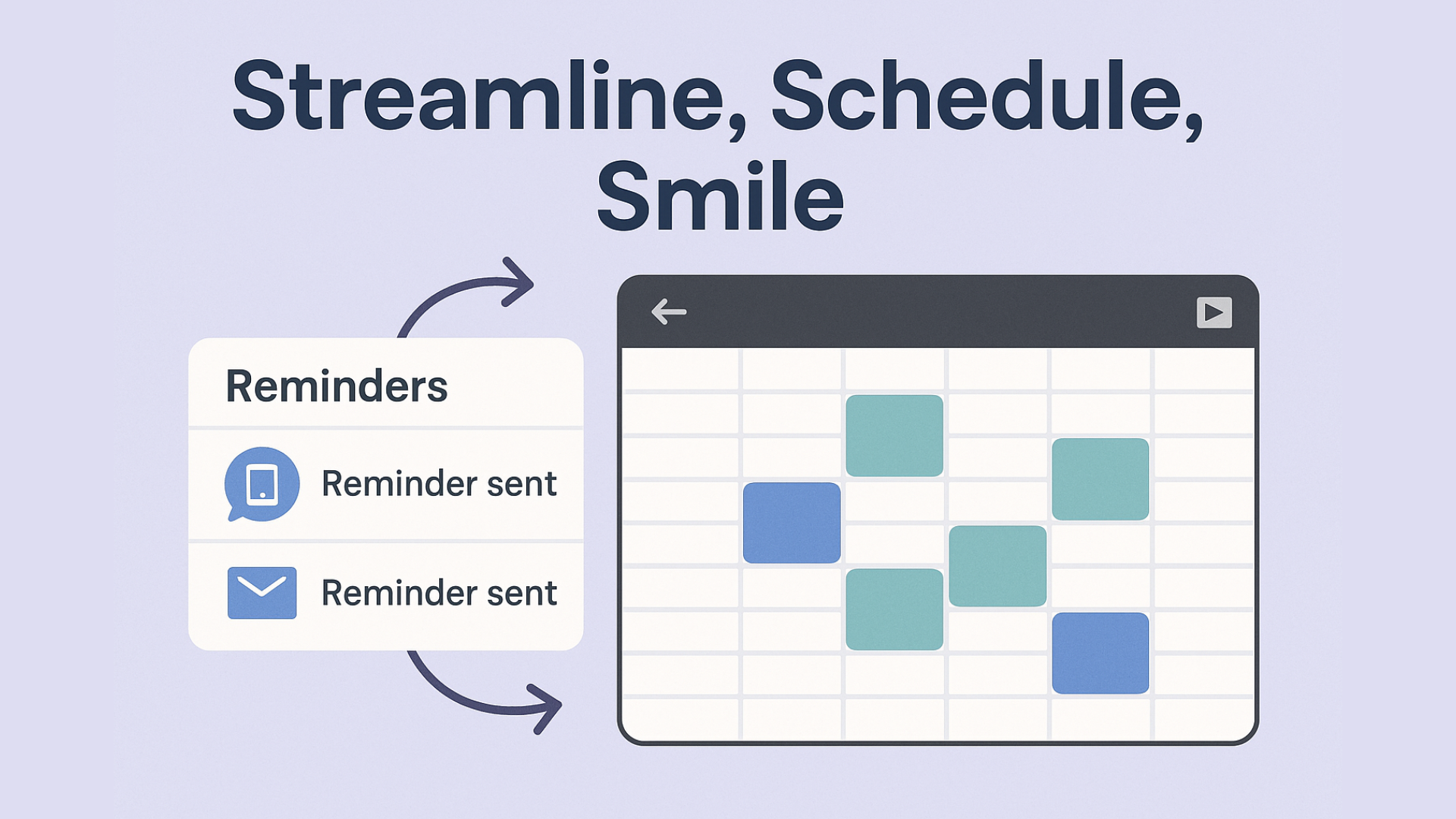
Manually calling every patient to confirm an appointment is an enormous time sink. Smart confirmation and reminder systems automate this entire process. These tools send a series of personalized messages via text and email leading up to a scheduled visit. The "smart" component allows the patient to interact directly with the message. They can simply reply "C" to confirm, and the appointment status is automatically updated in the Open Dental PMS. If a patient needs to reschedule, the system can provide a link to the online scheduler or alert a staff member to follow up. This workflow drastically reduces no-show rates and frees the front desk from hours of outbound calling.
AI-Powered Virtual Assistants and Front Office Support
Many incoming calls are for simple, repetitive questions: "What are your hours?" "Do you take my insurance?" "Are you accepting new patients?" An AI-powered virtual assistant or chatbot on your practice website can handle these queries instantly and accurately, at any time of day. These tools can be programmed with answers to hundreds of common questions, providing immediate support to patients and deflecting a significant number of calls from the front desk. For more complex issues, the assistant can intelligently gather information and route the request to the appropriate staff member for follow-up, ensuring no patient inquiry is lost and providing a system, like Mango Voice, with crucial context.
Automated Recall and Patient Reactivation
Keeping the schedule full requires a consistent recall strategy to bring back patients who are due for their next visit. Manually calling through lists of overdue patients is inefficient and often ineffective. An automated recall system can systematically work through this list, sending personalized messages to patients encouraging them to book their next appointment. It can include a direct link to the online scheduler, making it incredibly easy for the patient to take action. This not only fills the schedule and drives revenue but also automates a critical patient communication task that often falls by the wayside when the front desk is busy.
The Ripple Effect: Benefits Beyond a Quieter Phone
Reducing the number of phone calls is the immediate goal of smart automation, but the true value lies in the cascading benefits that spread throughout the entire dental practice. A quieter phone is just the first sign of a more efficient, patient-centric, and profitable operation. These positive changes create a powerful ripple effect that elevates the experience for everyone involved.
Elevated Patient Experience and Satisfaction
When patients are given convenient, self-service tools to manage their appointments and get information, their satisfaction soars. They no longer have to wait on hold or trade voicemails to accomplish simple tasks. The proactive delivery of information makes them feel valued and well-cared-for before they even step into the dental office. This modern, frictionless experience aligns with their expectations for service in other industries, strengthening their loyalty to the practice and increasing the likelihood that they will refer friends and family. A positive patient communication experience becomes a key differentiator for your practice.
Empowered Staff and Improved Practice Efficiency
With the constant interruption of the phone removed, front office staff can finally focus on higher-value activities. They have more time to engage in meaningful conversations with patients in the office, thoroughly explain treatment plans and financial options, and manage complex insurance claims with greater accuracy. This shift from reactive call handling to proactive patient management improves overall practice efficiency and reduces administrative errors. Staff morale improves as their roles become more strategic and less stressful, leading to lower turnover and a more positive work environment for the entire team.
Increased Revenue and Reduced Operational Costs
The financial benefits of smart automation are direct and measurable. Automated reminders and confirmations significantly reduce costly no-shows, immediately boosting production revenue. Automated recall campaigns work tirelessly to fill the schedule, reactivating dormant patients and ensuring a steady flow of appointments. By capturing new patients through 24/7 online scheduling, the practice taps into a new stream of revenue. Simultaneously, operational costs are reduced. The need for additional administrative staff to handle call volume decreases, and the improved efficiency means the existing team can accomplish more, directly impacting the bottom line.
Data-Driven Insights for Strategic Growth
Smart automation platforms provide a wealth of data that was previously difficult to track. Practice managers can see exactly how many appointments are booked online, which reminder messages have the best confirmation rates, and which recall campaigns are most effective. This data provides clear insights into patient behavior and communication preferences. Practices can use this information to continuously optimize their strategies, make informed decisions about marketing efforts, and identify opportunities for growth. The practice transitions from operating on assumptions to making strategic choices based on concrete data, paving the way for sustainable long-term success.
Implementing Smart Automation: A Practical Roadmap
Transitioning to a more automated communication system is a strategic move that requires careful planning and execution. A thoughtful, phased approach ensures a smooth rollout, maximizes staff adoption of tools like Flex Dental Solutions and Mango Voice, and delivers the best possible results for the practice and its patients. Following a clear roadmap can demystify the process and set your dental practice up for success.
Assessing Your Practice's Unique Needs and Call Drivers
The first step is to understand why your phone is ringing. For one week, have your front desk staff log every incoming call, categorizing it by type (e.g., new appointment scheduling, rescheduling, insurance question, directions, confirmation). This simple audit will provide a clear picture of your biggest call drivers. Identifying that 40% of calls are for new appointments, for instance, makes a strong case for prioritizing an online scheduling tool. This data-driven assessment ensures you invest in the tools that will have the biggest impact on your specific practice.
Choosing the Right Tools and Platforms
Not all automation tools are created equal. Look for solutions that are designed specifically for the dental industry and offer deep, seamless integration with your existing practice management software, like Open Dental, and the comprehensive patient engagement tools in Flex Dental Solutions. Key features to consider include two-way texting, customizable reminder workflows, real-time online scheduling (all offered by Flex Dental Solutions), and robust reporting capabilities. Seek out a platform that can consolidate multiple functions (e.g., reminders, recall, forms) into a single system to simplify management and training. Partnering with a reputable provider ensures you have the support and expertise needed to maximize the platform's value.
Ensuring HIPAA Compliance and Data Privacy
Patient communication involves the transmission of Protected Health Information (PHI), making HIPAA compliance an absolute necessity. Any automation tool you consider must be fully HIPAA-compliant. This means the vendor must be willing to sign a Business Associate Agreement (BAA) and employ robust security measures like data encryption to protect patient information. Never compromise on data privacy. Vet potential vendors thoroughly on their security protocols to protect your patients and your practice from liability.
Staff Training and Change Management
Technology is only effective if your team knows how to use it. Successful implementation hinges on comprehensive staff training and effective change management. Involve your front desk team in the selection process to build buy-in from the start. Provide dedicated training sessions on how to use the new tools and, just as importantly, how to adapt their workflows. Frame the change not as a replacement for their roles, but as an enhancement that will free them from tedious tasks and empower them to focus on more rewarding aspects of patient care.
Gradual Rollout and Continuous Optimization
Avoid trying to implement everything at once. A gradual rollout is more manageable and allows you to troubleshoot issues along the way. Start with the feature that addresses your biggest pain point, such as automated appointment reminders. Once the team is comfortable and the system is running smoothly, introduce the next component, like online scheduling or automated recall. After implementation, continuously monitor your data and solicit feedback from both staff and patients. Use these insights to tweak your message templates, timing, and workflows to constantly improve the system’s effectiveness and further reduce your call volume.
Embrace the Silence: A More Efficient, Patient-Centric Future
The journey to a quieter dental office is not about avoiding patients; it’s about connecting with them more effectively. By strategically implementing smart automation, practices can move away from a reactive, phone-dependent model to a proactive, digitally-enabled one. This transformation creates a calmer, more controlled environment where technology handles the repetitive tasks and frees human talent to do what it does best: build relationships and provide outstanding care.
Transforming Dental Care Through Intelligent Automation
Intelligent automation fundamentally reshapes the operational fabric of a dental practice. It streamlines the patient journey from the moment they book their first visit to their ongoing recall appointments. This operational excellence ensures that more patients receive timely dental care, schedules remain full, and the administrative side of the practice runs with quiet efficiency. The result is a practice that is not only more profitable but also better equipped to fulfill its core mission of promoting oral health in the community.
The Path to a Calmer, More Productive Practice
Embracing these tools is the path to a future where the front office is no longer a chaotic call center but a welcoming hub of patient care coordination. It’s a future where staff are less stressed, more productive, and more engaged in their work. It’s a future where patients feel empowered and respected, with convenient communication channels that fit their modern lifestyles. By silencing the unnecessary rings, you amplify the signals that truly matter: patient satisfaction, staff empowerment, and sustainable practice growth. The silence isn't empty; it's the sound of a well-run, future-ready dental practice.