The common perception of dental visits often centers on addressing immediate discomfort – a nagging toothache, a painful cavity, or the need for a routine cleaning. While these are vital aspects of oral hygiene, this view narrowly defines the scope of what dentistry can and should be. In an era where interconnectedness permeates every facet of our lives, from communication to commerce, it's only logical that our approach to healthcare should follow suit. The traditional separation of dental care from general medicine, while historically understandable, no longer serves the complex, holistic needs of the modern patient. We now recognize that the health of your mouth is inextricably linked to your overall well-being, influencing everything from cardiovascular health to cognitive function. This growing understanding has paved the way for a revolutionary shift: Integrated Dental Care. Moving beyond the confines of a single treatment room, integrated dental care embraces a comprehensive, patient-centric philosophy that unites oral health with broader healthcare objectives, promising not just a healthier smile, but a healthier life. This article will delve into what integrated dental care truly is, how it functions, why its impact is so profound, and what to look for when seeking this advanced model of healthcare.
What is Integrated Dental Care? Defining a Comprehensive Philosophy
Integrated dental care represents a paradigm shift in how oral health services are delivered and perceived. It moves away from a siloed approach, where dental appointments are seen as isolated events, towards a unified model that recognizes the profound connections between the mouth and the rest of the body. This philosophy is built on the understanding that oral health is not merely about preventing cavities or maintaining a bright smile; it is a critical component of overall systemic health.
A Coordinated Approach to Well-being
At its core, integrated dental care is about coordinated well-being. It acknowledges that the patient is a whole person, not just a collection of individual ailments. This means that your dental team actively considers your medical history, lifestyle, and any existing health conditions when formulating your oral care plan. Conversely, it also promotes communication and collaboration with your medical providers, ensuring that your dental health is factored into your broader healthcare management. The goal is to create a seamless continuum of care, where your dental team acts as an integral partner in your overall health journey, working in concert with other healthcare professionals to achieve optimal outcomes for every patient.
Distinguishing Integrated from Traditional Dental Care
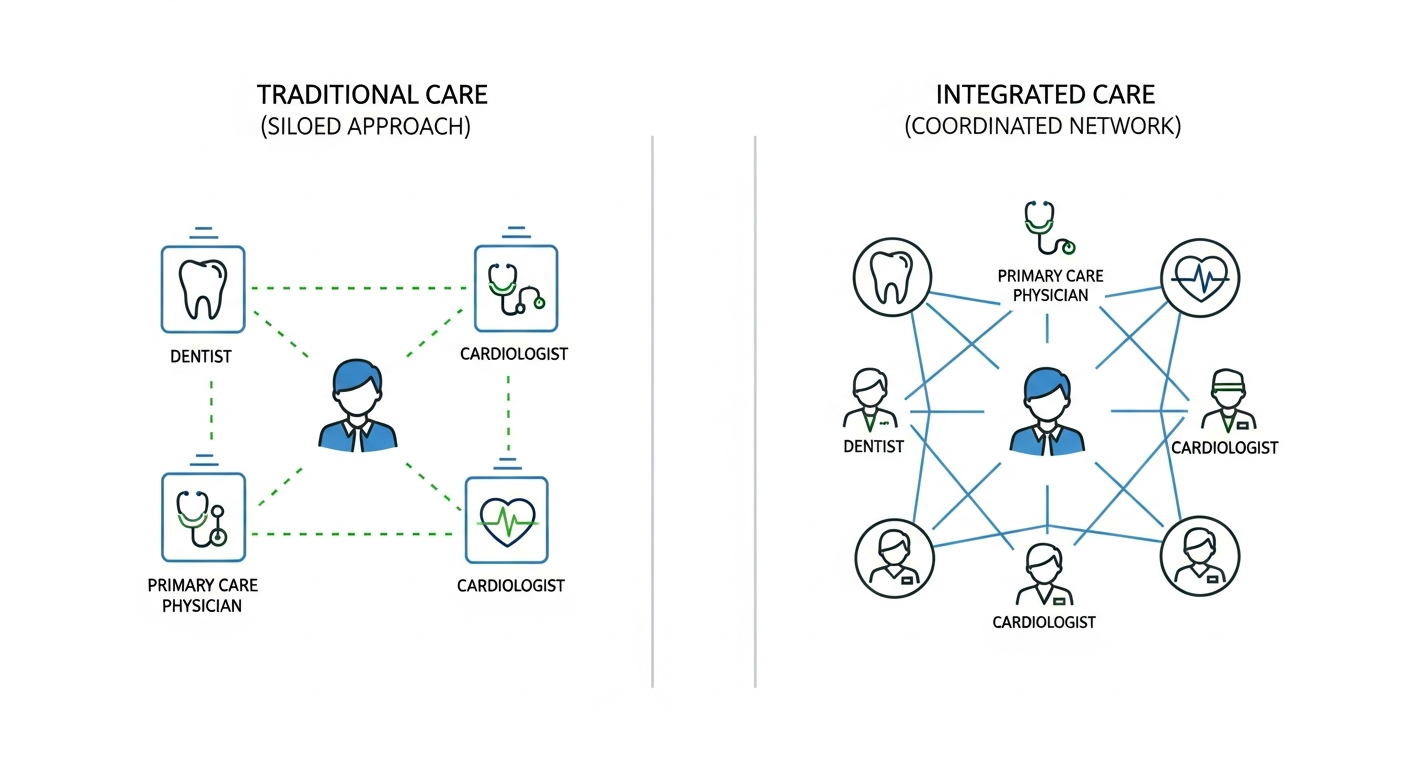 Traditional dental care often operates in isolation, while integrated care creates a collaborative network between all of a patient's healthcare providers.
The distinction between integrated and traditional dental care lies primarily in their scope and collaborative nature. Traditional dental care typically operates in isolation. A patient sees a dentist for dental issues, a primary care physician for medical concerns, and perhaps a specialist for other health problems, with minimal cross-communication between these providers. This fragmentation can lead to missed diagnoses, duplicated efforts, and a less efficient patient experience.
Integrated dental care, on the other hand, breaks down these barriers. It fosters interprofessional collaboration, ensuring that the dental team is not only focused on oral health but also actively looks for signs of systemic disease and communicates relevant findings to medical colleagues. For example, routine oral health screenings may reveal indicators of conditions like diabetes or heart disease, prompting a referral and early intervention. Furthermore, integrated practices often offer a wider spectrum of dental services under one roof, from routine check-ups and cosmetic dentistry to complex procedures like dental implants and prosthetic solutions, streamlining the patient's journey and enhancing convenience.
Core Principles Driving Integrated Care
Several core principles underpin the philosophy of integrated dental care. Foremost among these is the recognition of the oral health-body connection. This principle dictates that oral conditions, such as gum disease (also known as Periodontal disease) and tooth decay, can have significant systemic implications, affecting conditions like diabetes, cardiovascular disease, and even neurological disorders.
Secondly, interprofessional collaboration is paramount. This involves active communication and shared decision-making between dentists, physicians, and other healthcare providers. This ensures a comprehensive understanding of the patient's health status. Thirdly, patient-centered care is a driving force. Integrated dental care prioritizes the patient's overall experience, comfort, and individual needs, aiming to make healthcare accessible, convenient, and less stressful. Finally, the utilization of advanced dental technology plays a crucial role, enabling more precise diagnostics, effective treatment planning, and seamless data sharing among the dental team and other medical professionals. This technological integration supports everything from implant surgery planning to the delivery of personalized cosmetic treatments.
How Integrated Dental Care Works: Mechanisms of Coordinated Care
The effectiveness of integrated dental care hinges on robust mechanisms that facilitate seamless coordination between dental and medical professionals, leverage advanced technology, and offer a comprehensive suite of services. This intricate interplay ensures that the patient's oral health is understood within the broader context of their overall well-being.
Interprofessional Collaboration: Bridging the Dental-Medical Divide
The foundation of integrated dental care is strong interprofessional collaboration. This involves establishing clear communication channels and working relationships between the dental team and medical professionals, including primary care physicians, cardiologists, endocrinologists, and specialists. This collaboration goes beyond simply referring a patient; it involves sharing relevant patient information (with appropriate consent), joint care planning, and a mutual understanding of how oral health impacts systemic conditions and vice versa. For instance, a dentist might identify early signs of diabetes through oral examination, such as increased susceptibility to infections or dry mouth, and proactively inform the patient's physician. Conversely, a physician might alert the dental team to a patient's condition, like an autoimmune disorder, that could affect oral tissues or healing post-implant surgery. This collaborative approach ensures that the patient receives a cohesive and informed care plan, preventing potential health conflicts and optimizing treatment effectiveness.
The Role of Advanced Dental Technology and Data Sharing
Advanced dental technology is a critical enabler of integrated dental care. Innovations such as digital radiography, 3D cone-beam computed tomography (CBCT) scanners, intraoral scanners, and sophisticated practice management software allow for highly accurate diagnostics and precise treatment planning. These technologies facilitate the capture of detailed information about a patient's oral anatomy, bone structure, and the condition of their teeth and gums.
Crucially, these systems are increasingly designed for secure data sharing. When patient records are digitized and interoperable, information can be efficiently and confidentially exchanged between dental and medical offices. This allows all members of the patient's healthcare team to access a comprehensive overview of their health status. For procedures like dental implants, 3D imaging provides invaluable data for planning the placement of the prosthetic component, ensuring optimal function and aesthetics. Similarly, in cosmetic dentistry, digital tools allow for virtual smile makeovers, enabling patients to visualize the results of cosmetic treatments like veneers before they are applied. The ability to integrate this data into a patient's broader medical record provides a more complete picture, supporting better-informed decisions across all aspects of their Healthcare. In 2024, PDS Health reported over seven million integrated visits nationwide, a testament to the growing adoption of these technologically advanced, collaborative models [DOCS Education, 2025].
Comprehensive Service Offerings within an Integrated Framework
Integrated dental practices often distinguish themselves by offering a broad spectrum of services under one roof, simplifying the patient's journey and ensuring that all their oral health needs are met efficiently. This "all-in-one" approach is particularly beneficial for patients requiring complex treatments. For instance, someone needing dental implants to replace missing teeth can have their initial consultation, diagnostic imaging, implant surgery, and the placement of the final prosthetic (such as a denture or crown) all within the same practice.
This integration extends to various specializations. Patients seeking cosmetic dentistry can benefit from smile makeovers that may involve veneers, teeth whitening, and other cosmetic treatments, all planned and executed by a coordinated dental team. Furthermore, integrated dental care often incorporates screenings for broader health issues. This might include oral cancer screenings, but also extends to looking for signs of systemic diseases, such as gum disease indicators that can point to underlying medical conditions. This comprehensive approach ensures that patients receive not only excellent dental treatment but also proactive health management, fostering a holistic view of their well-being.
Why Integrated Dental Care Matters: Unlocking Superior Health Outcomes
The significance of integrated dental care extends far beyond mere convenience; it translates into tangible improvements in patient health, well-being, and long-term outcomes. By breaking down traditional healthcare silos, this approach unlocks a more effective and proactive model for managing health.
A Stronger Defense Against Systemic Diseases
The link between oral health and systemic health is undeniable, and integrated dental care is a powerful tool for combating this connection. Conditions like Periodontal disease, a chronic inflammatory disease affecting the gums and supporting bone, are prevalent, with approximately 46% of U.S. adults experiencing it [UT Dentistry, 2025]. This inflammation doesn't remain confined to the mouth; it can enter the bloodstream, contributing to a range of systemic issues. Studies indicate that individuals with gum disease may face a two to three times higher risk of heart attack, stroke, or severe cardiovascular disease [CareQuest]. The bacteria responsible for gum disease can travel throughout the body, potentially exacerbating conditions like diabetes, increasing the risk of dementia, and even being linked to certain types of cancer.
Integrated dental care facilitates early detection and management of these risks. Through regular screenings, dental professionals can identify early signs of gum disease and tooth decay, as well as potential indicators of systemic conditions. This proactive approach allows for timely intervention, potentially preventing the onset or progression of serious diseases. For example, managing oral inflammation can help patients with diabetes better control their blood sugar levels. This holistic perspective ensures that dental visits become a vital part of a comprehensive strategy for preventing and managing chronic diseases, leading to better overall health outcomes for the patient.
Enhanced Patient Experience and Greater Convenience
The fragmented nature of traditional healthcare often leads to a stressful and inconvenient patient experience. Patients may need to navigate multiple appointment systems, manage disparate medical records, and coordinate care between various specialists, often with limited communication between them. Integrated dental care fundamentally transforms this experience by offering a centralized and coordinated approach.
By housing a wide range of dental services—from routine check-ups and cosmetic dentistry to complex procedures like dental implants and prosthetic fittings—under one roof, integrated practices significantly reduce the burden on the patient. This means fewer appointments at different locations, less time spent on administrative tasks, and a more streamlined process from diagnosis to treatment completion. The dental team works cohesively, ensuring that all aspects of the patient's oral health are addressed efficiently and effectively. This convenience, coupled with a focus on personalized care and clear communication about procedures such as implant surgery or smile makeovers, leads to a more positive and less anxiety-inducing healthcare journey.
Long-Term Health and Economic Benefits
The benefits of integrated dental care extend beyond immediate health improvements and convenience; they also yield significant long-term health and economic advantages for both individuals and society. By prioritizing oral health as a cornerstone of overall well-being, integrated care promotes preventative strategies that can avert serious and costly health issues down the line. Early detection and management of oral diseases and their systemic links can prevent the escalation of chronic conditions, reducing the need for extensive medical interventions, hospitalizations, and long-term disease management. This not only improves quality of life but also leads to substantial savings in healthcare expenditures over time.
For individuals, proactive oral health management, facilitated by integrated care, can mean fewer unexpected dental emergencies, reduced treatment costs associated with advanced disease, and the preservation of natural teeth, which are generally more functional and cost-effective than replacements. Furthermore, the integration of dental care with medical insurance plans, as seen in some employer benefits, can improve accessibility. Despite the trend of increasing preventive dental care visits, with the percentage of U.S. adults seeking preventive care rising from 78% to 83% between 2022 and 2023 [Benevis, 2025], approximately 68.5 million adults in the U.S. still lacked dental insurance by the end of 2023 [Health Affairs]. Integrated models that foster better health can therefore lead to more efficient use of healthcare resources overall, contributing to a more sustainable healthcare system. The economic impact of dental health is clear, with consumer dental spending growing 10% in the five years post-pandemic [ADA's Health Policy Institute, 2025], reflecting a greater appreciation for oral health's value.
Choosing an Integrated Dental Care Provider: What to Look For
Selecting the right integrated dental care provider is a crucial step in embracing this holistic approach to health. It requires looking beyond standard dental services and assessing a practice's commitment to comprehensive, coordinated care.
Identifying a Truly Integrated Practice
A truly integrated dental practice will exhibit several key characteristics. Firstly, they will emphasize the connection between oral and systemic health, actively discussing it with patients and incorporating it into their care philosophy. This is often evident in their educational materials and the way their dental team communicates. Secondly, look for evidence of interprofessional collaboration. This could mean they have established referral networks with local physicians or that their staff is trained to recognize and report potential systemic health indicators.
Thirdly, advanced dental technology should be a prominent feature. This includes digital diagnostics like CBCT scanners for precise implant surgery planning, intraoral scanners for accurate impressions in cosmetic dentistry and prosthetic work, and robust digital record-keeping systems that facilitate secure data sharing. Fourthly, the practice should offer a comprehensive range of services, ideally including general dentistry, cosmetic treatments like smile makeovers and veneers, restorative services, and advanced procedures such as dental implants. The presence of multiple specialists or a highly skilled general dentist capable of handling complex cases under one roof is a strong indicator of integration. Finally, the overall patient experience should feel coordinated and patient-centered, with clear communication and a focus on individual well-being beyond just oral hygiene.
Key Questions to Ask Prospective Providers
When evaluating an integrated dental care provider, asking the right questions can help you discern their level of integration and suitability for your needs. Consider asking:
- "How do you approach the connection between oral health and overall systemic health?" This will reveal their understanding and philosophy.
- "Do you collaborate with medical doctors? If so, how do you facilitate communication and information sharing?" This assesses their commitment to interprofessionalism.
- "What advanced dental technology do you utilize, and how does it benefit patient care, particularly for procedures like dental implants or cosmetic dentistry?" This probes their technological capabilities and application.
- "What range of dental services do you offer on-site, from routine care to complex prosthetic work or cosmetic treatments?" This clarifies their comprehensive service offering.
- "How do you handle screenings for potential systemic health issues during a dental visit?" This determines their proactive health assessment approach.
- "Can you describe the typical patient journey for a procedure like implant surgery or a smile makeover within your practice?" This helps you understand the integrated process in practice.
- "How do you ensure patients understand the link between conditions like gum disease or tooth decay and their broader health?" This gauges their patient education strategy.
By asking these questions, you can gain a clear picture of whether a practice truly embodies the principles of integrated dental care and is the right choice for your comprehensive health needs.
The Future is Integrated: A Paradigm Shift in Healthcare
The movement towards integrated dental care is not merely a trend; it represents a fundamental evolution in how healthcare is conceived and delivered. As our understanding of the intricate connections within the human body deepens, so too does the imperative to break down traditional disciplinary barriers. This paradigm shift is driven by advancements in medical knowledge, technological innovation, and a growing patient demand for more holistic and convenient care.
Evolving Healthcare Standards
The healthcare landscape is rapidly evolving, with an increasing emphasis on preventative care, chronic disease management, and patient-centered approaches. Integrated dental care aligns perfectly with these evolving standards by recognizing the mouth as a gateway to overall health. The traditional model, which often treated oral health as a separate entity, is proving insufficient in addressing the complex interplay of factors that influence well-being. As research continues to illuminate the links between oral conditions like gum disease and systemic diseases such as diabetes, heart disease, and Alzheimer's, the integration of dental care into mainstream Healthcare becomes not just beneficial, but essential. The future standard of care will undoubtedly involve seamless collaboration between dental and medical professionals, ensuring that patients receive comprehensive and coordinated treatment plans that address their complete health profile.
Innovation and "Connected Care"
Innovation is the engine driving the integration of dental and medical Healthcare. The proliferation of dental technology, from advanced imaging systems to AI-powered diagnostic tools, enables more precise diagnoses and personalized treatments. Furthermore, the development of interoperable electronic health record systems and secure data-sharing platforms is making "connected care" a reality. This allows for the seamless exchange of patient information between different healthcare providers, fostering a collaborative environment where the dental team can work in tandem with physicians and other specialists. The concept of integrated dental practices offering services like dental implants, prosthetic solutions, and cosmetic dentistry under one roof, supported by sophisticated technology, is a prime example of this innovation. This connected approach ensures that every aspect of a patient's health is considered, leading to more effective interventions and better overall outcomes.
Empowering the "Dental Workforce"
The integration of dental and medical healthcare also heralds a new era for the dental workforce. As the scope of dental practice expands to encompass broader health implications, dental professionals are becoming increasingly vital partners in preventative healthcare and chronic disease management. This evolution requires new training and a broadened skillset, enabling dentists, hygienists, and dental assistants to recognize and address systemic health indicators within the oral cavity. The rise of concepts like the "integrated dental hygienist" signifies this shift, where these professionals are trained to perform basic medical screenings and collaborate more closely with physicians. This expansion of roles not only empowers the dental workforce but also enhances their contribution to overall public health, transforming dental clinics into essential hubs for comprehensive wellness and early disease detection, thereby improving the accessibility of vital healthcare services.
Conclusion: Your Partner in Lifelong Health
The journey towards optimal health is multifaceted, and the significance of oral well-being within this journey cannot be overstated. Integrated Dental Care transcends the traditional boundaries of dentistry, offering a holistic, patient-centered approach that recognizes the profound connections between your mouth and your body. By fostering interprofessional collaboration, leveraging advanced dental technology, and providing comprehensive services, this model ensures that your oral health is addressed as an integral component of your overall healthcare.
From preventing gum disease and tooth decay to facilitating complex procedures like dental implants and cosmetic dentistry, integrated practices empower patients with a more coordinated, convenient, and effective path to wellness. The benefits are clear: a stronger defense against systemic diseases, an enhanced patient experience, and long-term health and economic advantages. As the landscape of healthcare continues to evolve, embracing integrated dental care is not just a choice for better dental outcomes, but a strategic decision for lifelong health and well-being. Partner with a provider who understands this interconnectedness, and take a proactive step towards a healthier future, where your smile and your systemic health thrive in harmony.