The initial moments a patient spends within your dental practice lay the foundation for their entire experience. This first impression, often shaped by the check-in process, is far more influential than many realize. In today's fast-paced healthcare environment, dental practices face increasing pressure to optimize every touchpoint, and the front office – the metaphorical "window" to your practice – is a critical area ripe for enhancement. Efficient check-in procedures not only boost patient satisfaction but also significantly impact staff productivity and the overall financial health of the practice. This article explores innovative "window solutions" designed to transform the traditional dental check-in, making it a seamless, technology-driven, and patient-centric experience.
The Gateway to Care: Why Check-In Matters More Than You Think
Your dental practice's front office serves as the primary interface for patients, embodying the professionalism and efficiency with which you operate. A smooth check-in process sets a positive tone, signaling competence and respect for the patient's valuable time. Conversely, a chaotic or slow check-in can quickly erode patient confidence, leading to frustration and dissatisfaction before a patient even sees the dentist or hygienist. This initial interaction directly influences patient perception of the quality of care they are about to receive. It's not merely about administrative tasks; it’s about crafting an experience that makes patients feel welcomed, valued, and efficiently processed. The ability of a dental practice to manage appointments effectively and handle patient arrivals with grace is a testament to its operational excellence.
The Current Landscape: Common Bottlenecks and Patient Frustrations
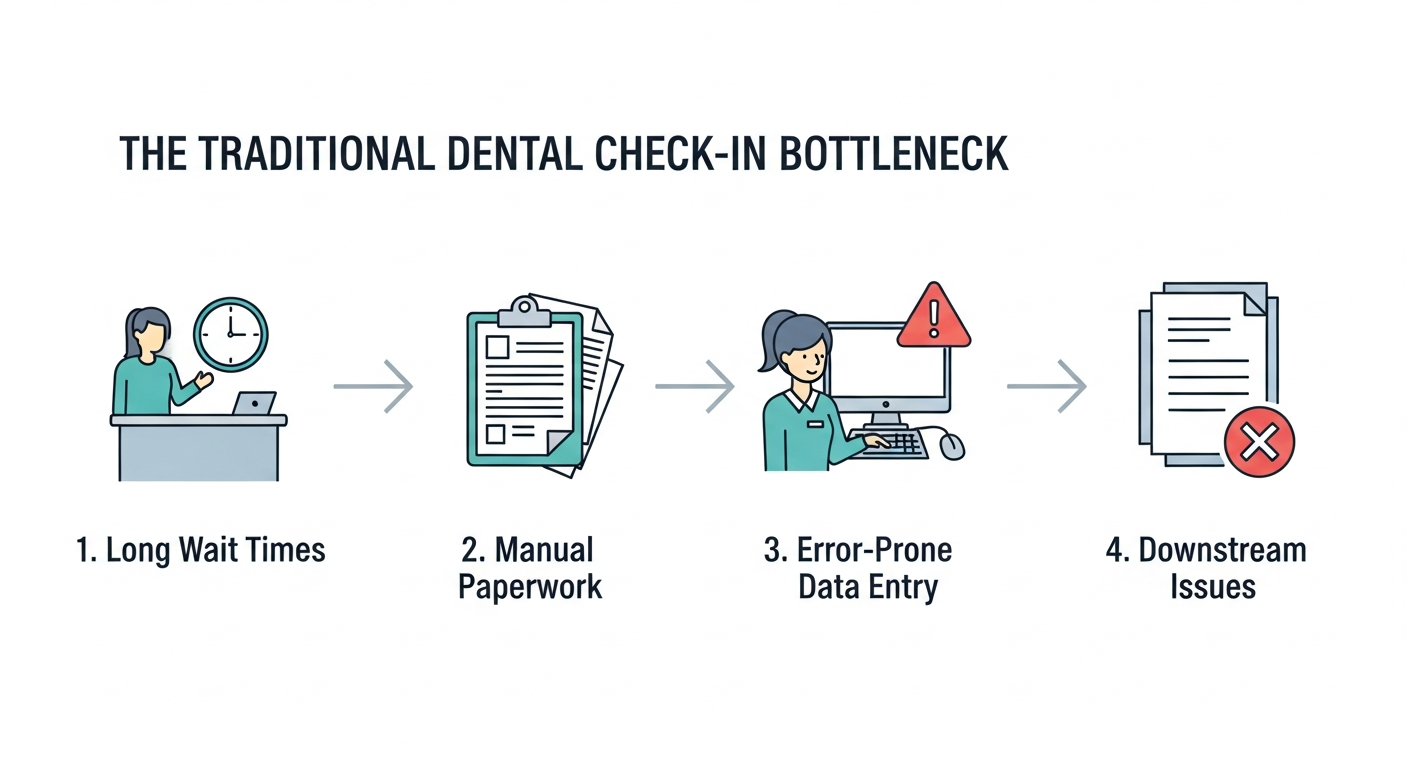 The traditional check-in process creates a chain reaction of inefficiencies, from patient wait times to administrative errors.
Traditional dental check-in processes are often plagued by inefficiencies that lead to significant bottlenecks. Patients frequently encounter long wait times, exacerbated by manual paperwork and repetitive data entry. When patients arrive, they are often met with stacks of forms requiring their personal, medical, and insurance information to be filled out by hand. This not only consumes valuable patient time but also places a considerable burden on front desk staff who must meticulously transcribe this information into practice management systems. This manual data entry is prone to errors, which can cascade into downstream issues like denied insurance claims. Furthermore, outdated systems and a lack of integrated technology create disconnects, leading to patient frustration and a drain on staff resources.
Introducing "Window Solutions": A Strategic Approach to Check-In Efficiency
"Window Solutions" represents a holistic and strategic approach to optimizing the dental office check-in experience. It moves beyond viewing the front office as a mere point of transaction to understanding it as a dynamic hub where technology, workflow design, and human interaction converge. These solutions encompass the entire patient journey from pre-arrival to post-check-in, aiming to reduce friction for both the patient and the practice staff. The core idea is to leverage technology and thoughtful process design to create a seamless, efficient, and positive interaction at the primary point of patient contact. This strategic framework integrates various digital and physical elements to streamline operations, improve data accuracy, and enhance the overall patient experience within the dental practice.
What This Article Will Cover: Your Guide to a Seamless Patient Experience
This article will delve into the multifaceted nature of "Window Solutions" for dental practices. We will explore the modern definition of the check-in "window," moving beyond the physical desk to encompass the digital interfaces and patient interactions that define the modern arrival experience. You will learn about the common challenges that impede efficiency, such as time constraints and staff burden, and understand their impact on patient perception and practice operations. We will then introduce the transformative power of digital window solutions, including online pre-registration, self-service kiosks, and the role of AI. Furthermore, we will examine how to optimize the physical front desk area and the essential technology required. The article will highlight the critical role of integrated systems in streamlining key processes like insurance verification, appointment management, and billing. Finally, we will outline the tangible benefits of implementing these solutions, from elevated patient satisfaction to increased practice profitability, and provide best practices for successful adoption.
Understanding the "Window": Redefining the Dental Check-In Point
The concept of the "window" in a dental office context has evolved significantly. Historically, it referred to the physical counter or desk where patients checked in and out. Today, it encompasses a much broader spectrum of patient touchpoints. This evolution reflects the increasing integration of technology into healthcare delivery. What was once a singular point of human interaction is now a multi-layered experience that can begin days before an appointment and continue through the patient's entire visit. Understanding this expanded definition is crucial for dental practices aiming to modernize their operations and meet patient expectations.
Beyond the Glass: What Constitutes the Modern "Doctor's Window"
The modern "Doctor's Window," a term we use to represent the comprehensive check-in and patient reception area, extends far beyond the physical counter. It includes digital portals and mobile applications that allow patients to complete paperwork, confirm appointments, and even check in remotely before arriving at the dental office. It also encompasses self-service kiosks strategically placed in the waiting area, offering a convenient and contact-free option for arrival. This holistic view recognizes that the patient's interaction with the practice begins the moment they engage with its systems, whether online, via a mobile device, or upon entering the physical premises. Every touchpoint within this "window" contributes to the patient's overall perception of the practice.
The Impact of the Check-In Workflow on Patient Perception and Practice Operations
The efficiency of the check-in workflow profoundly influences both patient perception and the operational smoothness of a dental practice. A streamlined process, utilizing modern technology and well-designed workflows, conveys a sense of organization, care, and respect for the patient's time. This positive initial experience can lead to higher patient satisfaction scores, increased loyalty, and a greater likelihood of positive referrals. Conversely, a clunky or lengthy check-in can create anxiety, discomfort, and a negative first impression, potentially overshadowing the quality of the dental care itself. For practice operations, an optimized check-in workflow means reduced administrative burden on staff, minimized patient wait times, and a more predictable flow of patients through the office, allowing hygienists and dentists to focus on providing care.
Identifying Core Challenges: Time, Paperwork, and Staff Burden at the Window
At the heart of inefficient check-in processes lie several persistent challenges. The sheer volume of paperwork required for new and returning patients is a significant hurdle, consuming valuable time for both patients and staff. Manually filling out and processing these forms is prone to errors and delays. The impact of this administrative burden is substantial; dental spending on administrative processes, including eligibility and benefit verification, increased by 15% to $2.1 billion in 2023 [CAQH Index, 2024]. This highlights the significant financial and time cost associated with traditional methods. Staff often find themselves dedicating considerable time to data entry, verifying insurance information, and managing patient queues, which detracts from their ability to focus on higher-value tasks or provide more personalized patient interactions.
Digital Window Solutions: Transforming the Pre-Arrival and Arrival Experience
The advent of digital technologies has revolutionized the check-in process, offering unprecedented opportunities for efficiency and patient convenience. These solutions shift many of the administrative tasks from the peak arrival times at the front office to moments that are more convenient for the patient, often before they even leave home. By embracing digital tools, dental practices can significantly reduce wait times, minimize paperwork, and improve data accuracy, thereby transforming the entire patient experience. These technologies are not just about convenience; they are about fundamentally re-engineering the workflow for the better.
Online Patient Paperwork and Pre-Registration Systems
One of the most impactful digital solutions is the implementation of online patient paperwork and pre-registration systems. Patients can complete comprehensive forms, including medical history, consent documents, and insurance details, from the comfort of their own homes or on their mobile devices prior to their appointment. Utilizing online forms reduces the amount of time patients spend at the front desk, minimizes the physical handling of paper, and ensures that data is captured accurately and legibly. This also allows practices to collect essential insurance information upfront, facilitating quicker verification.
Self Check-In Kiosks
Self check-in kiosks offer a modern, efficient alternative for patients upon arrival. These interactive terminals allow patients to quickly confirm their identity, update necessary information, complete any outstanding forms, and digitally alert the front desk of their arrival. This aligns with patient preferences, as 69% of consumers are extremely or very interested in digitally alerting the front office that they've arrived and are waiting to be seen [Kyruus, 2023]. Kiosks reduce queues at the reception desk, minimize staff interaction for routine check-ins, and provide a contact-free option that many patients now prefer. This technology frees up front desk staff to manage more complex patient needs and administrative tasks.
AI and Automation at the Check-In Point
Artificial intelligence (AI) and automation are increasingly playing a role in streamlining the check-in process. AI-powered chatbots can handle initial patient inquiries, answer frequently asked questions, and even guide patients through pre-registration steps, available 24/7. Automation can also be leveraged for intelligent data capture, optical character recognition (OCR) for scanning documents, and real-time insurance eligibility verification. By automating repetitive tasks, AI and automation reduce the manual workload on staff, minimize errors, and accelerate the check-in process, allowing dental practices to operate with greater efficiency and responsiveness.
Optimizing the Physical "Doctor's Window" and Front Desk Area
While technology is paramount, the physical layout and design of the dental office's front desk and waiting area are equally crucial for an efficient check-in experience. A well-designed space can enhance workflow, improve patient comfort, and support staff productivity. Investing in the physical environment is an often-overlooked aspect of creating a seamless check-in.
Thoughtful Layout and Design for Enhanced Workflow
The physical layout of the front office area should be designed with workflow efficiency in mind. This includes ensuring adequate space for staff to work comfortably, easy access to necessary equipment, and a clear, unobstructed path for patients checking in and out. The waiting area should be comfortable, well-organized, and facilitate a sense of calm. Clear signage can guide patients to the check-in point and any self-service options. An ergonomic design minimizes physical strain for staff, contributing to their well-being and productivity.
Essential Hardware Solutions for the Check-In Window
Essential hardware for a modern check-in "window" includes reliable tablets for digital form completion and check-in, secure payment terminals for co-pays and balances, and potentially barcode scanners for insurance cards or patient IDs. High-speed internet connectivity is non-negotiable to ensure seamless operation of all digital systems. Printers may still be necessary for certain documents or patient receipts, but the goal is to minimize their use in favor of digital alternatives. The selection of hardware should align with the chosen software solutions to ensure full integration and optimal performance.
The Human Element: Empowering Office Staff at the Window
Despite the advancements in technology, the human element remains indispensable. Front desk staff are the frontline ambassadors of your dental practice. Rather than being replaced by technology, their roles evolve to become more focused on patient engagement, problem-solving, and managing exceptions. Empowering office staff with proper training on new technologies, clear protocols for handling patient interactions, and the authority to resolve issues is crucial. They should be equipped to guide patients through digital processes, offer personalized assistance, and ensure that the human touch is present, especially for patients who may struggle with technology.
Streamlining Key Processes with Integrated Window Solutions
The true power of modern check-in solutions is realized when they are integrated seamlessly into the practice's core systems, particularly the Dental Practice Management Software (PMS), such as Open Dental. This integration allows for the smooth flow of information, reducing manual data entry and ensuring consistency across all aspects of practice management. This interconnectedness is fundamental to achieving comprehensive efficiency.
Patient Data Management and Accuracy
Integrated window solutions ensure that patient data is captured once and updated across all platforms. This leads to a single, accurate source of truth for each patient. When patients enter their information digitally or through a kiosk, it directly populates or updates their profile within the PMS. This drastically reduces the risk of errors, duplicates, and the need for manual reconciliation. Nearly one in two providers (49%) cite patient information errors at intake as a primary cause of denied claims [Experian Health, 2024], underscoring the financial imperative for accurate data management.
Dental Insurance Verification and Claims Processing
Efficient check-in technology facilitates real-time dental insurance verification. Patient insurance details captured during pre-registration or check-in can be automatically sent to the PMS for immediate eligibility checks. This allows staff to identify coverage details, co-pays, and deductibles upfront, informing patients of their financial responsibilities before treatment begins. This proactive approach significantly speeds up claims processing and reduces the likelihood of denied claims, contributing to a healthier revenue cycle.
Appointment Scheduling and Management
Integrated scheduling systems, like Flex Dental Solutions, linked to check-in processes enhance the management of appointments. Patients can often view available appointment slots online, book new appointments, or reschedule existing ones, with these updates reflecting immediately in the practice's schedule. This reduces the administrative burden of manual scheduling and minimizes the risk of double-bookings. Furthermore, patients with an active patient portal account are less likely to no-show for appointments, a benefit directly linked to improved communication and scheduling management.
Payment Collection and Billing
Check-in solutions can integrate with billing and payment systems to streamline financial transactions. Collecting co-pays and deductibles at the time of check-in, either via digital forms or kiosks, improves cash flow and reduces the effort required for post-appointment billing. Digital statements and payment options can be offered, further enhancing patient convenience and accelerating the revenue cycle management for the dental practice.
Tangible Benefits of Implementing Robust Window Solutions
The adoption of comprehensive window solutions yields significant, measurable benefits for dental practices. These advantages extend across patient satisfaction, staff efficiency, data integrity, and ultimately, financial performance. Embracing these innovations is no longer a luxury but a necessity for practices aiming to thrive in a competitive landscape.
Elevating the Patient Experience and Patient Satisfaction
By reducing wait times, minimizing paperwork, and offering convenient digital options, window solutions dramatically enhance the patient experience. Patients feel respected and valued when their time is efficiently managed. The ability to pre-register, check in via a mobile device or kiosk, and receive timely notifications contributes to a less stressful and more positive visit. This improved experience leads to higher patient satisfaction scores, increased retention rates, and a greater likelihood of positive online reviews and word-of-mouth referrals.
Maximizing Staff Efficiency and Productivity
Automating routine tasks at the check-in point frees up front desk staff to focus on more complex and patient-centric responsibilities. Reduced data entry errors, faster insurance verification, and streamlined appointment management allow staff to be more productive and engaged. This shift from administrative overload to proactive patient care can boost morale and reduce burnout. The efficiency gained translates directly into better resource utilization for the entire dental practice, enabling dentists and hygienists to see more patients or dedicate more time to each patient.
Enhancing Data Accuracy and Compliance
Integrated digital check-in systems significantly improve the accuracy and completeness of patient data. By eliminating manual transcription errors and providing standardized digital forms, practices can ensure that patient information is correct and up-to-date. This accuracy is vital for effective treatment planning, insurance claims, and regulatory compliance, such as HIPAA. Maintaining high data integrity protects both the patient and the practice from potential issues.
Boosting Practice Profitability and Revenue Cycle Management
The cumulative effect of these efficiencies—reduced no-shows, faster insurance verification, fewer denied claims due to errors, and quicker payment collection—directly impacts a practice's profitability. Streamlined operations mean less wasted time and fewer administrative overheads. Reducing no-show rates, which have seen significant improvements in high-performing practices, ensures more consistent revenue streams. These improvements collectively contribute to a more robust and efficient revenue cycle management for the dental practice.
Implementing Window Solutions: Best Practices and Considerations
Successfully implementing new check-in solutions requires a strategic approach that considers technology, process, and people. A thoughtful implementation plan is key to maximizing benefits and minimizing disruption.
Assessing Your Current Workflow and Identifying Pain Points
Before adopting new technology, conduct a thorough assessment of your current check-in workflow. Identify specific bottlenecks, sources of patient frustration, and areas where staff time is most heavily consumed. This diagnostic step will help you prioritize which "window solutions" will provide the greatest impact and ensure that your chosen technologies address your practice's unique needs effectively.
Selecting and Integrating Technology Wisely
Choose technology solutions that integrate seamlessly with your existing Dental Practice Management Software, like Flex Dental Solutions integrating with Open Dental. Look for systems that offer robust features for online pre-registration, digital check-in, and patient communication. Consider the user-friendliness for both patients and staff. Prioritize solutions that enhance data security and ensure HIPAA compliance. A pilot program with a small group of patients or staff can help identify and resolve any integration issues before a full rollout.
Prioritizing Data Security and Patient Privacy
When implementing digital solutions, data security and patient privacy must be paramount. Ensure that all systems are HIPAA compliant and employ robust security measures to protect sensitive patient information. Educate staff on data handling protocols and best practices for cybersecurity. Transparent communication with patients about how their data is protected can build trust and confidence in your digital processes.
Training and Change Management for Staff
Effective change management is crucial for the successful adoption of new technologies. Provide comprehensive training for all office staff on how to use the new systems and how their roles may evolve. Clearly communicate the benefits of the new solutions to staff and encourage their feedback. A well-trained and engaged team will be instrumental in guiding patients and ensuring a smooth transition to the enhanced check-in experience.
Conclusion
The dental office check-in process is no longer a mere administrative formality; it is a critical touchpoint that shapes patient perception, influences operational efficiency, and directly impacts practice profitability. By embracing comprehensive "Window Solutions" that integrate digital technologies, thoughtful physical design, and empowered staff, dental practices can transform this essential function. From online pre-registration and self-service kiosks to AI-driven automation and seamless integration with Practice Management Software, these innovations offer a pathway to a more efficient, patient-centric, and financially sound practice. The move towards digital check-in is not just about keeping pace with technological advancements; it’s a strategic imperative that enhances the patient journey, optimizes staff resources, and ultimately drives the success of your dental practice. Implementing these solutions requires careful planning and a commitment to continuous improvement, but the rewards—in patient satisfaction, staff productivity, and financial health—are substantial. Begin by assessing your current workflow, investing in integrated technology, and empowering your team to guide patients through this modern, streamlined experience.