The Unseen Foundation of a Thriving Dental Practice
In the intricate world of healthcare, clinical expertise is undeniably crucial. Yet, a thriving dental practice is built not solely on the precision of a scaler or the skill of a complex procedure, but on an often-underestimated cornerstone: patient trust. This trust isn't a happy accident; it's meticulously cultivated through the art and science of communication. In an era where patients are more informed and discerning than ever, the quality of interactions within a dental office directly impacts patient satisfaction, loyalty, and ultimately, the practice's long-term success.
The Irreplaceable Value of Patient Trust
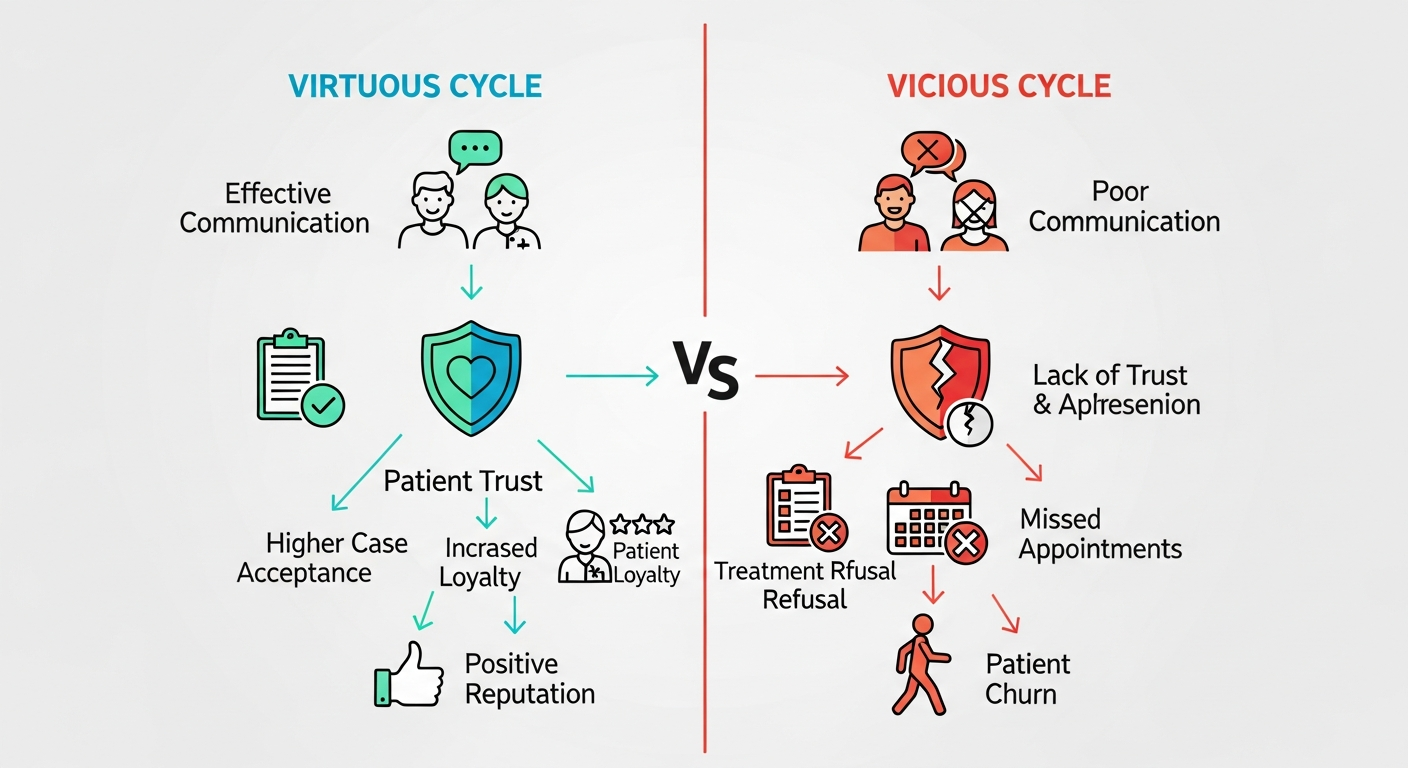 The tangible impact of communication: Effective communication builds a virtuous cycle of trust and growth, while poor communication creates a vicious cycle of apprehension and decline.
Patient trust is the bedrock upon which enduring patient-dentist relationships are built. When patients trust their dentist and the entire dental team, they are more receptive to recommended treatments, more likely to adhere to oral health regimens, and significantly more inclined to become loyal advocates for the practice. This trust translates into tangible benefits: increased patient retention, a higher case acceptance rate, and a more positive reputation within the community. Conversely, a deficit in trust, often stemming from communication breakdowns, can lead to patient apprehension, missed appointments, and even a search for care elsewhere. In fact, strong communication, trust, and personal interactions are the most significant predictors of both satisfaction and loyalty.
Beyond Clinical Skill: Why Communication is Your Most Powerful Tool
While exceptional clinical skills are non-negotiable, they alone are insufficient to foster deep patient trust. Effective communication acts as the vital conduit, transforming technical knowledge into patient understanding and comfort. It's the bridge that connects the dentist's expertise with the patient's needs, fears, and aspirations for their oral health. This dynamic exchange ensures that patients feel heard, valued, and empowered in their healthcare journey. Without strong communication skills, even the most skilled dentist risks creating a disconnect that erodes confidence and hinders optimal patient outcomes.
What This Article Will Cover: A Holistic Approach to Patient-Centered Communication
This article delves into the multifaceted world of dentist-patient communication, offering a comprehensive guide designed to elevate your practice. We will explore the psychological underpinnings of trust, dissect essential communication skills, introduce a powerful patient-empowerment framework, and examine strategic communication across the entire patient journey. Furthermore, we will equip you with techniques for navigating difficult conversations, demystifying the role of technology, and fostering a unified communication culture within your dental office. Our aim is to provide actionable strategies that transform patient interactions into opportunities for building lasting trust and achieving practice growth.
The Psychology of Trust: Why Effective Communication is Non-Negotiable
Trust is a fundamental human psychological need, deeply impacting how individuals perceive and engage with healthcare providers. In the context of a dental practice, this psychological dimension is amplified by the inherent vulnerability many patients feel when undergoing dental treatment. Understanding these underlying motivations and anxieties is the first step toward building a communication strategy that fosters genuine connection.
Building Bridges, Not Walls: Understanding Patient Needs and Fears
Patients arrive at your dental office with a unique set of experiences, expectations, and often, fears. Dental anxiety is a pervasive issue, with approximately 21% of adults in the United States avoiding dental visits due to this fear How Many Patients Avoid Dental Visits Due to Anxiety—and What Eases Their Fear?, 2025. These fears can range from the pain of procedures to concerns about cost, embarrassment about their oral health, or a general distrust of medical professionals. Effective communication begins with acknowledging and validating these emotions. It involves creating an environment where patients feel safe to express their concerns without judgment. By actively seeking to understand their individual needs and apprehensions, dentists can dismantle the psychological walls that often separate providers from patients, building bridges of empathy and understanding.
The Direct Link Between Communication and Patient Compliance
A patient's willingness to adhere to recommended treatment plans and maintain consistent oral hygiene practices is directly correlated with their level of trust and understanding. When communication is clear, comprehensive, and empathetic, patients are far more likely to grasp the necessity of their treatment, the benefits it offers, and their role in achieving successful oral health outcomes. Conversely, a lack of clarity or a perceived dismissal of concerns can lead to confusion and non-compliance, undermining the effectiveness of even the most expertly planned treatment.
Mitigating Risk: How Clear Communication Prevents Misunderstandings and Conflict
Misunderstandings are fertile ground for conflict and dissatisfaction. In a dental practice, unclear explanations about diagnoses, treatment options, potential outcomes, or financial obligations can lead to significant problems. This can manifest as patient complaints, negative reviews, and even loss of business. It’s very common for patients to switch dentists due to bad communication experiences. Implementing clear, consistent, and transparent communication strategies acts as a powerful risk mitigation tool, preventing disputes before they arise and safeguarding the practice's reputation and patient relationships.
Core Communication Skills: Mastering the Art of Chairside Connection
Developing exceptional communication skills is not merely a professional courtesy; it is a clinical imperative. These skills form the foundation for building rapport, ensuring patient comprehension, and delivering truly patient-centered care. Mastering these techniques empowers dentists to connect with patients on a deeper level, fostering trust and enhancing the overall dental experience.
Active Listening: The Cornerstone of Empathy and Understanding
Active listening goes far beyond simply hearing words; it involves fully concentrating on, understanding, responding to, and remembering what is being said. In the dental chair, this means putting down your instruments, making eye contact, and giving your patient your undivided attention. It involves paying attention to both verbal cues and non-verbal signals, such as body language and tone of voice. When patients feel truly heard, their anxiety often diminishes, and they are more open to discussing their concerns and understanding their treatment. This practice is fundamental to demonstrating empathy and building a strong foundation of trust.
Cultivating Empathy and Emotional Intelligence: Connecting Beyond the Diagnosis
Empathy—the ability to understand and share the feelings of another—is a critical component of effective healthcare communication. It requires stepping into the patient's shoes, acknowledging their potential discomfort, fear, or anxiety, and responding with compassion. Emotional intelligence, which encompasses self-awareness, self-regulation, motivation, empathy, and social skills, allows dentists to manage their own emotions while effectively recognizing and responding to the emotions of their patients. This dual capability enables a deeper, more human connection that transcends the clinical diagnosis, making patients feel supported and cared for as individuals.
Clarity Over Jargon: Speaking the Patient's Language for Oral Health Literacy
Medical and dental terminology can be complex and intimidating for patients. A significant statistic reveals that 60% of patients do not fully understand the explanations given by their dentists Elite Learning, 2025. Great software, such as Flex Dental Solutions, can help alleviate some of the disconnect and pressure found in practices. Effective communication demands translating technical terms into simple, understandable language. Using analogies, visual aids, and avoiding jargon ensures that patients can fully comprehend their diagnosis, the proposed treatment options, and the importance of their oral health. This enhances oral health literacy, empowering patients to make informed decisions about their care.
The Power of Nonverbal Communication: Body Language, Eye Contact, and Professional Demeanor
What you don't say can be as impactful as what you do say. Nonverbal cues—such as maintaining appropriate eye contact, having an open and relaxed posture, and offering a genuine smile—convey attentiveness, confidence, and approachability. A calm, reassuring demeanor can significantly reduce patient anxiety. Conversely, rushed movements, avoiding eye contact, or a tense posture can inadvertently communicate disinterest or discomfort, undermining the patient's trust. Consistency between verbal and nonverbal messages is key to building a strong, trustworthy rapport.
Encouraging Questions: Fostering Dialogue and Shared Responsibility
Creating an environment where patients feel comfortable asking questions is paramount. This signals that their input is valued and that they are an active participant in their care. Dentists should proactively invite questions at various points during the appointment, such as after explaining a diagnosis or outlining treatment options. Responding patiently and thoroughly to every question reinforces that the patient's understanding and concerns are a priority. This collaborative approach transforms a hierarchical relationship into a partnership, fostering shared responsibility for oral health.
The "Co-Discovery" Communication Framework: Empowering Patients Through Shared Understanding
The traditional model of healthcare often positions the provider as the sole expert delivering directives. However, a more effective and trust-building approach involves empowering patients as active partners in their treatment journey. The "Co-Discovery" framework emphasizes shared decision-making, ensuring patients feel informed, respected, and in control of their oral health.
Presenting Treatment Options, Not Directives: Engaging Patients in Their Care
Instead of presenting a single, predetermined treatment plan, dentists should aim to present a range of viable treatment options. This involves clearly outlining the benefits, risks, costs, and expected outcomes associated with each option. By providing patients with this comprehensive information, dentists empower them to make choices that align with their personal values, lifestyle, and financial considerations. This collaborative approach fosters a sense of ownership and significantly increases the likelihood of successful treatment adherence.
Leveraging Visual Aids: Making Complex Diagnoses and Treatment Plans Understandable
Visual aids are invaluable tools for demystifying complex dental issues. X-rays, intraoral cameras, models, diagrams, and digital simulations can help patients visualize their oral health status and understand the rationale behind proposed treatments. When patients can see and comprehend what is happening in their mouths, their understanding deepens, and their confidence in the recommended course of action grows. This visual reinforcement complements verbal explanations, making information more accessible and memorable.
Ensuring Informed Consent: A Conversation, Not Just a Signature
Informed consent is a critical ethical and legal requirement, but it should be far more than a mere formality or a signature on a form. It is a dynamic conversation that ensures the patient fully understands the proposed treatment, including its purpose, potential risks, benefits, alternatives, and the consequences of declining treatment. This dialogue allows patients to ask questions and voice any concerns, confirming their comprehension and voluntary agreement to proceed. A thorough informed consent process is a powerful testament to a practice's commitment to patient autonomy and trust.
Addressing Patient Concerns: Creating a Safe Space for Questions and Doubts
Patients may have lingering questions or doubts even after initial discussions. Establishing a safe and supportive environment where these concerns can be voiced without judgment is crucial. This might involve scheduled follow-up conversations, readily available contact information for questions, or simply allocating sufficient time during appointments to address all patient inquiries. Acknowledging and validating patient concerns demonstrates respect and reinforces the practice's dedication to their well-being.
Strategic Communication Across the Entire Patient Journey: A Holistic Ecosystem
Effective communication in a dental practice is not confined to the chairside interaction; it is a continuous thread woven through every touchpoint a patient has with the office. From the initial phone call to post-appointment follow-up, every interaction contributes to the patient's overall perception and trust in the practice. A phone system, such as Mango Voice, combined with a patient engagement software, like Flex Dental Solutions, can improve overall communication and clarity.
First Impressions Matter: The Critical Role of the Reception Team and Initial Contact
The dental office's reception area and administrative staff serve as the patient's first point of contact. A warm, welcoming atmosphere, coupled with efficient, courteous administrative processes, sets a positive tone from the outset. The front desk staff's communication skills—their ability to answer questions clearly, manage appointment schedules efficiently, and convey a friendly and professional demeanor—are just as vital as the dentist's chairside manner. They are ambassadors for the practice, shaping initial perceptions of competence and care.
Pre-Appointment Communication: Setting Expectations and Alleviating Dental Anxiety
Proactive communication before an appointment can significantly enhance the patient experience and alleviate anxiety. This can include appointment reminders, information about what to expect during their visit, and directions to the office. For new patients or those with known dental fears, providing resources or offering a brief introductory call can be incredibly beneficial. This foresight helps patients feel prepared and reduces uncertainty, contributing to a smoother, less stressful visit.
During the Appointment: Consistent Messaging from Dentist to Dental Team
Consistency in messaging is crucial during the appointment. This means ensuring that the dentist, hygienist, and any dental assistants are all on the same page regarding the patient's diagnosis, treatment plan, and any discussed post-operative instructions. Clear internal communication among the dental team allows for a cohesive and unified patient experience, where information is reinforced rather than contradicted, building confidence and trust.
Post-Appointment Follow-Up: Reinforcing Care and Building Long-Term Relationships
The communication doesn't end when the patient leaves the office. Post-appointment follow-up, whether through a phone call to check on their comfort, a reminder for their next appointment, or educational materials sent via email, reinforces the practice's commitment to their care. This ongoing engagement strengthens the patient-dentist relationship, fosters loyalty, and demonstrates that the practice values their long-term oral health and well-being. Practices that engage in effective two-way communication experience up to a 25% increase in patient retention Engage, Educate, Excel: Mastering Patient Communication in 2025 Dental Practices, 2025.
Navigating Difficult Conversations with Skill and Sensitivity
Some conversations in a dental practice are inherently challenging, involving patient anxiety, complex financial matters, or unexpected treatment outcomes. Approaching these dialogues with practiced skill, sensitivity, and a commitment to transparency is essential for maintaining patient trust and achieving the best possible results.
Addressing Dental Anxiety and Fear: Techniques for Reassurance and De-escalation
When patients express significant dental anxiety, a calm, reassuring, and patient approach is paramount. This involves active listening, validating their fears, and explaining procedures in simple, non-threatening terms. Techniques like deep breathing exercises, offering breaks, or using gentle touch can help de-escalate anxiety. Clearly explaining the steps of a procedure before and during its execution can also reduce apprehension. Demonstrating a genuine understanding of their fear builds rapport and trust, making the experience more manageable for the patient.
Discussing Complex Treatment Plans and Financial Realities: Transparency and Options
Complex treatment plans often come with intricate financial implications. Transparency is key here. Dentists and the administrative staff must be prepared to discuss costs openly, provide detailed treatment estimates, and explore all available payment options. Explaining insurance coverage thoroughly and offering flexible financial arrangements can alleviate financial stress and prevent misunderstandings. It is crucial to avoid surprise bills, as 70% of patients who received one reported being less likely to return for future care and losing trust in their provider Charm Economics, May 2025.
Managing Expectations: Handling Unforeseen Challenges and Potential Complications
Despite meticulous planning, unforeseen challenges or complications can arise during or after dental treatment. Honesty and proactive communication are vital in these situations. Dentists should be prepared to explain what happened, why it occurred, and what steps are being taken to address it. Openly discussing potential complications beforehand, as part of the informed consent process, can help manage patient expectations and build trust, even when things don't go exactly as planned.
Approaching Treatment Non-Compliance: Supportive Dialogue for Better Outcomes
When patients do not follow recommended treatment plans or oral hygiene advice, it’s essential to address this with a supportive and non-judgmental approach. Instead of accusatory language, focus on understanding the barriers preventing compliance. This might involve discussing difficulties with the treatment regimen, financial constraints, or a lack of understanding. Collaborative problem-solving, offering alternative solutions, and reinforcing the importance of their oral health can encourage better adherence and improved outcomes.
Conclusion
In the dynamic landscape of dental care, the cultivation of patient trust through exceptional communication is not merely a desirable attribute; it is a strategic imperative. From the initial greeting to the post-appointment follow-up, every interaction presents an opportunity to strengthen the patient-dentist relationship. By mastering core communication skills, embracing empathy, prioritizing clarity, and fostering a patient-centered approach, dental practices can build an unshakeable foundation of trust.
The "Co-Discovery" framework empowers patients, transforming them into active partners in their oral health journey, while a holistic strategy ensures that communication excellence permeates every aspect of the practice. Navigating difficult conversations with skill and sensitivity further solidifies this trust, demonstrating a commitment to patient well-being above all else.
The statistics are clear: strong communication directly correlates with increased patient satisfaction, loyalty, and retention. It mitigates risk, enhances treatment acceptance, and ultimately drives practice growth. As patient expectations continue to evolve, practices that invest in developing robust communication strategies will not only thrive but will lead the way in delivering truly compassionate and effective dental care. Implementing these proven strategies is an investment in your patients, your practice, and a future built on enduring trust.